
Vila Velha
All of Brazil, within reach.

Three equal horizontal stripes of blue, white and pink, with the motto "Trabalha e Confia" (Work and Trust) in the centre. The colours evoke the garments of Nossa Senhora da Vitória; designed in 1908 under governor Jerônimo Monteiro and made official in 1947.
Vila Velha in pictures

About Vila Velha
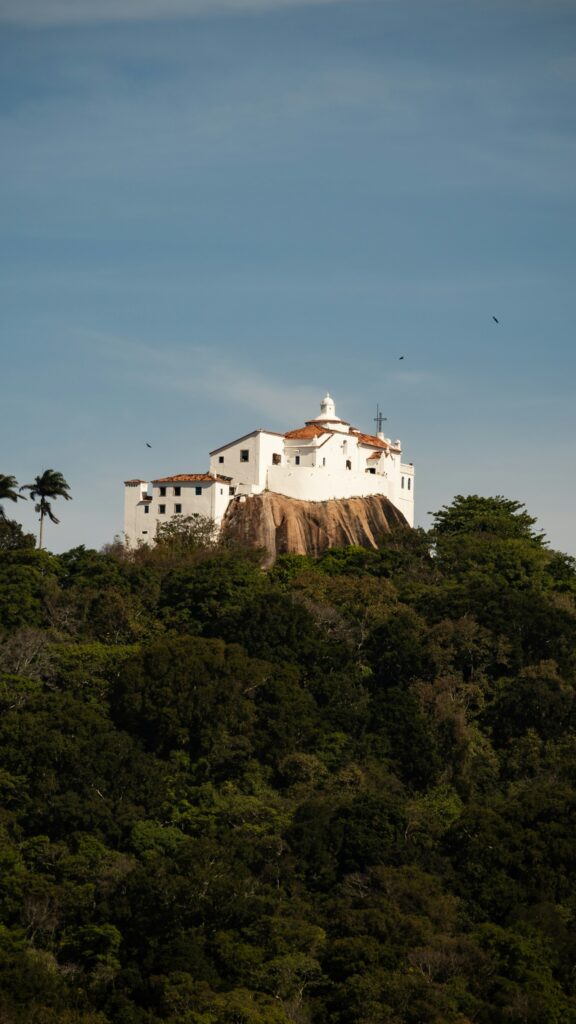
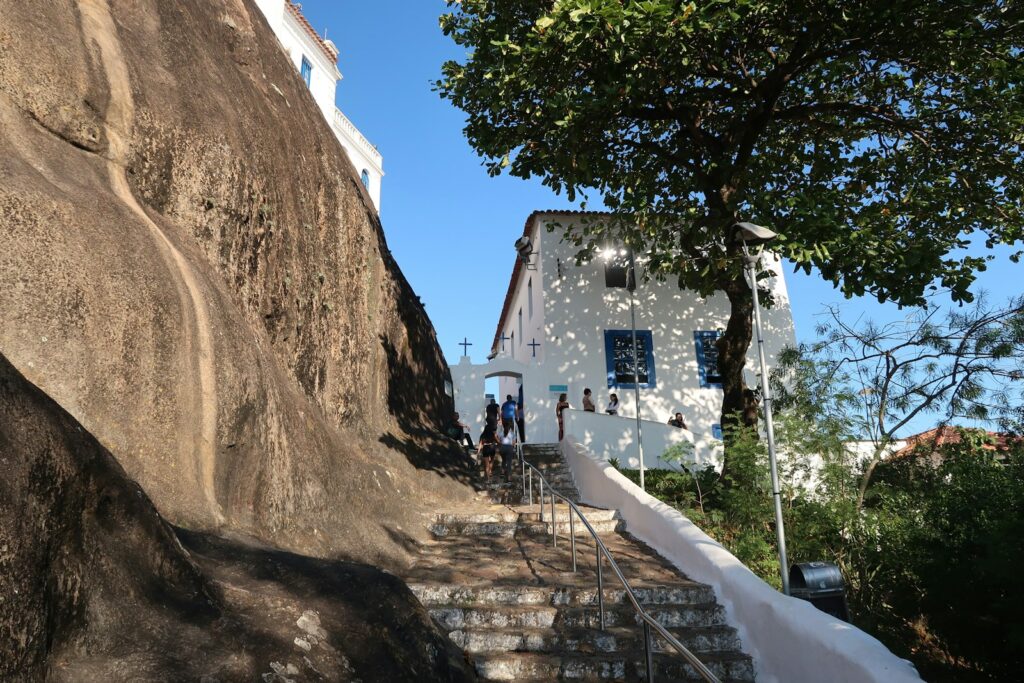
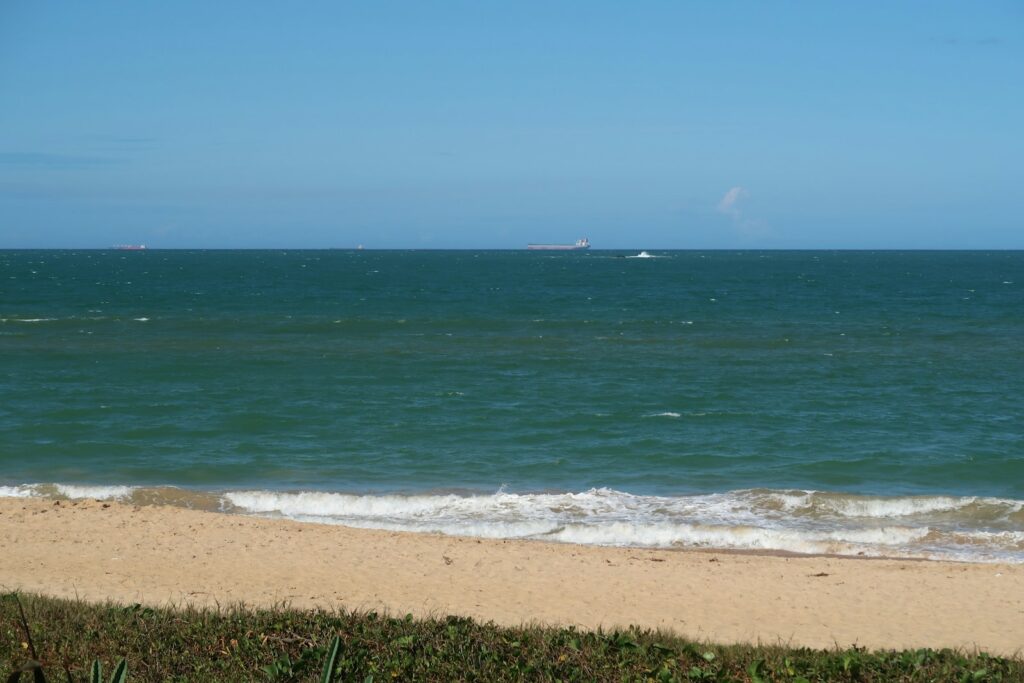
Vila Velha is the oldest town in Espírito Santo. On 23 May 1535 the Portuguese donatary Vasco Fernandes Coutinho landed at Prainha, on the southern shore of Vitória Bay, and founded the first settlement of the captaincy, which remained its seat until the capital moved to the island of Vitória in 1551. Its skyline is dominated by the Convento da Penha, a Franciscan convent begun in 1558 by friar Pedro Palácios on a rock 154 m above the bay, listed as national heritage in 1943 and the home of the patron saint of the state. Below it, Prainha keeps the Igreja do Rosário, described as the oldest church in active liturgical use in Brazil, and the Forte São Francisco Xavier da Barra. The city had about 468,000 inhabitants in the 2022 census and some 32 km of Atlantic coastline, from Praia da Costa, with the Santa Luzia lighthouse, to Itapoã, Itaparica and the old fishing village of Barra do Jucu. It is also home to Garoto, one of Latin America's largest chocolate makers, founded here in 1929. For agencies, Vila Velha suits heritage and religious visits built around the Convento da Penha and Prainha, the Garoto chocolate museum tour, beach stays, and culture-focused programs around the congo bands of Barra do Jucu. The Festa da Penha, which starts on Easter Sunday and lasts nine days, suits pilgrimage groups but draws very large crowds, so regular leisure programs should avoid those dates or plan around them. Vitória, across the Terceira Ponte, is the natural add-on for its historic centre and clay-pot makers. Honest logistics: there is no airport in Vila Velha, and clients fly into VIX in Vitória, about 10 km from Vitória's centre, then cross the bay by bridge, so transfers should include some buffer. Visits to the fort are scheduled in advance, the Garoto tour needs pre-booked tickets and the convent sits on a steep rock, so fitness should be considered for guests who walk up.
Aeroporto de Vitória, Eurico de Aguiar Salles
The airport for Vila Velha, operated by Zurich Airport Brasil since 2019, with a terminal opened in 2018 and domestic flights by Azul, Gol and LATAM to hubs such as São Paulo, Rio de Janeiro, Brasília and Belo Horizonte.
How Vila Velha came to be
Sourced milestones your team can use for guest briefings and storytelling, not filler copy.
Curiosities & practical notes
What's on the table
Moqueca capixaba
Fish or seafood stewed with tomatoes, onions, coriander and annatto, without palm oil or coconut milk, cooked and served in black clay pots.
Torta capixaba
A Holy Week seafood pie of shredded crab, shrimp, oysters, sururu mussels, salt cod and palm heart.
Caranguejada
A crab-based dish counted by the state government among the best-known typical preparations of Espírito Santo.
Garoto chocolate
Chocolate from the company founded in Vila Velha in 1929, maker of brands such as Serenata de Amor and Baton, and a natural local souvenir.
What there is to see
Marked where a site carries UNESCO World Heritage status directly, versus a locally or nationally protected landmark.
Convento da Penha
A Franciscan convent begun in 1558 atop a 154 m rock, listed as national heritage in 1943 and the sanctuary of the state's patron saint.
Igreja de Nossa Senhora do Rosário
The Prainha church whose origins go back to a 1535 chapel, described as the oldest church in active liturgical use in Brazil.
Forte São Francisco Xavier da Barra
An eighteenth-century fort at the entrance of Vitória Bay, now home to an Army battalion, with a viewpoint over the bay and the convent.
Farol Santa Luzia
A 12 m cast-iron lighthouse from Scotland at Praia da Costa, lit in 1871 and open to visitors.
Morro do Moreno
A 164 m hill with Atlantic Forest remnants and views over the bay.
Chocotour Garoto
The chocolate museum and tour at the Garoto factory, with pre-booked tickets.
Barra do Jucu
A former fishing village at the mouth of the Jucu river, known for its congo bands, beaches and the Jacarenema mangrove park.
What else we brief agencies on
This is what we prepare for every RFP, whether or not it's published on this page yet:
On request for every proposal
- Best season / weather windows and blackout dates for groups & MICE
- Permit and quota logistics for regulated attractions, lead time and group-size caps
- Accessibility notes and physical-difficulty ratings per activity
- Vetted ground partners, guides and transport already used on past programs
- Sustainability / certification credentials relevant to client RFPs, where they genuinely exist
- Real, checked room and vehicle availability for your travel dates, not a generic quote
