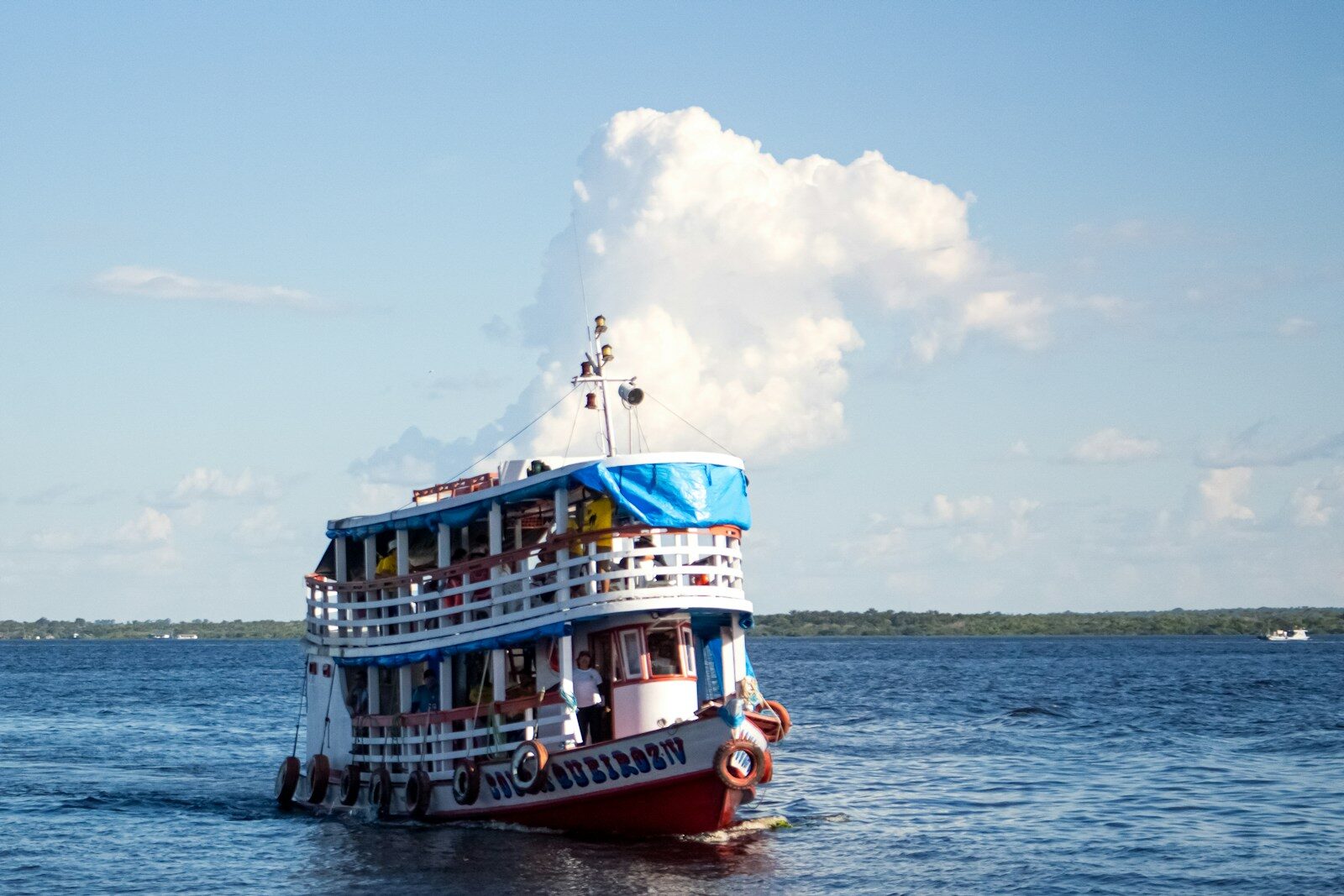
Most itineraries treat the Amazon as a lodge with a river attached. You fly into Manaus, you board a boat, you see the meeting of the waters, you leave. Belém, the other Amazon capital, sits at the mouth of the river and is usually skipped altogether. That is harder to justify this year than last.
The Largest Procession Most Travelers Have Never Heard Of
On Sunday, October 11, 2026, Belém held the 234th Círio de Nazaré. An estimated 2.3 million people followed the image of Our Lady of Nazareth along a 3.6 kilometer route from the Metropolitan Cathedral to the Basilica Sanctuary, a walk that took around five hours (Ministério da Cultura, 2026).
It is not a one day event. The 2026 program ran 14 processions between October 7 and October 26 (Ministério da Cultura, 2026). The first Círio was held in 1774, and since 1793 it has taken place every year on the second Sunday of October (Ministério da Cultura, 2026).
The recognition matches the scale. Iphan registered the Círio as Brazilian cultural heritage in 2004, and UNESCO added it to the Representative List of the Intangible Cultural Heritage of Humanity in 2013 (Ministério da Cultura, 2026). A gathering of that size, with that status, and almost no international operator sells it.
What a Climate Summit Left Behind
Belém hosted COP30 from November 11 to 21, 2025, and the preparation changed the city in ways that outlast the conference. The international airport received 470 million reais in investment (COP30 Brasil, 2025).
Porto Futuro II, the old industrial port on Guajará Bay, became a cultural complex, and one of its warehouses now holds the Museu das Amazônias. The São Brás market was restored, and so was the Basilica Sanctuary itself, handed back to the community on August 24, 2026 after the largest restoration in its history (O Tempo, 2026).
The Parque da Cidade, built on the site of the former Brigadeiro Protásio airport, covers 500,000 square meters and now works as an everyday public space rather than a conference venue (O Tempo, 2026). Before it closed for the summit build it had already drawn more than 670,000 visitors in under two months (Agência Pará, 2025).
Not everything landed where it was promised. Local reporting through 2025 was consistent that the housing deficit in Belém was not solved by the summit, and part of the hotel capacity was built for a peak that does not repeat. Both things are true at once: the city gained real infrastructure, and the city still has real gaps. An honest brief for a client says both.
The Market, and a Cuisine With No Equivalent
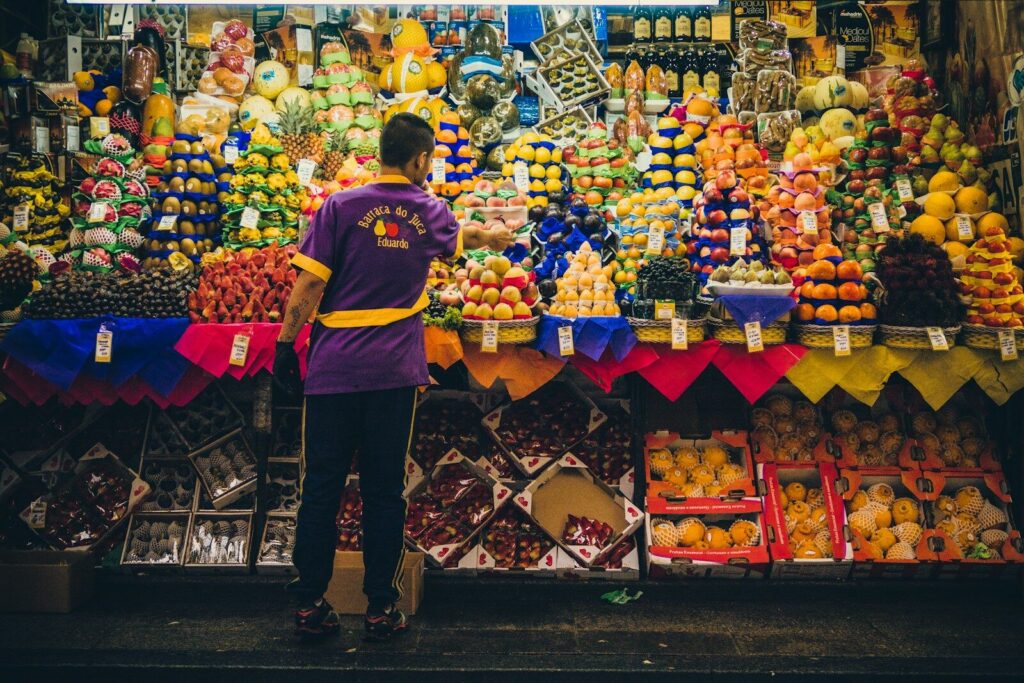
Ver-o-Peso is reason enough on its own. It is a working riverside market, not a restored one, where the boats unload before dawn and the stalls sell fish, fruit and medicinal plants that have no equivalent in a European supermarket. The rule for a client is simple: go early, go with someone local, and plan nothing immediately afterward.
Belém is also where Brazilian food stops resembling Brazilian food. The staples are tucupi, the liquid pressed from wild manioc, tacacá, the soup built on it, and maniçoba, cooked for days. All three are of indigenous origin, and in Pará they carry the weight a Christmas table carries elsewhere: during the Círio, families eat them together as the centerpiece of the day (O Tempo, 2026).
Açaí is the clearest case of how little travels. In Belém it is savory and unsweetened, served with fish or shrimp and manioc flour. The frozen sweetened version sold abroad is a different product with the same name. For a client who has already done Rio and Salvador, this is the strongest argument Brazil has left.
When to Go, and for How Long
Three nights is the working minimum: one for the market and the old city, one for the river and the islands, one for the food. Two nights produces a transit stop, not a visit.
October is the most intense month and the hardest to book, for obvious reasons. For a first visit, the weeks on either side of the Círio give you the same city with room to move. The drier months, roughly June to November, are the easier window for river excursions.
Pairing matters more here than elsewhere in Brazil. Belém works as the opening or closing leg of an Amazon itinerary, or as a counterweight to a coastal stretch in the Northeast, rather than as a standalone destination.
O que isso significa para os seus programas
Belém is at the point in its cycle where the infrastructure has arrived and the demand has not. That gap does not stay open indefinitely, and it is where the best value currently sits for clients who want a Brazil their friends have not already posted.
The obstacle is not the city. It is that almost nobody is building the product yet. Which is usually the moment to start.