
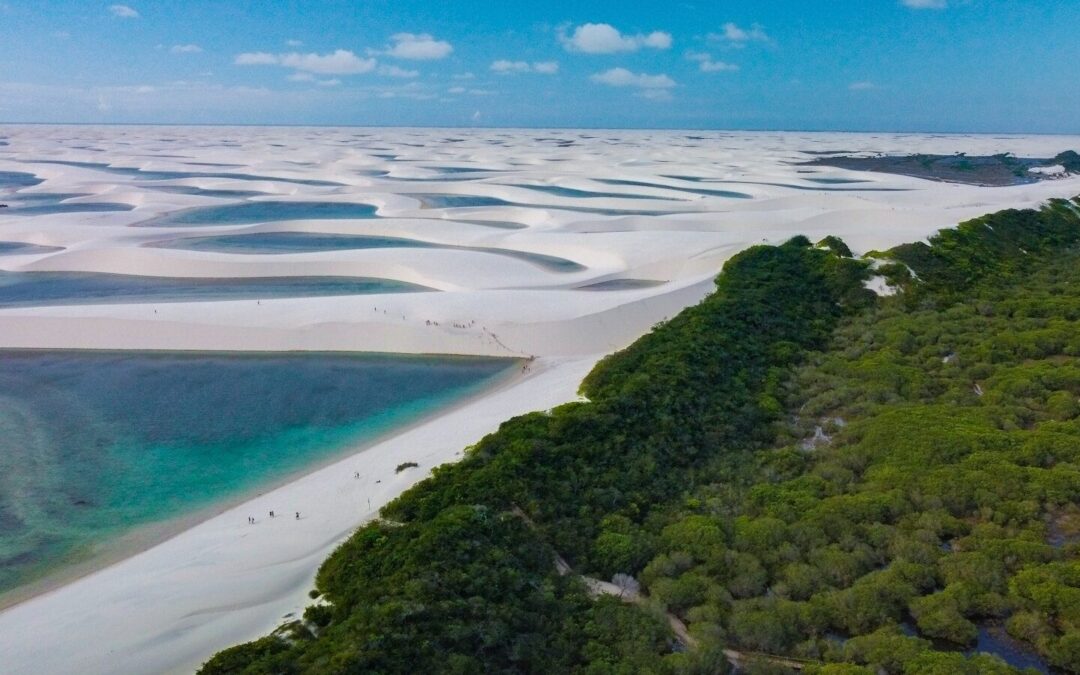
Lençóis Maranhenses National Park is one of Brazil’s most surreal natural wonders, where endless white dunes meet rain‑fed lagoons along the Atlantic coast. Located in the state of Maranhão, in northeastern Brazil, this protected area is a magnet for travelers seeking otherworldly landscapes without the polish of mass‑tourism resorts.
In July 2024, the site was inscribed as a UNESCO World Heritage natural site, recognized for its exceptional beauty and unique combination of dunes, lagoons, and coastal ecosystems.
For many, Lençóis Maranhenses is “the place where the desert meets the sea,” combining off‑road adventure, surreal photography opportunities, and refreshing swims in crystal‑clear lagoons. It also offers a glimpse into the rhythms of small coastal communities, where local guides and families depend on tourism but still live close to traditional ways of life.
Where Lençóis Maranhenses Is
The park sits on the eastern coast of Maranhão, roughly 70 km of beaches along the Atlantic Ocean, with an inland stretch of rolling dunes and temporary lagoons. It lies in a transition zone between three Brazilian biomes (Cerrado, Caatinga, and Amazon) giving the region a rich ecological mix despite its desert‑like appearance.
Most visitors enter through the towns of Barreirinhas, Atins, or Santo Amaro do Maranhão, which act as gateways for boat or 4×4 transfers into the dune fields.
How the Landscape Works
Spanning about 155,000 hectares, Lençóis Maranhenses is dominated by vast barchanoid dunes formed by wind and sea sediments during the late Quaternary period. The park’s name, which means “bedsheets of Maranhão,” comes from the way these huge dunes stretch across the coast, resembling giant white sheets.
During the rainy season (roughly January–June), valleys between the dunes fill with freshwater lagoons, prevented from draining by an impermeable rock layer beneath the sand. In the dry season, many lagoons shrink or disappear, leaving behind a more arid, desert‑like scene, but the dunes and some permanent lagoons remain striking.
Biodiversity and Conservation
Despite its sandy appearance, Lençóis Maranhenses harbors a surprising range of wildlife, including several species categorized as threatened or endangered. The park mixes coastal ecosystems with inland lagoons, rivers, and mangrove patches, creating habitats for birds, fish, and small mammals that adapt to the seasonal water cycle.
Researchers have also found that the lagoons’ water quality is generally excellent for swimming, provided visitors respect guidelines and avoid polluting the environment.
Visiting Lençóis Maranhenses
Tourism in Lençóis Maranhenses is centered on guided 4×4 or boat trips, hiking circuits, and stays in simple lodgings or pousadas in Barreirinhas, Atins, or nearby villages. Most visitors come between June and September, when lagoons are at their fullest and the weather is relatively dry, making walking and swimming more comfortable.
Responsible travel is key: the park is fragile, and unchecked tourism can damage dunes, water quality, and local communities. Sticking to marked routes, using licensed guides, and minimizing waste are simple ways to protect this unique landscape.
Because of its blend of wonder, remoteness, and ecological importance, Lençóis Maranhenses remains one of Brazil’s most iconic destinations for travelers who want to go beyond the usual beach resorts.