
Rio Branco
All of Brazil, within reach.

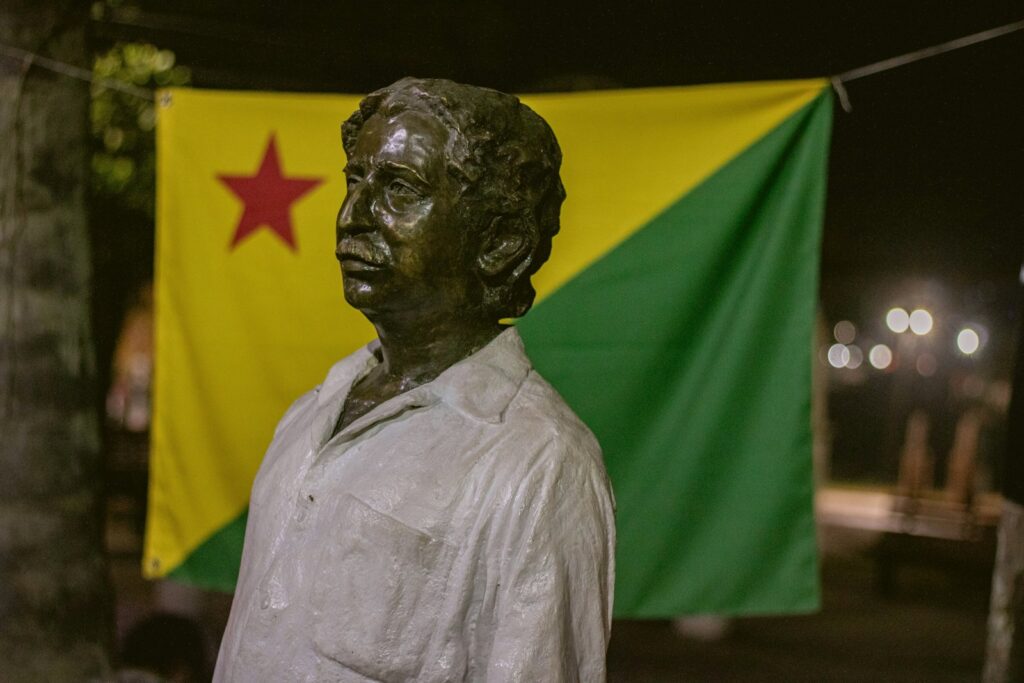
A rectangle divided diagonally from lower left to upper right, yellow above and green below, with a red star in the upper left corner. Yellow stands for the riches of the land, green for hope, and the red 'Estrela Altaneira' honours those who fought for Acre's annexation to Brazil.
Rio Branco in pictures
About Rio Branco
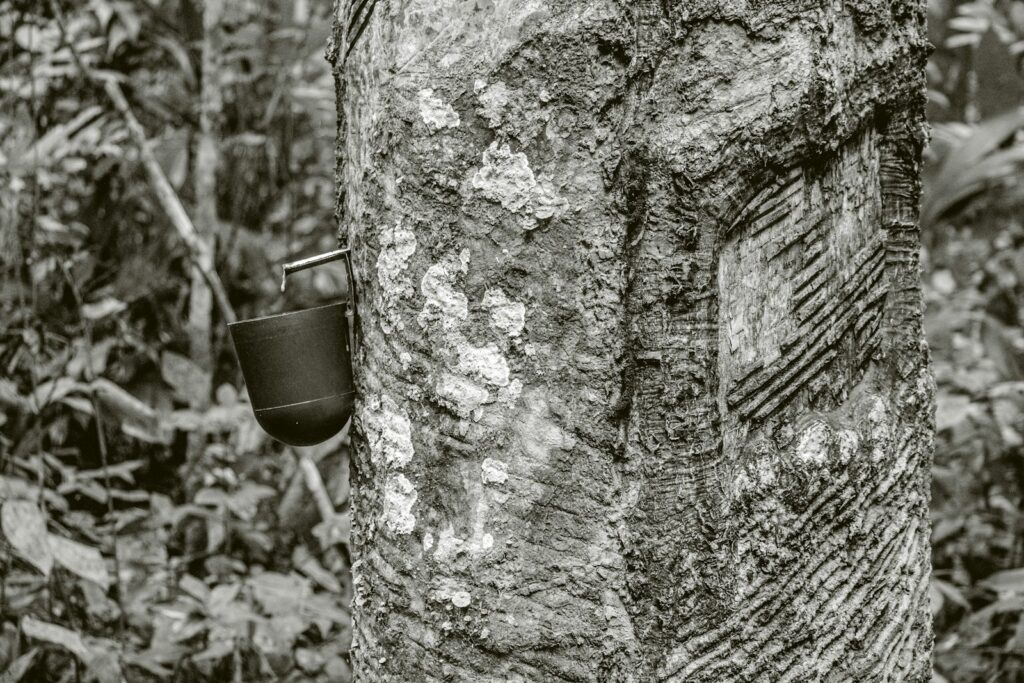
Acre is Brazil's westernmost state, bordering Peru and Bolivia in the southwestern Amazon. Rio Branco, its capital, grew from a rubber estate founded on the banks of the Acre River in 1882 and today holds almost half of the state's population. The state's story is unusually recent and unusually vivid: an armed revolution against Bolivian rule, annexation by treaty in 1903, and, in the 1980s, the rubber tappers' movement led by Chico Mendes, which gave the world the concept of the extractive reserve. Beneath the forest and pasture lie hundreds of geometric earthworks built by indigenous societies centuries before European contact, now on Brazil's UNESCO tentative list. For agencies, Acre suits FIT and small-group special-interest programs rather than volume: archaeology and Amazon history, socio-environmental themes around Xapuri and the Chico Mendes Extractive Reserve, ethno-tourism at indigenous festivals, and expedition-style nature travel in Serra do Divisor National Park. Logistics call for honest planning. Rio Branco is reached by domestic flights via hubs such as Brasília; Cruzeiro do Sul, gateway to Serra do Divisor, lies about 630 km away by road and is linked to the capital by air; the park itself is reached by boat and has only community-based lodging. Acre also runs two hours behind Brasília.
Rio Branco-Plácido de Castro International Airport
Main gateway to Acre, operated by Vinci under a 30-year concession since 2021, with domestic connections to hubs including Brasília and São Paulo-Guarulhos and a link to Cruzeiro do Sul.
Cruzeiro do Sul International Airport
Brazil's westernmost airport with scheduled flights, also operated by Vinci since 2021, and the air gateway to the Juruá valley and Serra do Divisor National Park, with service to Rio Branco.
How Rio Branco came to be
Sourced milestones your team can use for guest briefings and storytelling, not filler copy.
Curiosities & practical notes
What's on the table
Baixaria
Acre's signature breakfast and supper plate of cuscuz topped with ground beef and a runny fried egg, sometimes finished with tomato, onion and cheiro-verde.
Tacacá
A hot Amazonian broth of tucupi, tapioca gum and dried shrimp, served with jambu, the herb that leaves a gentle tingle on the palate.
Pato no tucupi
Duck cooked in tucupi, the yellow sauce extracted from cassava, served with rice and jambu.
Pirarucu
The region's emblematic river fish, served in local cooking alongside carne-de-sol and accompanied by tucupi.
Farinha de Cruzeiro do Sul
Cassava flour from the Juruá valley with geographical indication status since 2017, an everyday accompaniment across the state.
What there is to see
Marked where a site carries UNESCO World Heritage status directly, versus a locally or nationally protected landmark.
Palácio Rio Branco
The 1930 former seat of government in central Rio Branco, blending classical and art deco lines, now a museum on Acre's formation, the geoglyphs, the Acrean Revolution and Chico Mendes.
Catedral Nossa Senhora de Nazaré
Rio Branco's cathedral, opened in 1958 in Roman basilica style and lit by 36 stained-glass windows.
Gameleira and Mercado Velho
On the Acre River, the historic fig tree that marks the city's 1882 origins and the refurbished 1920s Old Market, linked across the river by the Joaquim Macedo footbridge.
Parque Ambiental Chico Mendes
An environmental park in Rio Branco with a collection of regional wildlife, including jaguars and anacondas.
Geoglyphs of Acre
Pre-Columbian geometric earthworks of circles and squares spread across eastern Acre, on Brazil's UNESCO World Heritage tentative list since 2015.
Casa de Chico Mendes, Xapuri
The house where Chico Mendes lived and was killed in 1988, listed by IPHAN in 2007 and kept as a museum with his original furniture and belongings.
Chico Mendes Extractive Reserve
Nearly one million hectares of forest managed by rubber-tapping communities, created in 1990 and the largest extractive reserve in the Amazon.
Serra do Divisor National Park
Remote mountain forest on the Peruvian border near Cruzeiro do Sul, with waterfalls such as Cachoeira Formosa, the Buraco da Central sinkhole and a viewpoint at 609 metres.
What else we brief agencies on
This is what we prepare for every RFP, whether or not it's published on this page yet:
On request for every proposal
- Best season / weather windows and blackout dates for groups & MICE
- Permit and quota logistics for regulated attractions, lead time and group-size caps
- Accessibility notes and physical-difficulty ratings per activity
- Vetted ground partners, guides and transport already used on past programs
- Sustainability / certification credentials relevant to client RFPs, where they genuinely exist
- Real, checked room and vehicle availability for your travel dates, not a generic quote
