
Oiapoque
All of Brazil, within reach.

Horizontal bands of blue, green, yellow and white, with a black and white geometric emblem at the hoist representing the Fortress of São José de Macapá. Green stands for the forests, yellow for mineral wealth, blue for the sky, white for peace and black for those who gave their lives for the state; it was established in 1984 and kept at statehood in 1988.
Oiapoque in pictures
About Oiapoque
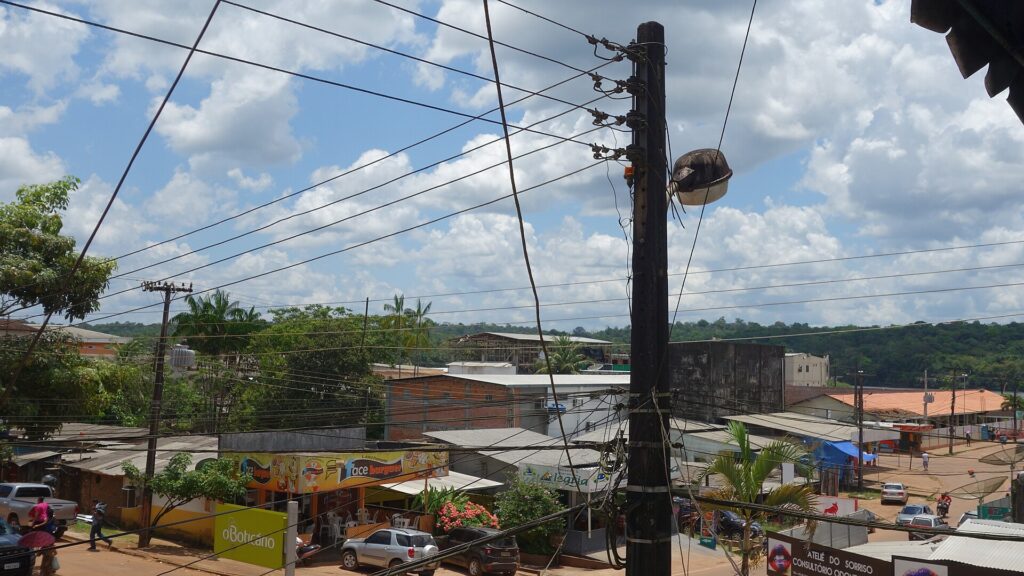
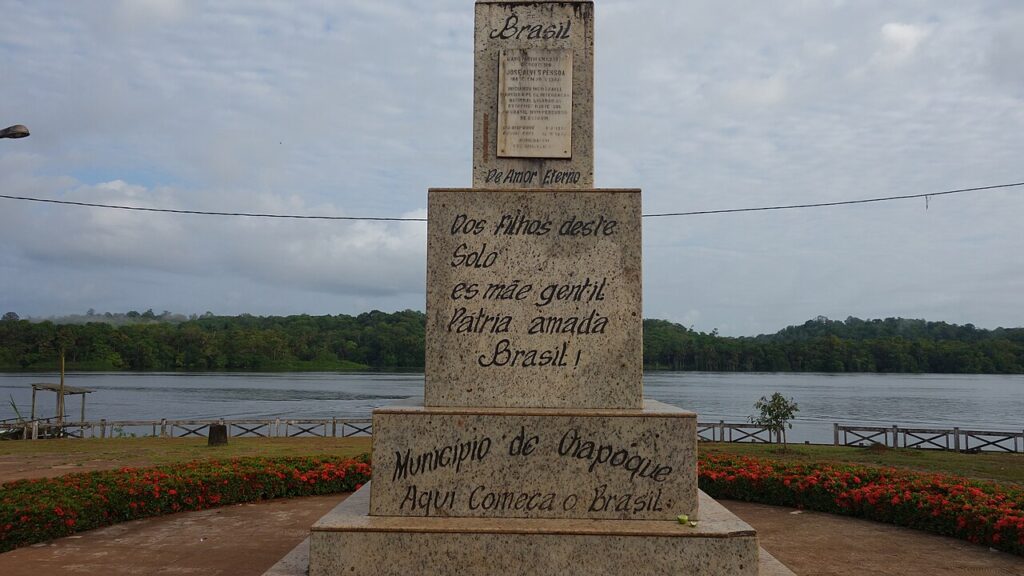
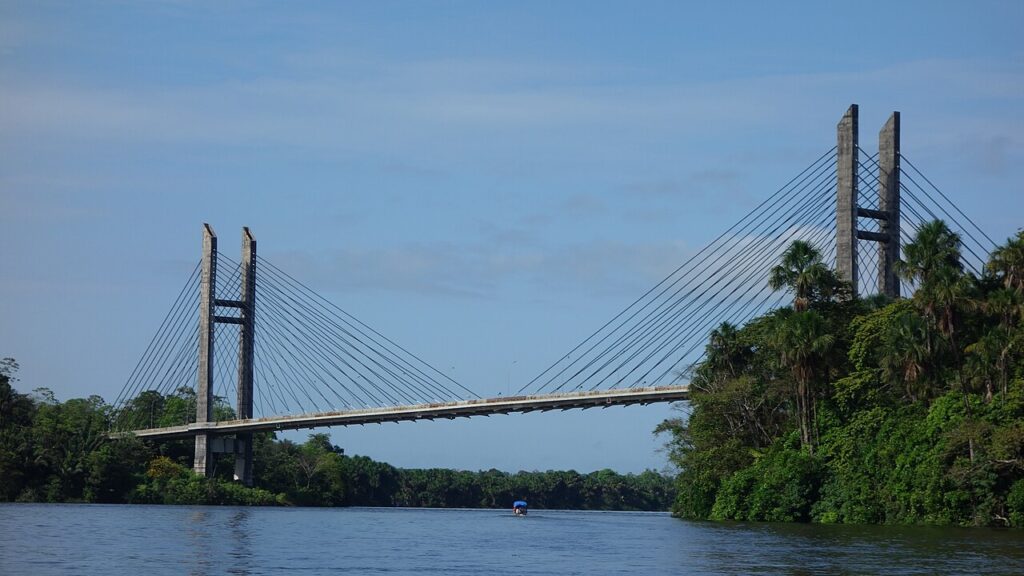
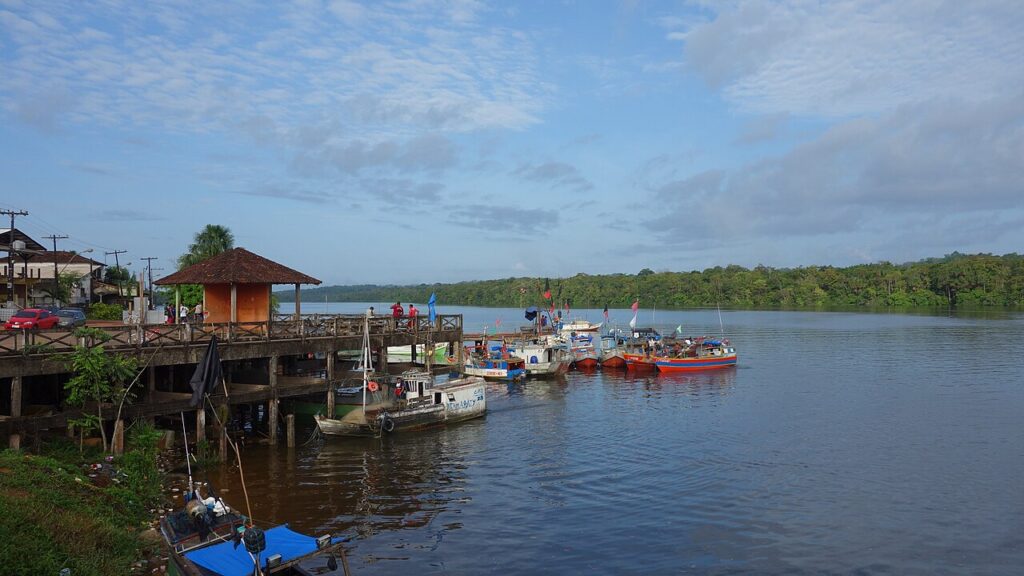
Oiapoque is the northernmost municipality of Amapá, a river town on the right bank of the Oiapoque River facing Saint-Georges-de-l'Oyapock in French Guiana. Its name lives on in the Brazilian expression "do Oiapoque ao Chuí", from north to south, and a 1943 riverfront monument bears the words "Aqui começa o Brasil", here Brazil begins. The river became the border through the Swiss arbitration of 1900, which settled a long dispute with France in Brazil's favour, and the municipality was created in 1945. The 2022 census counted 27,482 inhabitants across a territory of about 23,000 km², much of it forest, Indigenous land and protected areas. The Karipuna, Palikur, Galibi Marworno and Galibi Kalinã peoples live in the municipality, and their culture is presented at the Kuahí Museum of the Indigenous Peoples of Oiapoque, opened in 2007. Since 2017 the Oyapock River Bridge has linked Brazil and French Guiana by road, and the town is also the base for boat trips to Cabo Orange National Park on the coast. For agencies, Oiapoque suits expedition-minded FIT and small groups, overland journeys between Macapá and Cayenne, and special-interest programs on Indigenous culture and frontier history. It is not a mass-market destination and has a small stock of hotels and guesthouses, so it works best as a one or two night stop inside a wider Amapá or Guianas itinerary. Logistics need honest planning. The town lies about 550 km from Macapá on the BR-156, and a stretch of that highway was still being paved in late 2025, so journey times vary with the rains. The local airport has no regular scheduled flights, so most programs fly into Macapá and continue by road. The French checkpoint on the bridge has kept weekday office hours and closed at weekends and Brazilian public holidays, so crossings to Saint-Georges are best planned Monday to Friday, with entry rules for French Guiana checked per nationality. The rainy season runs from about December to August.
Aeroporto Internacional de Macapá, Alberto Alcolumbre
Amapá's main gateway and the practical air access for Oiapoque, with domestic connections to the rest of Brazil.
Aeroporto de Oiapoque
A 1,500 m asphalt runway without instrument approaches; no regular scheduled service, with occasional charter flights to Macapá.
How Oiapoque came to be
Sourced milestones your team can use for guest briefings and storytelling, not filler copy.
Curiosities & practical notes
What's on the table
Camarão no bafo
Fresh shrimp steamed in a pot or in banana leaves, seasoned with salt, lime, cachaça and hot pepper.
Tacacá
A hot broth of tucupi, the yellow extract of wild cassava, with jambu leaves, shrimp and tapioca.
Pescada de gurijuba
Gurijuba, a firm white-fleshed fish of the Amapá coast, often stewed in tucupi sauce.
Caldeirada de tucunaré
A fish stew of tucunaré with potatoes, onions and boiled eggs, served with white rice.
Açaí
Served the northern way as a thick, unsweetened pulp, often eaten with cassava flour.
What there is to see
Marked where a site carries UNESCO World Heritage status directly, versus a locally or nationally protected landmark.
Monumento "Aqui começa o Brasil"
The 1943 monument to the nation with lines from the national anthem, the town's signature photo stop.
Ponte Binacional sobre o Rio Oiapoque
The 378 m cable-stayed bridge to Saint-Georges-de-l'Oyapock in French Guiana, open to traffic since 2017.
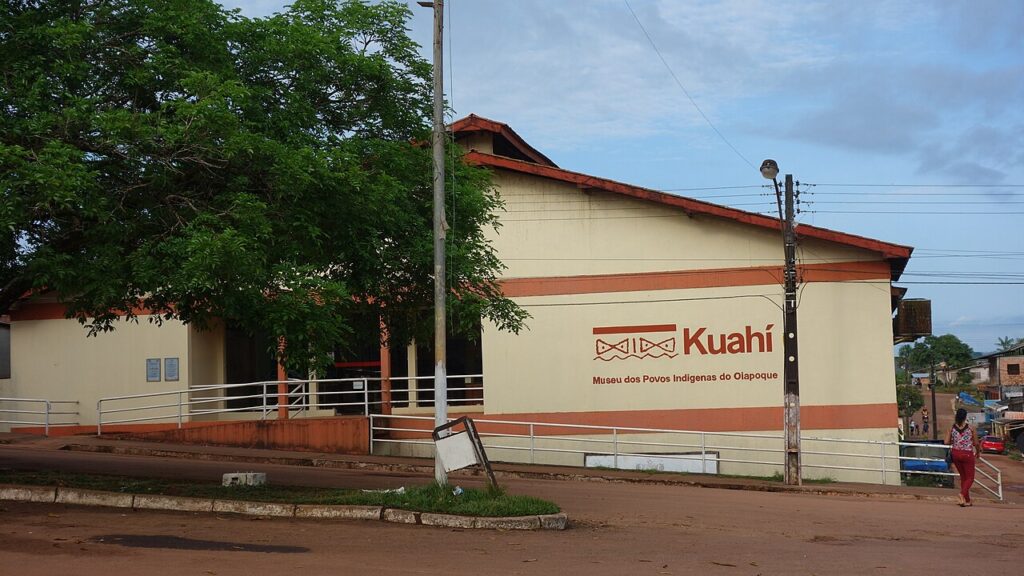
Kuahí, Museu dos Povos Indígenas do Oiapoque
A museum opened in 2007 with canoes, beadwork, featherwork, ceramics and Turé dance regalia of the Karipuna, Palikur, Galibi Marworno and Galibi Kalinã.
Clevelândia do Norte
The former military colony and 1920s penal camp about 3 km from town, today a district with an Army border unit.
Monumento do Laudo Suíço
A monument recalling the 1900 Swiss arbitration that fixed the border on the Oiapoque River.
Cachoeira Grande
A waterfall listed among the municipality's natural attractions.
What else we brief agencies on
This is what we prepare for every RFP, whether or not it's published on this page yet:
On request for every proposal
- Best season / weather windows and blackout dates for groups & MICE
- Permit and quota logistics for regulated attractions, lead time and group-size caps
- Accessibility notes and physical-difficulty ratings per activity
- Vetted ground partners, guides and transport already used on past programs
- Sustainability / certification credentials relevant to client RFPs, where they genuinely exist
- Real, checked room and vehicle availability for your travel dates, not a generic quote
