
Alcântara
All of Brazil, within reach.

Created in 1889 by the poet Joaquim de Sousa Andrade, it has nine horizontal stripes (four white, three red, two black) representing the peoples that formed Maranhão, and a blue canton with a white star. The star is Beta Scorpii, which represents Maranhão on the national flag.
Alcântara in pictures
About Alcântara
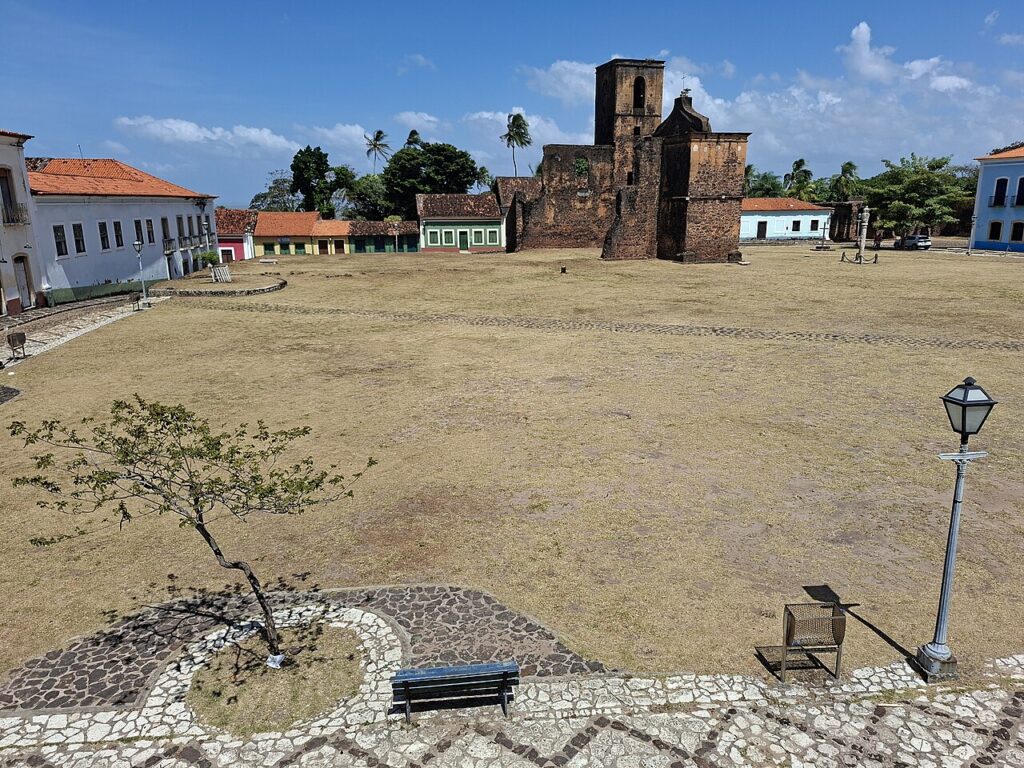
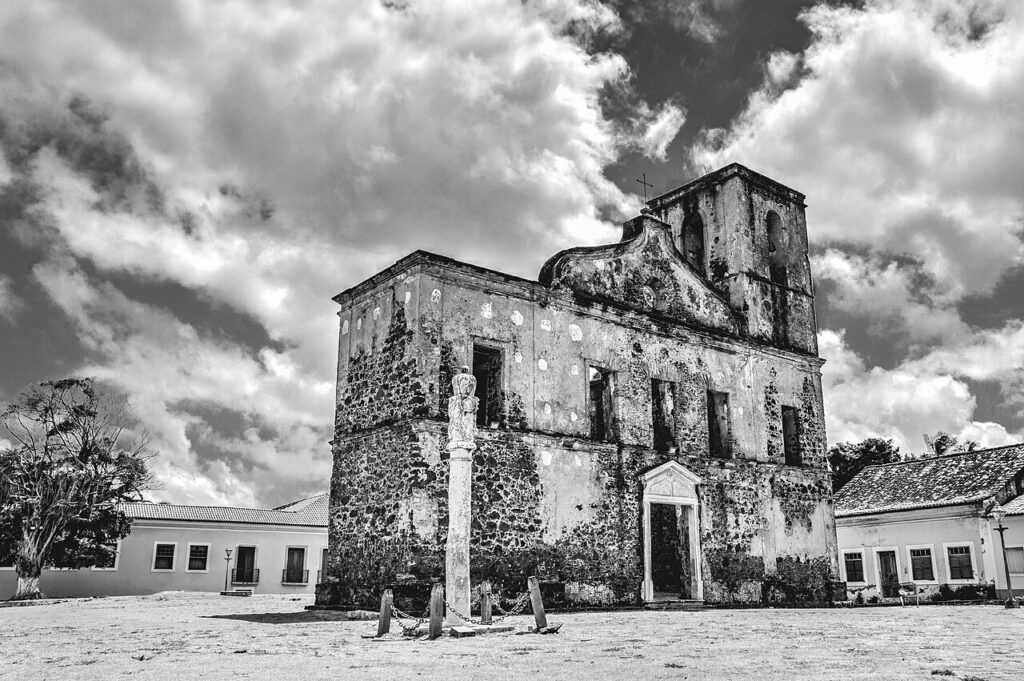
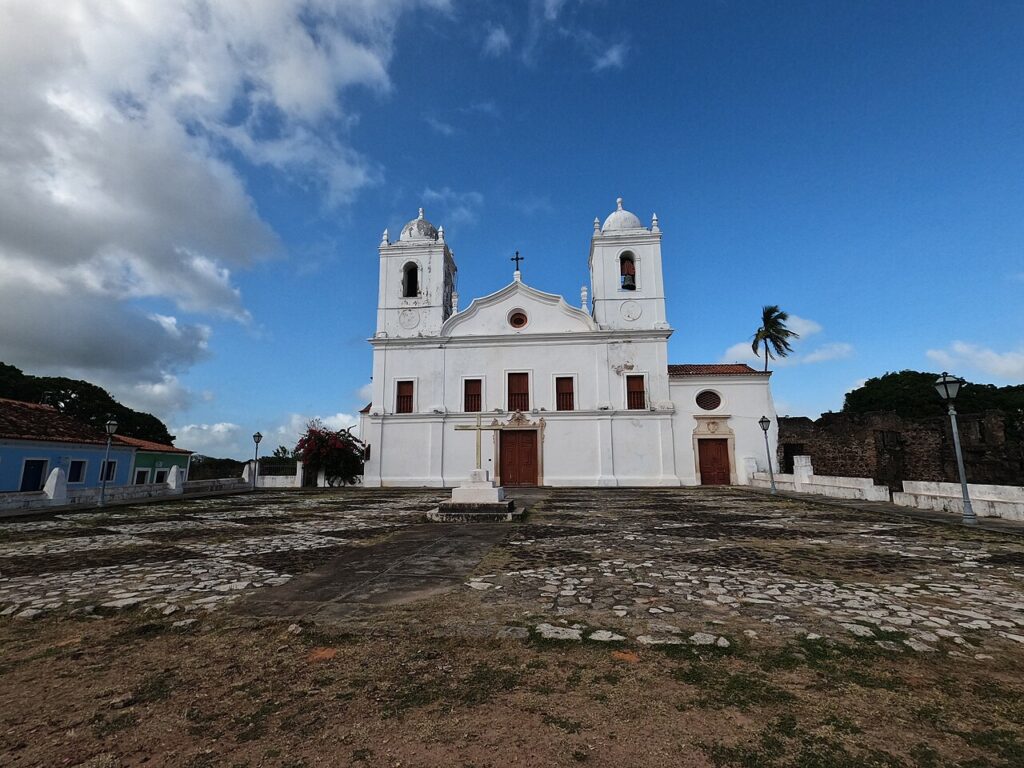
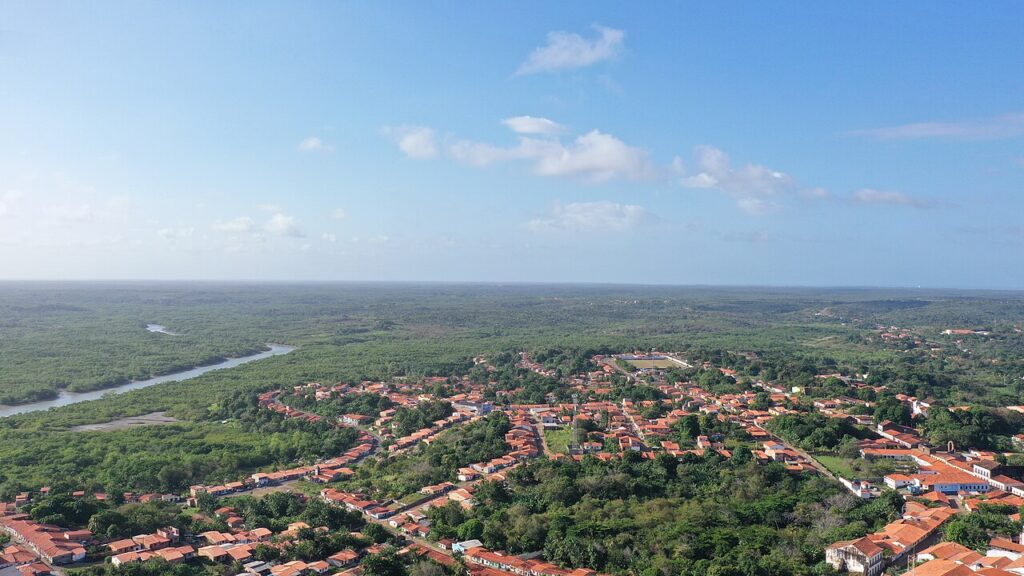
Alcântara is a small colonial town on the western shore of the Bay of São Marcos, about 30 km from São Luís. It grew on the site of Tapuitapera, a Tupinambá village, was occupied by the Portuguese after the French were expelled and in 1648 became the Vila de Santo Antônio de Alcântara, seat of the Captaincy of Cumã. Planter families built churches, convents and two-storey manor houses, and the town was raised to city status in 1836 before the decline of its agricultural economy and the abolition of slavery left much of it abandoned. That long stagnation preserved an urban ensemble that IPHAN listed in 1948: today visitors walk between the roofless façade of the Igreja Matriz de São Matias on Praça da Matriz, the white Igreja do Carmo, the Rosário church built by and for the Black brotherhood, and sobrados now used as museums. The municipality counted 18,467 people in the 2022 census and has more than 200 quilombola communities, the highest number of any Brazilian municipality. Alcântara is also home to the Alcântara Launch Center, the Brazilian Air Force rocket base. It is a nationally listed heritage town, not a UNESCO site. For agencies, Alcântara is best sold as a full-day excursion from São Luís for FIT clients and small groups interested in colonial history, Afro-Brazilian heritage and photography, and it pairs naturally with a São Luís city stay. Travel by boat or catamaran from the Praia Grande pier takes about 1 h 20 min, but departures depend on high tide and the crossing is often rough, so clients prone to seasickness should be warned. The alternative is the car ferry to Cujupe followed by a road transfer, around 3 h 30 min to 4 h in total. Services and accommodation are simple, cobbled streets are uneven, and the Festa do Divino Espírito Santo, from Ascension to Pentecost, adds a date-specific cultural hook that requires early planning.
São Luís-Marechal Cunha Machado International Airport
The nearest commercial airport, with domestic flights on Azul, Gol and LATAM and TAP's Lisbon route from 27 October 2026; from there Alcântara is reached by boat or car ferry.
How Alcântara came to be
Sourced milestones your team can use for guest briefings and storytelling, not filler copy.
Curiosities & practical notes
What's on the table
Doce de espécie
Alcântara's signature sweet, inherited from Azorean settlers: a butter and wheat flour pastry filled with soft coconut candy, sold from small doorways in town.
Caranguejada
Mangrove crab from the bay, served whole, as claws or as stuffed shells.
Torta de caranguejo
Crab meat baked in a custard-like batter of beaten eggs, the same method used for the regional shrimp pie.
Juçara
Maranhão's name for açaí, eaten as a thick purple pulp with cassava flour, fish or shrimp.
What there is to see
Marked where a site carries UNESCO World Heritage status directly, versus a locally or nationally protected landmark.
Ruins of the Igreja Matriz de São Matias
The roofless stone shell of the old parish church, facing the colonial pillory on Praça da Matriz, the town's main square.
Museu Casa Histórica de Alcântara
A late 18th or early 19th century sobrado on Praça da Matriz, run by Ibram and opened as a house museum in 2004.
Igreja e Convento do Carmo
The Carmelite church, founded in 1646, and the ruins of its convent of 1665, on the Largo do Carmo.
Igreja de Nossa Senhora do Rosário dos Pretos
A church built by the Black brotherhood of the Rosário, licensed in 1781 and completed in 1803.
Igreja do Desterro
A small church rebuilt in 1654 and restored in the 19th century and again in 1978.
Fonte de Pedra
A stone fountain attributed to the French and dated to 1613, one of the oldest structures in town.
Ladeira do Jacaré
A historic stone stairway street in the listed centre, worth including on a walking tour.
What else we brief agencies on
This is what we prepare for every RFP, whether or not it's published on this page yet:
On request for every proposal
- Best season / weather windows and blackout dates for groups & MICE
- Permit and quota logistics for regulated attractions, lead time and group-size caps
- Accessibility notes and physical-difficulty ratings per activity
- Vetted ground partners, guides and transport already used on past programs
- Sustainability / certification credentials relevant to client RFPs, where they genuinely exist
- Real, checked room and vehicle availability for your travel dates, not a generic quote
