
Canela
All of Brazil, within reach.

Diagonal bands of green, red and yellow with the state coat of arms at the centre, inherited from the Riograndense Republic of the Ragamuffin War (1835-1845). The coat of arms carries the motto 'Liberdade, Igualdade, Humanidade'; the flag was officially restored in 1966.
Canela in pictures
About Canela
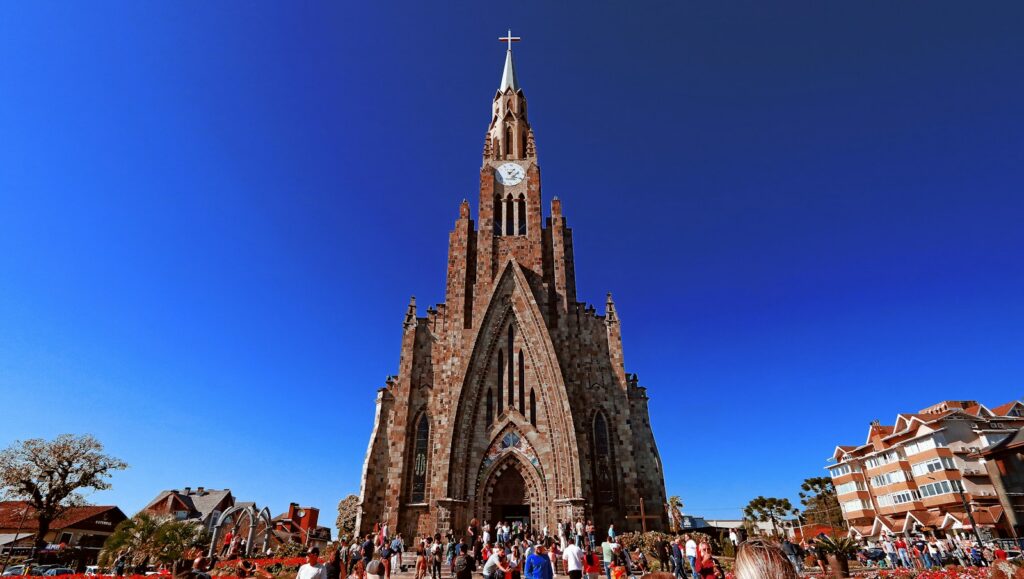
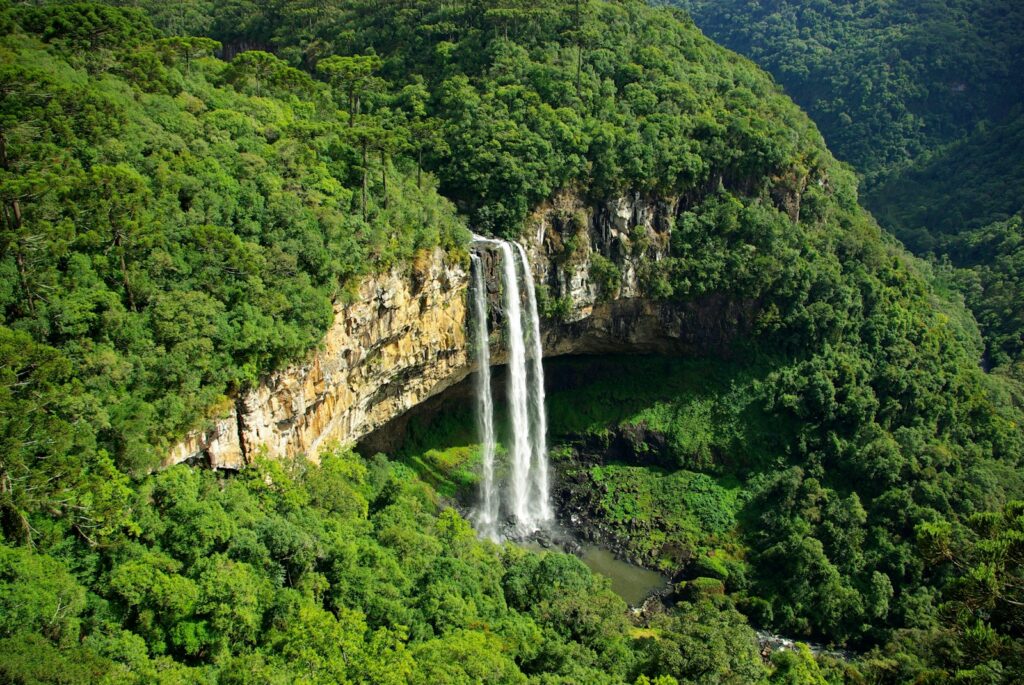
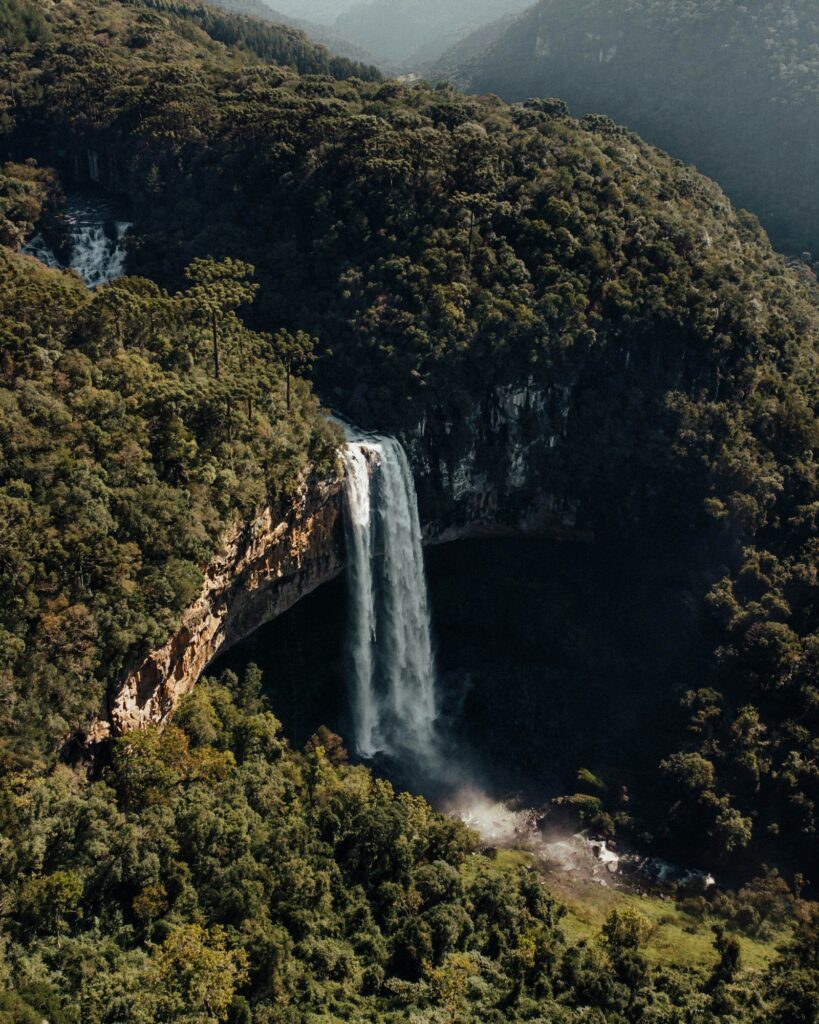
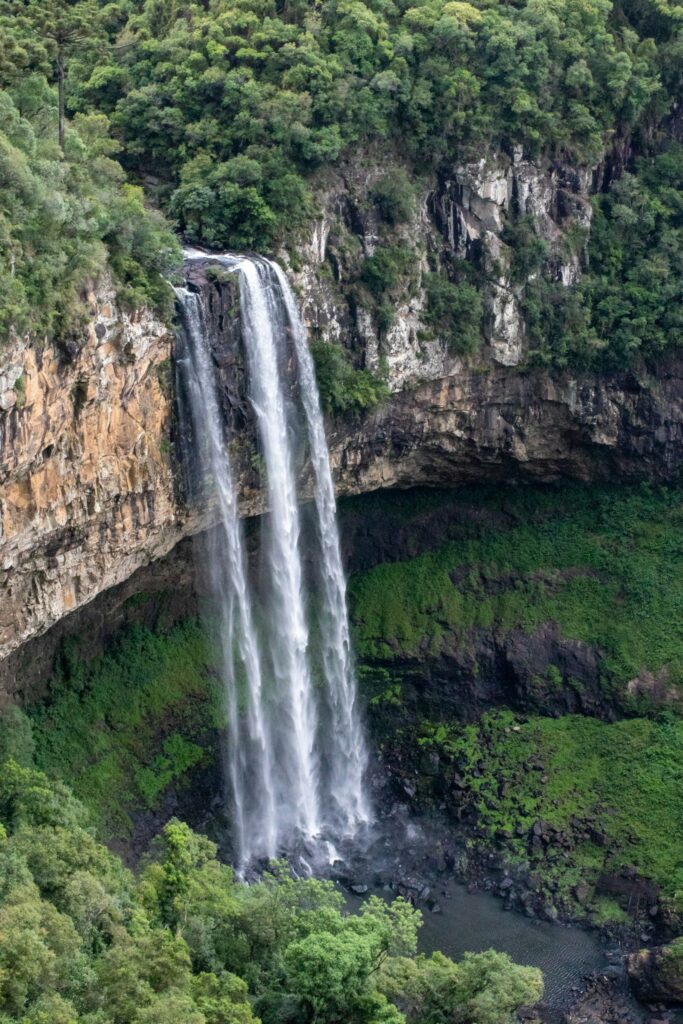
Canela is a Serra Gaúcha town of about 49,000 people (2022 census), at roughly 837 m above sea level and some 123 km by paved road from Porto Alegre. Its name comes from Campestre Canella, after the caneleira trees whose shade sheltered cattle drovers on the old routes across the highland. An urban nucleus formed in 1903, the railway from Taquara arrived in the 1920s and the town grew as a summer retreat, with hotels and even a casino in the 1940s, before becoming a municipality in 1945. Where Gramado is urban and polished, Canela's appeal is its landscape and a handful of strong sights: the Catedral de Pedra, a neo-Gothic stone church with a 65 m tower in the town centre; the Parque do Caracol, where the Arroio Caracol drops 131 m in free fall over basalt cliffs; and the deep Vale da Ferradura, where the Rio Caí bends in a horseshoe below viewpoints and the Skyglass platform. For agencies, Canela works either as a base in its own right or as a half-day or full-day add-on from Gramado, about 6 km away. It suits families, senior groups and FIT couples, with soft adventure and viewpoints rather than long hikes: the Caracol park offers a lift to a 27 m viewing platform and a 927-step staircase to the base of the falls for fitter clients, while the Ferradura trails involve steep descents. Heritage and themed stops such as the Castelinho Caracol and Mundo a Vapor round out a day. Honest logistics: most clients arrive through Porto Alegre, around 2 hours away, or Caxias do Sul, whose airport is often affected by fog; the local Canela airfield has no scheduled flights. Winter brings cold, damp days and occasional snow, which itself draws visitors. Canela also stages its own Christmas program, Sonho de Natal.
Aeroporto Internacional Salgado Filho, Porto Alegre
Rio Grande do Sul's main airport, with a 3,200 m runway and domestic and regional international flights; closed by the May 2024 floods, it resumed full operations on 16 December 2024. Direct buses run from the airport to the Serra Gaúcha.
Aeroporto Regional Hugo Cantergiani, Caxias do Sul
Regional airport with scheduled flights to São Paulo and Campinas, and to Rio de Janeiro-Galeão; it is prone to closures from fog and bad weather, so it works best as a secondary option.
Aeroporto de Canela
Regional airfield with a 1,260 m asphalt runway, operated by Infraero since 2024; it had no scheduled flights at the time of writing, so it is relevant only for private and charter aircraft.
How Canela came to be
Sourced milestones your team can use for guest briefings and storytelling, not filler copy.
Curiosities & practical notes
What's on the table
Cuca
A German-origin cake that is half bread, half cake, with a crumbly topping and fillings such as grape, banana or doce de leite.
Apfelstrudel
Thin pastry rolled around apple, cinnamon and raisins, served with tea or ice cream.
Pinhão
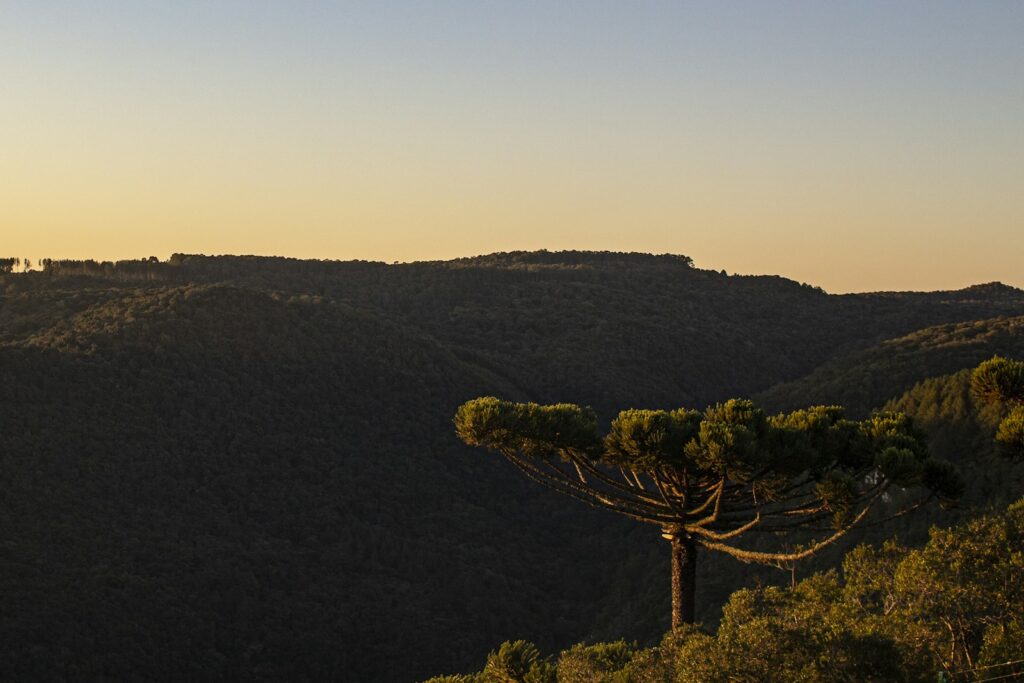
The seed of the araucaria pine, eaten from May to August, boiled in salted water or roasted on a cast-iron plate.
Entrevero de pinhão
A hearty highland sauté that combines pinhão with meats and vegetables.
Café colonial
The colonists' afternoon spread of breads, cakes, cucas, jams, cheese, salami and fried polenta.
Fondue
Cheese, meat and chocolate courses served on cold evenings across the Serra Gaúcha.
What there is to see
Marked where a site carries UNESCO World Heritage status directly, versus a locally or nationally protected landmark.
Catedral de Pedra (Igreja Matriz de Nossa Senhora de Lourdes)
A neo-Gothic stone church built from 1953 to 1987 in the town centre, with a 65 m tower and a 12-bell carillon.
Parque do Caracol and Cascata do Caracol
A park created in 1973 about 7 km from the centre, around a 131 m waterfall, with a viewing platform, lift and staircase to the base.
Parque da Ferradura
A park about 13 km from the centre with viewpoints over the horseshoe bend of the Rio Caí canyon.
Skyglass Canela
A 35 m glass platform suspended about 360 m above the Vale da Ferradura, opened in 2021.
Castelinho Caracol
A wooden family residence of 1913 to 1915 on the Estrada do Caracol, now a museum with period furniture.
Mundo a Vapor
A park of steam-powered machines and industrial miniatures, famous for its Montparnasse train accident recreation.
What else we brief agencies on
This is what we prepare for every RFP, whether or not it's published on this page yet:
On request for every proposal
- Best season / weather windows and blackout dates for groups & MICE
- Permit and quota logistics for regulated attractions, lead time and group-size caps
- Accessibility notes and physical-difficulty ratings per activity
- Vetted ground partners, guides and transport already used on past programs
- Sustainability / certification credentials relevant to client RFPs, where they genuinely exist
- Real, checked room and vehicle availability for your travel dates, not a generic quote
