
Angra dos Reis
All of Brazil, within reach.

Blue and white quarters with the state coat of arms at the centre, showing an eagle above the Dedo de Deus peak of the Serra dos Órgãos, framed by sugarcane and coffee branches that recall the agricultural economy. Rooted in a 19th-century provincial standard, it was formalised by State Law 5,588 of 1965.
Angra dos Reis in pictures
About Angra dos Reis
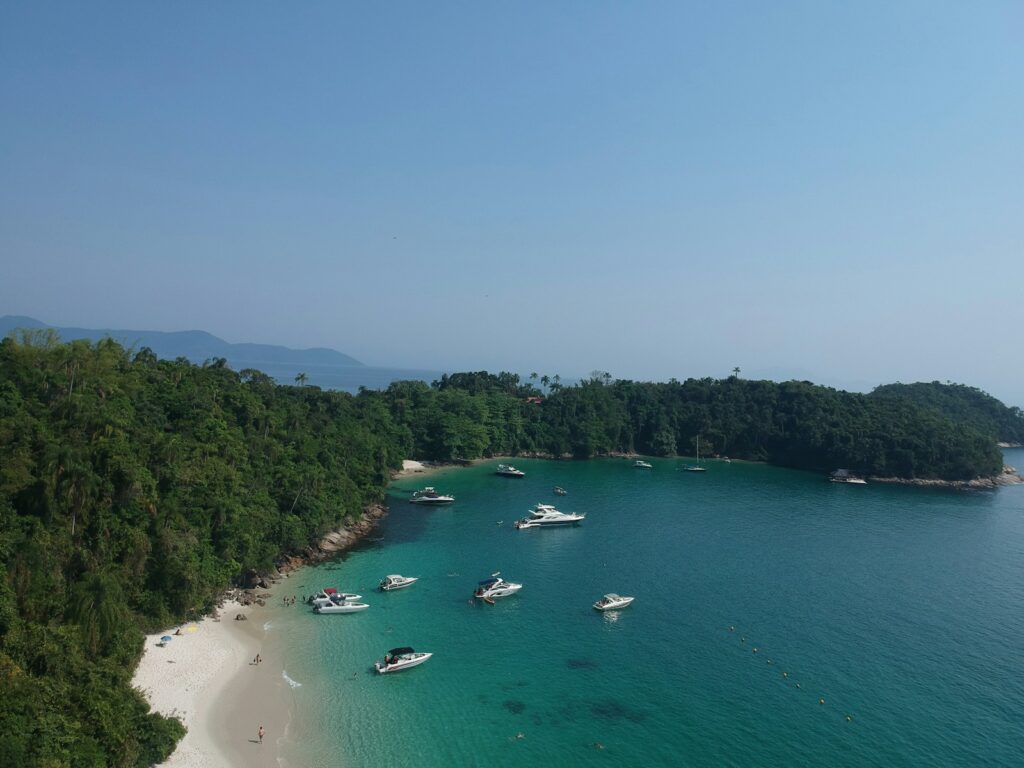
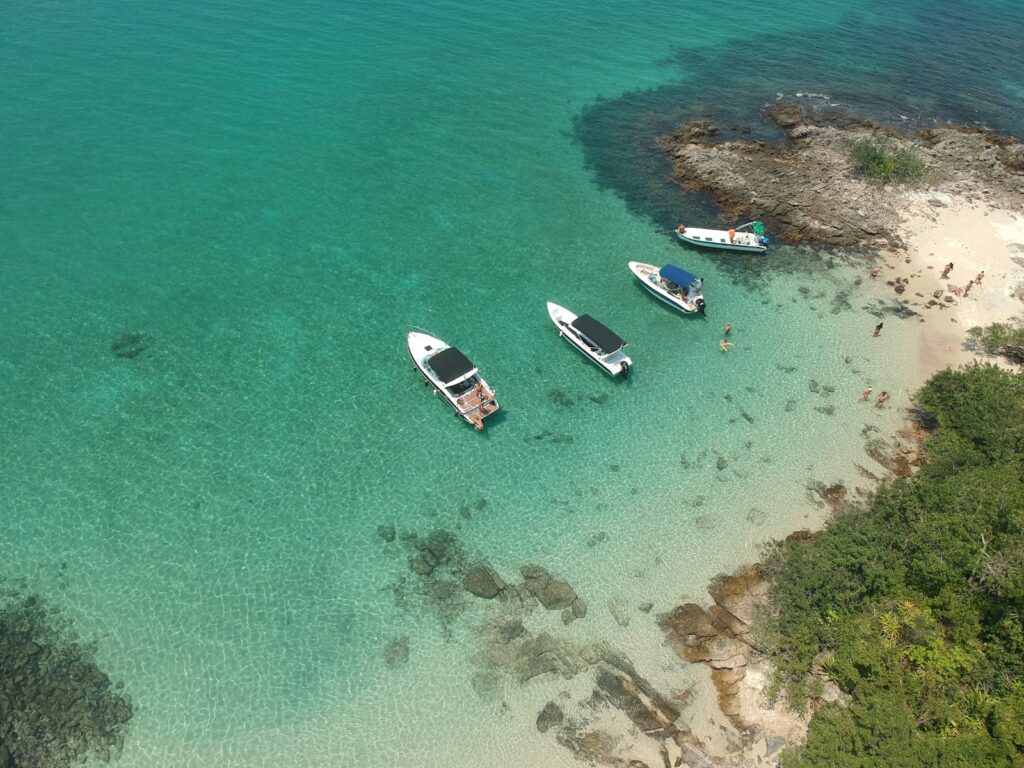
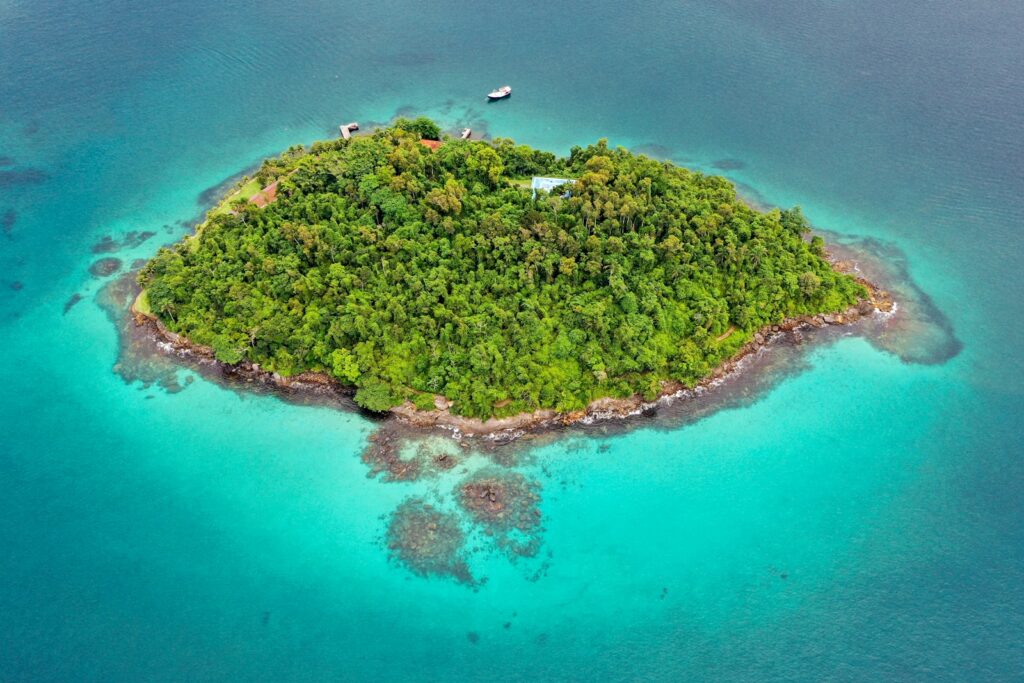
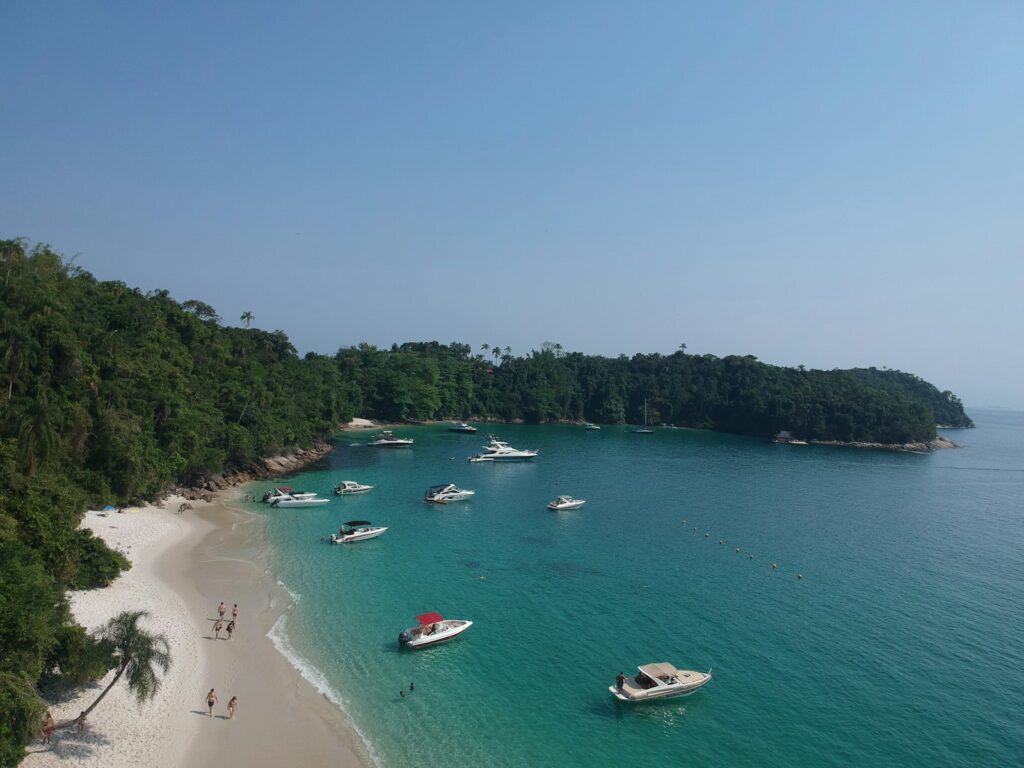
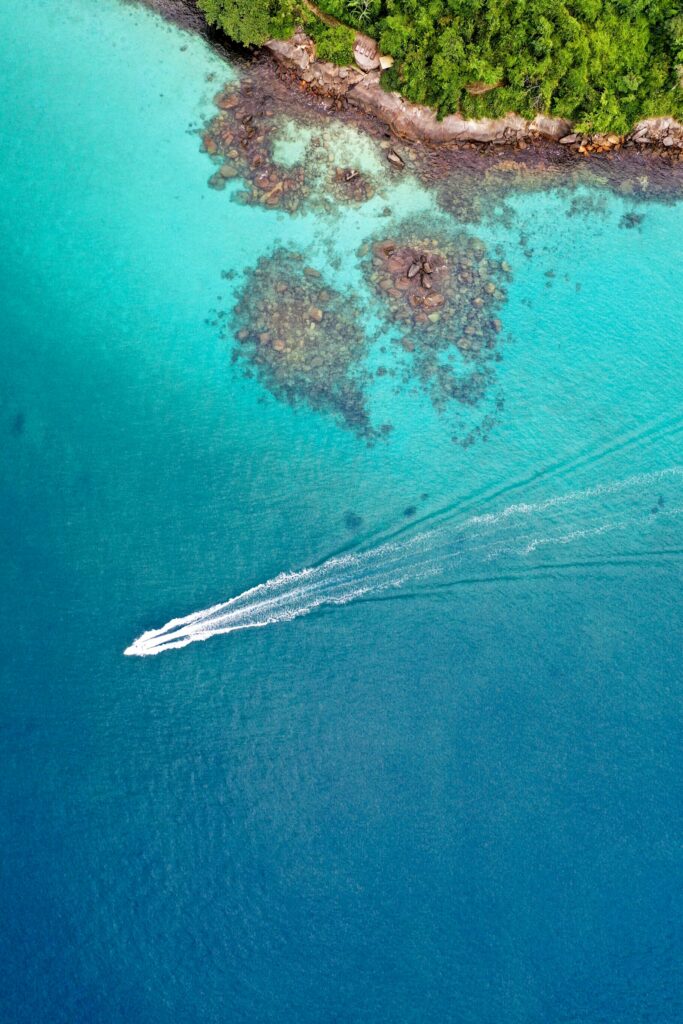
Angra dos Reis is a port and resort municipality on the Costa Verde, the green coast of southern Rio de Janeiro state, with 167,434 inhabitants in the 2022 census and 816 km² of mainland and islands. Its waters hold hundreds of islands (local counts put the number at 365), scattered across the Baía da Ilha Grande beneath the forested Serra do Mar. The name recalls 6 January 1502, the Day of Kings, when a Portuguese fleet reached the bay; permanent settlement began in 1556 and the town became a vila in 1608 and a city in 1835. Its colonial core still has the Carmelite convent and church facing the sea and, on the hill above, the Franciscan convent of São Bernardino de Sena, both protected by IPHAN. Modern Angra is also an industrial town, home to Brazil's only nuclear power plants at Itaorna, a shipyard and an oil terminal, while tourism centres on marinas, island resorts and schooner and speedboat tours. The municipality also includes Ilha Grande, the island across the bay usually sold as a separate stay. For agencies, Angra suits FIT and families looking for resort stays, luxury groups and incentive trips built around private boat days, and MICE programs in beach hotels within road reach of Rio. A classic day on the water combines Ilha da Gipóia, the second largest island in the municipality, with the floating bars of Praia do Dentista and small islands such as Cataguás. Honest logistics: Angra is about 150 km from Rio de Janeiro by the BR-101 Rio-Santos highway, so clients land at Galeão or Santos Dumont and transfer by road, with traffic leaving Rio adding time. Boats leave from the Santa Luzia pier and from hotel and marina jetties. Summers are hot and wet, and heavy rains have caused deadly landslides in the region, notably in 2002 and 2010, so wet season programs need weather buffers. Ilha Grande is the natural add-on for one to three nights.
Aeroporto Internacional do Rio de Janeiro/Galeão, Antonio Carlos Jobim
Rio's main international gateway, with runways of 4,000 m and 3,180 m and the widest choice of long-haul and domestic flights.
Aeroporto Santos Dumont, Rio de Janeiro
Domestic airport next to Rio's financial centre, with an annual passenger cap and night closure from 23:00 to 06:00; convenient for connections from other Brazilian cities.
How Angra dos Reis came to be
Sourced milestones your team can use for guest briefings and storytelling, not filler copy.
Curiosities & practical notes
What's on the table
Azul-marinho
A caiçara stew of fish and green banana, cooked in an iron pot whose reaction with the banana tannins turns the broth blue-grey; served with rice and pirão.
Moqueca de peixe
Fish stewed with tomato, onion, peppers and coconut milk, a staple of Angra's seafood restaurants.
Caldeirada de frutos do mar
A generous seafood stew of fish, shrimp, squid and shellfish in a seasoned broth.
Bobó de camarão
Shrimp in a creamy sauce of cassava purée and coconut milk.
Lula recheada
Whole squid stuffed with a savoury filling, found on the menus of local seafood restaurants.
Mexilhões ao vinagrete
Mussels served cold with a tomato, onion and pepper vinaigrette, served as a starter in local seafood bars.
What there is to see
Marked where a site carries UNESCO World Heritage status directly, versus a locally or nationally protected landmark.
Igreja e Convento do Carmo
The Carmelite complex facing the sea near Praça General Osório, begun in 1722 on earlier foundations, with a two-storey cloister and a tiled bell tower.
Convento de São Bernardino de Sena
Ruins of the Franciscan convent of 1758 to 1763 on the Morro de Santo Antônio, with its restored Baroque church.
Igreja Matriz de Nossa Senhora da Conceição
The mother church of the historic centre, part of Angra's group of colonial monuments.
Ilha da Gipóia
The municipality's second largest island, with beaches such as Jurubaíba, Praia do Norte and Praia da Fazenda, reached by boat in about 35 minutes.
Praia do Dentista (Jurubaíba)
A sheltered cove on Ilha da Gipóia and one of the bay's most popular anchorages, with floating bars.
Cais de Santa Luzia
The central pier where schooners and speedboats depart for island tours of the bay.
Tamoios Environmental Protection Area
A protected area created in 1982 that covers islands and coastal stretches of the Angra dos Reis bay.
What else we brief agencies on
This is what we prepare for every RFP, whether or not it's published on this page yet:
On request for every proposal
- Best season / weather windows and blackout dates for groups & MICE
- Permit and quota logistics for regulated attractions, lead time and group-size caps
- Accessibility notes and physical-difficulty ratings per activity
- Vetted ground partners, guides and transport already used on past programs
- Sustainability / certification credentials relevant to client RFPs, where they genuinely exist
- Real, checked room and vehicle availability for your travel dates, not a generic quote
