
Belo Horizonte
All of Brazil, within reach.

A white field with a red equilateral triangle bearing the Latin motto 'Libertas quae sera tamen' (freedom, albeit late), taken from the flag proposed by the Inconfidência Mineira conspirators of 1789. It was made official by State Law 2,793 of 1963, and the triangle is traditionally read as a symbol of the Holy Trinity.
Belo Horizonte in pictures
About Belo Horizonte
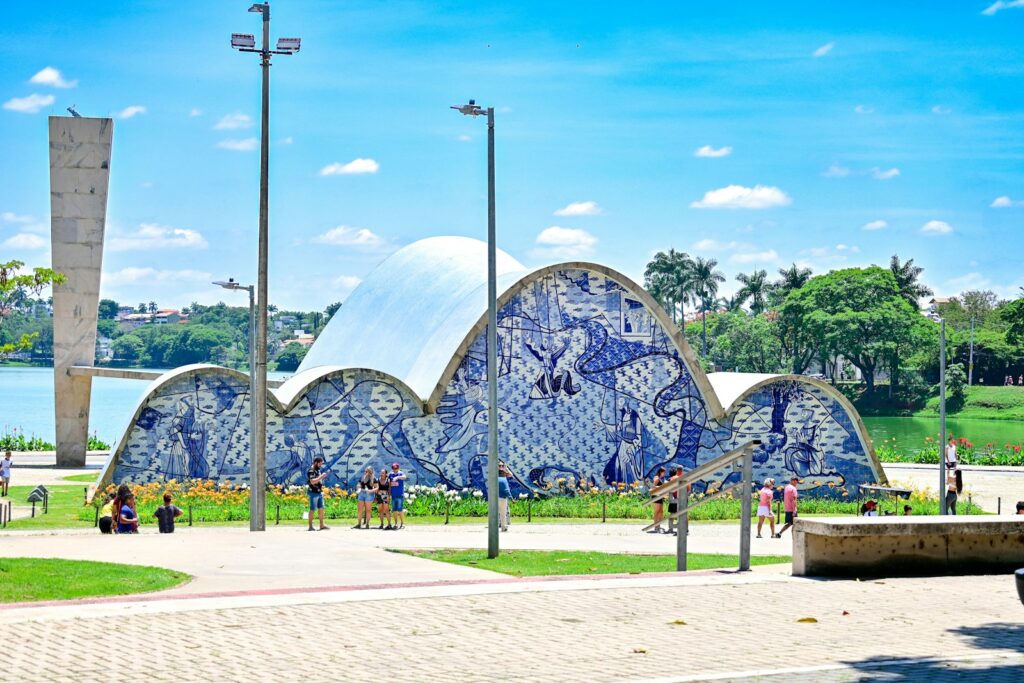
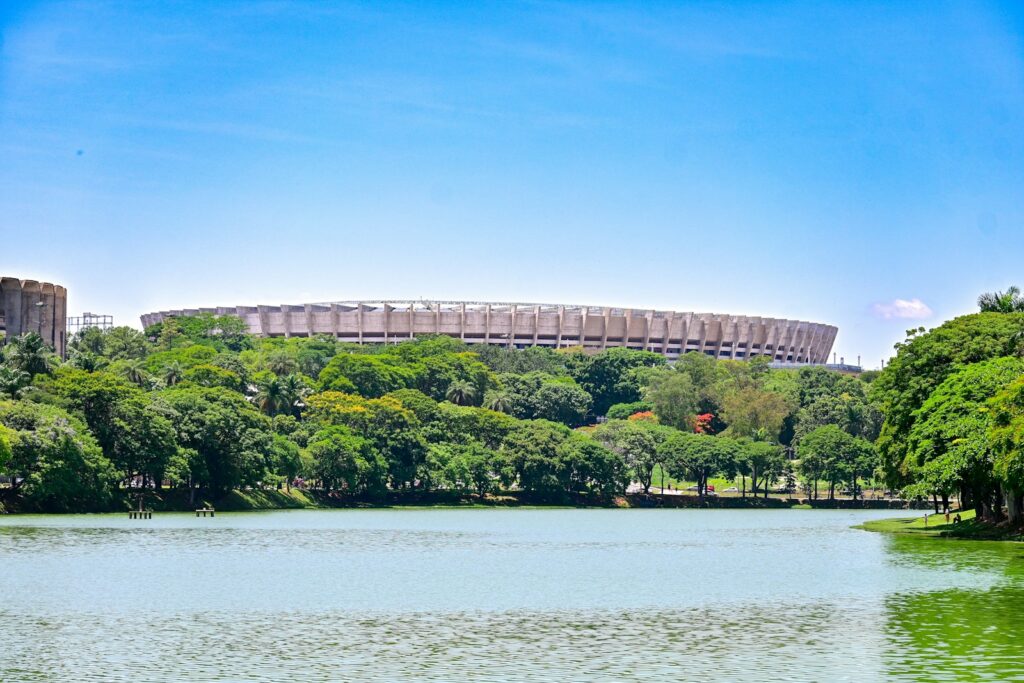
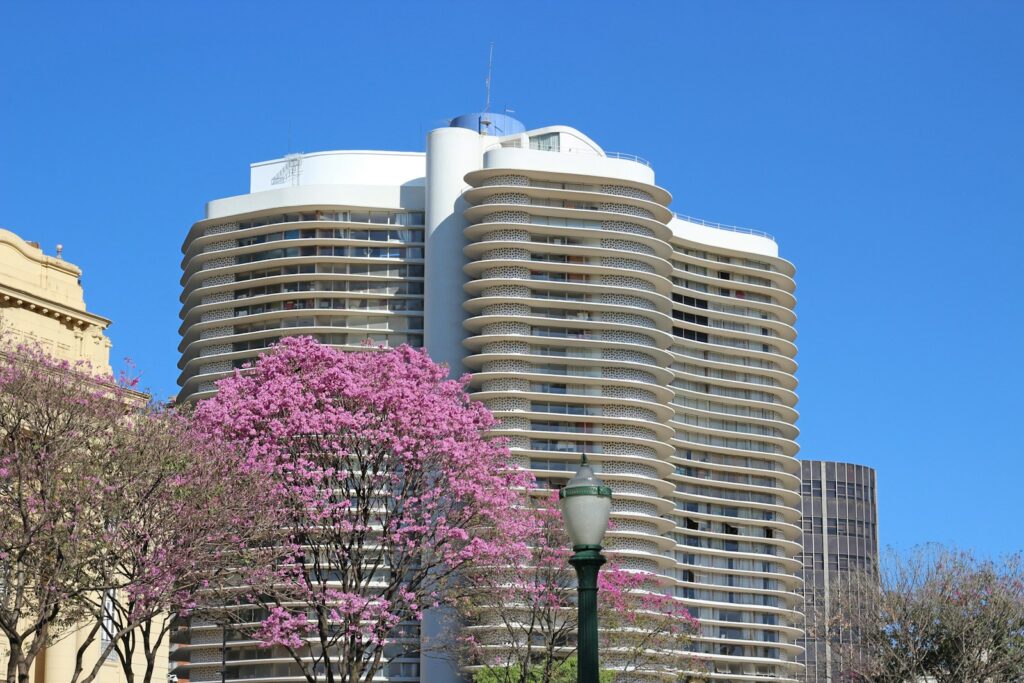
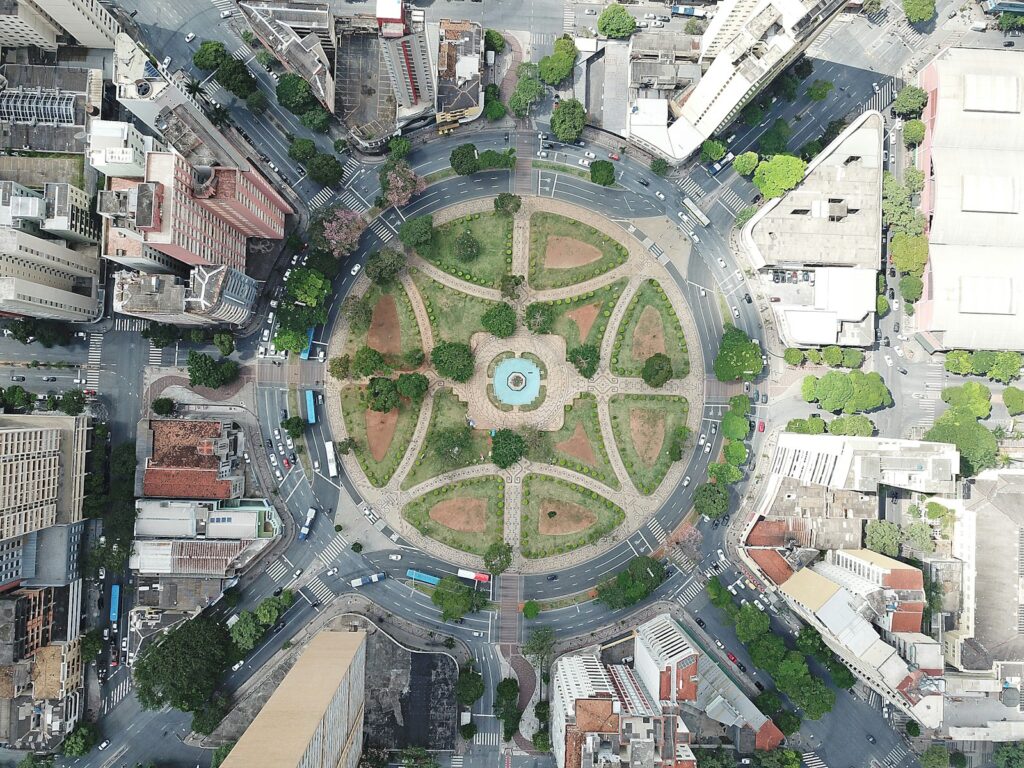
Belo Horizonte, capital of Minas Gerais, was built from scratch to replace Ouro Preto as the seat of government. The engineer Aarão Reis led the commission that planned it on the site of the hamlet of Curral del-Rei, and the new capital was inaugurated on 12 December 1897 under the name Cidade de Minas, later changed to Belo Horizonte. Set at about 850 m against the Serra do Curral, the city counted 2.3 million people in the 2022 census, at the heart of a metropolitan area of more than six million. In the early 1940s the mayor Juscelino Kubitschek commissioned the young Oscar Niemeyer to design a leisure district around the Pampulha lake: a casino, a ballroom, a yacht club and the Church of São Francisco de Assis, with gardens by Roberto Burle Marx and murals by Cândido Portinari. The Pampulha Modern Ensemble was inscribed on the UNESCO World Heritage List in 2016. Downtown, the Praça da Liberdade cultural circuit groups museums in former government buildings, the Mercado Central has traded since 1929, and the city's neighbourhood bars earned it the nickname of Brazil's bar capital and, in 2019, a place in the UNESCO Creative Cities Network for gastronomy. For agencies, Belo Horizonte is the arrival hub for Minas Gerais and a destination in its own right for modern architecture, art and food programs. It suits FIT city stays, gastronomy-led groups, football fans visiting the Mineirão, and MICE groups, and it is the natural base for pre and post nights around the historic towns of Minas, which have their own pages. The contemporary art park of Inhotim, in Brumadinho about 60 km away, is the classic full-day extension. Logistics are straightforward: most flights use Confins, 44 km north of downtown, so transfer time must be built into arrival days, while the city airport of Pampulha handles only small regional aircraft. The climate is mild at altitude, with an average of about 22°C, rainy summers and dry winters; the Palácio da Liberdade opens to visitors only on the last Sunday of each month.
Belo Horizonte/Confins-Tancredo Neves International Airport
The main gateway to Minas Gerais, opened in 1984 and run by the BH Airport concession since 2014, with a 3,600 m runway, domestic hubs and international routes to Portugal, Argentina, Chile, Uruguay, Colombia and the United States; it handled about 13.3 million passengers in 2025.
Belo Horizonte/Pampulha-Carlos Drummond de Andrade Airport
The city airport, operated by Infraero and restricted since 2005 to small regional aircraft, with limited scheduled service mainly within Minas Gerais.
How Belo Horizonte came to be
Sourced milestones your team can use for guest briefings and storytelling, not filler copy.
Curiosities & practical notes
What's on the table
Pão de queijo
Small, soft cheese rolls made with cassava starch, eggs, milk and Minas cheese, found everywhere from bakeries to bars.
Fígado com jiló
Sautéed liver with onions and jiló, a small bitter fruit of the eggplant family, the classic bar snack of the Mercado Central.
Feijão tropeiro
Beans mixed with cassava flour and other ingredients, a Minas classic named after the tropeiros, the muleteers of colonial times.
Queijo minas artesanal
Raw-milk artisanal cheese from 106 municipalities of Minas Gerais, whose traditional ways of making were inscribed by UNESCO in December 2024.
Cachaça
Brazil's sugarcane spirit, sold by the bottle in the Mercado Central and an easy theme for tastings in the city's bars.
What there is to see
Marked where a site carries UNESCO World Heritage status directly, versus a locally or nationally protected landmark.
Igreja de São Francisco de Assis, Pampulha
Niemeyer's curved-vault church on the lake, inaugurated in 1943, with tile panels and Stations of the Cross by Cândido Portinari.
Museu de Arte da Pampulha
Niemeyer's former casino on the lake, an art museum since 1957, set in gardens by Roberto Burle Marx.
Casa do Baile
The former Pampulha ballroom by Niemeyer, now a centre of reference for urbanism, architecture and design.
Mercado Central
A covered market open since 1929 and run by a traders' cooperative since 1964, with more than 400 shops and busy bars.
Circuito Liberdade
Museums and cultural centres in former government buildings around Praça da Liberdade, including the Memorial Minas Gerais, the Museu das Minas e do Metal and the Palácio da Liberdade.
Museu de Artes e Ofícios
A museum of Brazilian work and trades in the former Central Station on Praça da Estação, opened in 2005.
Mineirão
The Estádio Governador Magalhães Pinto in Pampulha, opened in 1965, with a capacity of about 66,000.
What else we brief agencies on
This is what we prepare for every RFP, whether or not it's published on this page yet:
On request for every proposal
- Best season / weather windows and blackout dates for groups & MICE
- Permit and quota logistics for regulated attractions, lead time and group-size caps
- Accessibility notes and physical-difficulty ratings per activity
- Vetted ground partners, guides and transport already used on past programs
- Sustainability / certification credentials relevant to client RFPs, where they genuinely exist
- Real, checked room and vehicle availability for your travel dates, not a generic quote
