
Ilha Grande
All of Brazil, within reach.

Blue and white quarters with the state coat of arms at the centre, showing an eagle above the Dedo de Deus peak of the Serra dos Órgãos, framed by sugarcane and coffee branches that recall the agricultural economy. Rooted in a 19th-century provincial standard, it was formalised by State Law 5,588 of 1965.
Ilha Grande in pictures
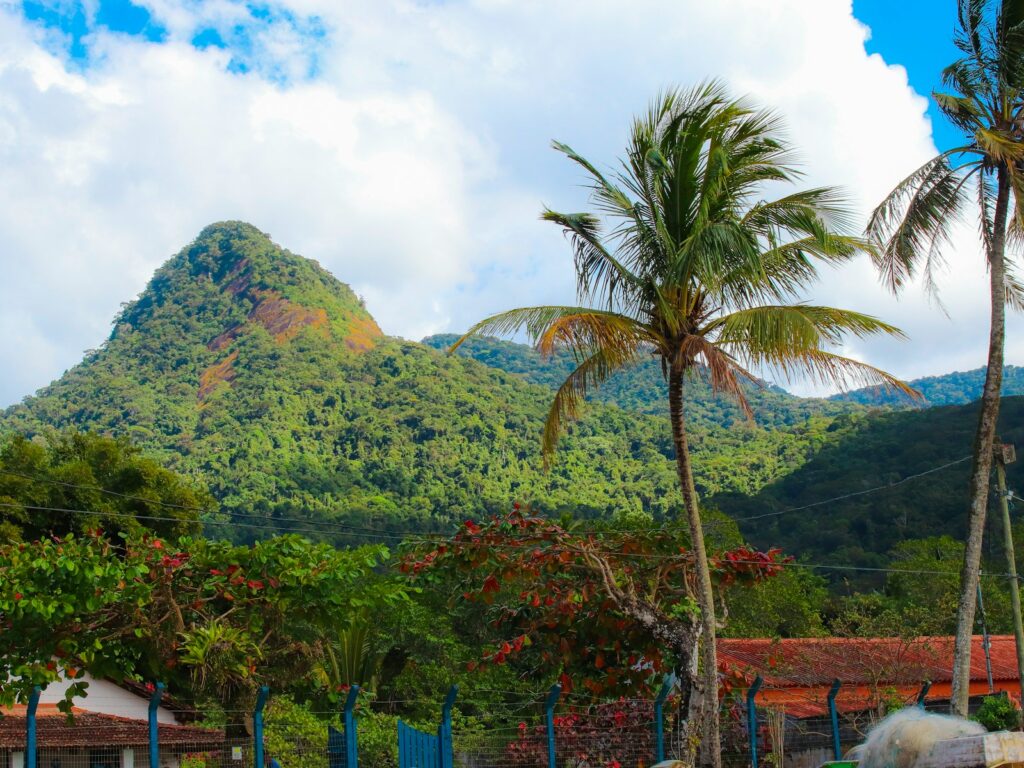
About Ilha Grande
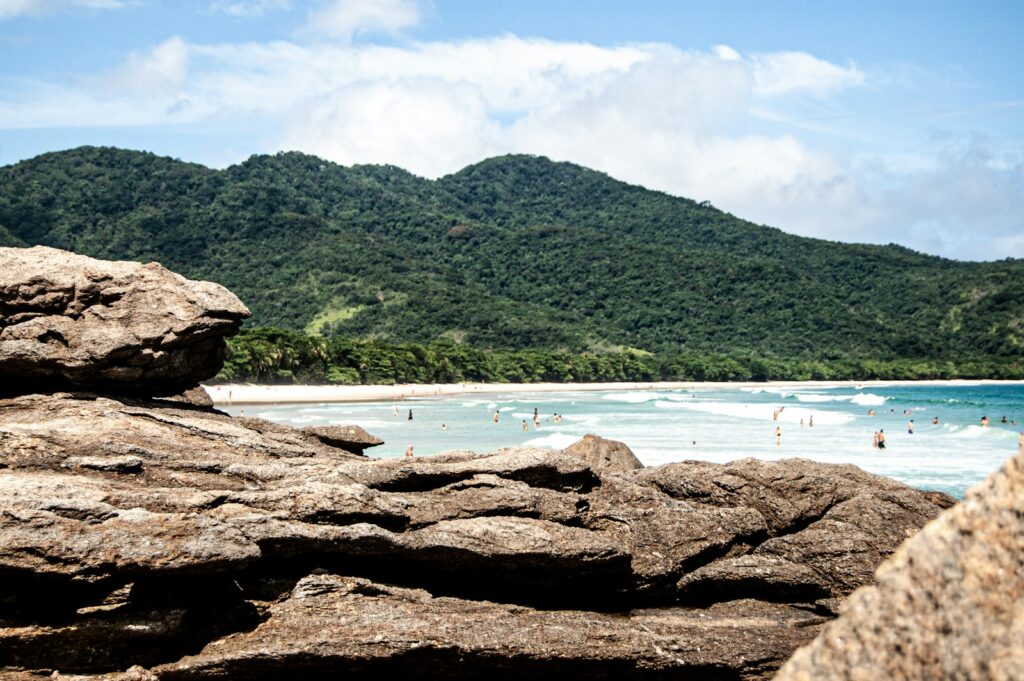
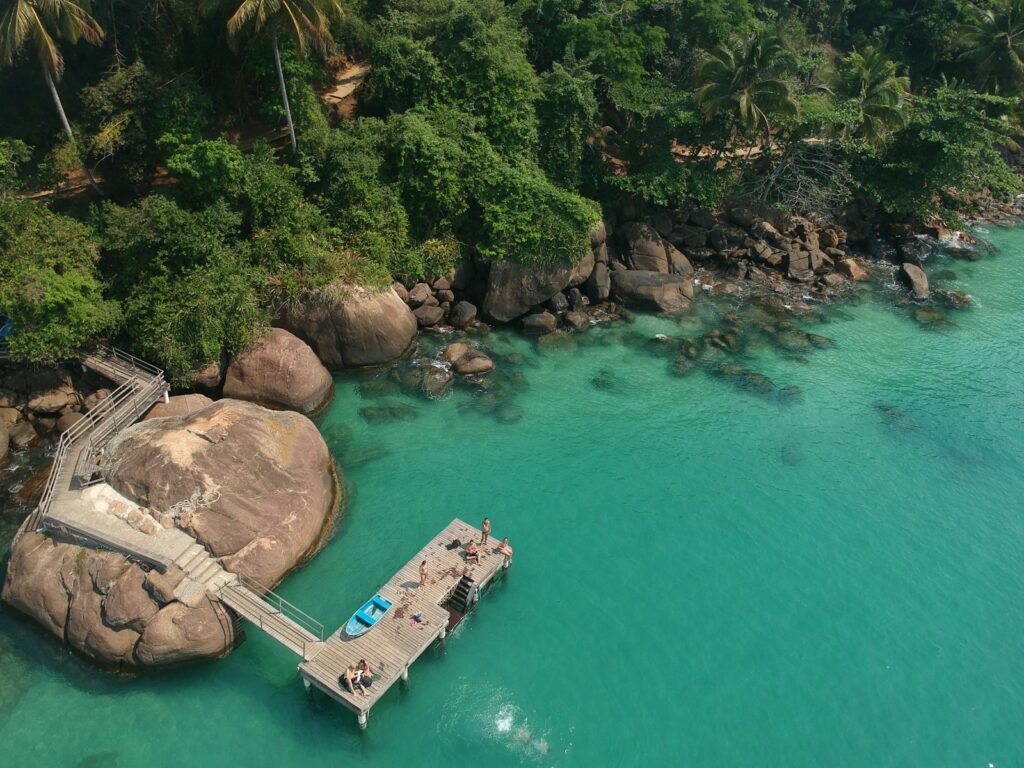
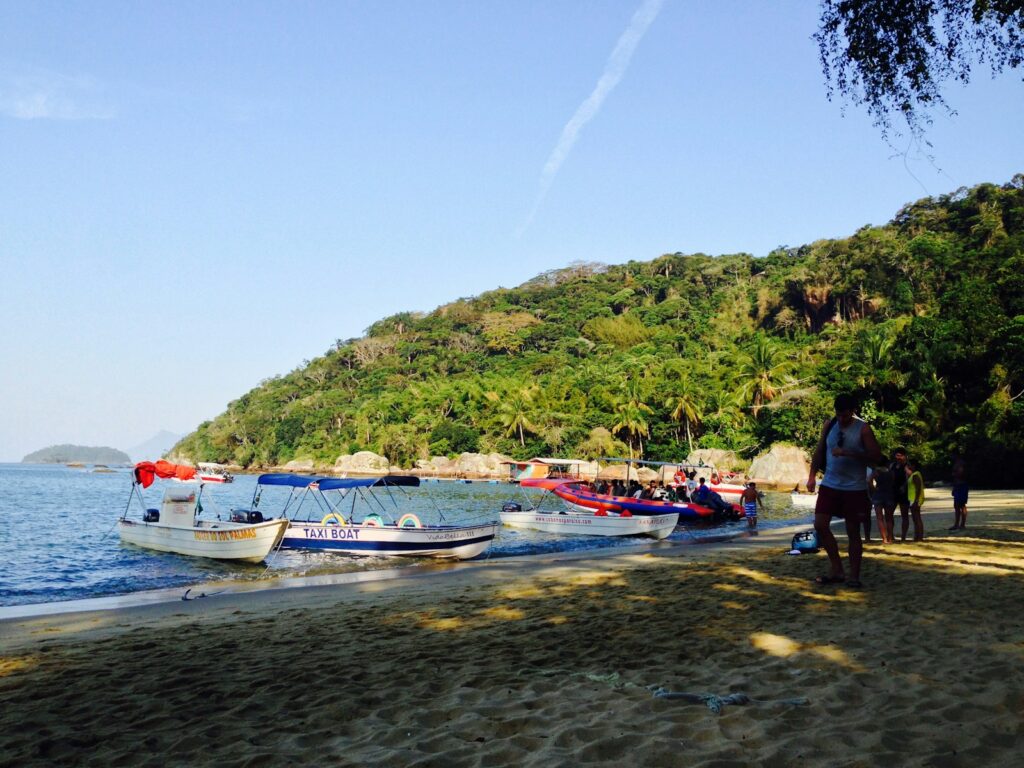
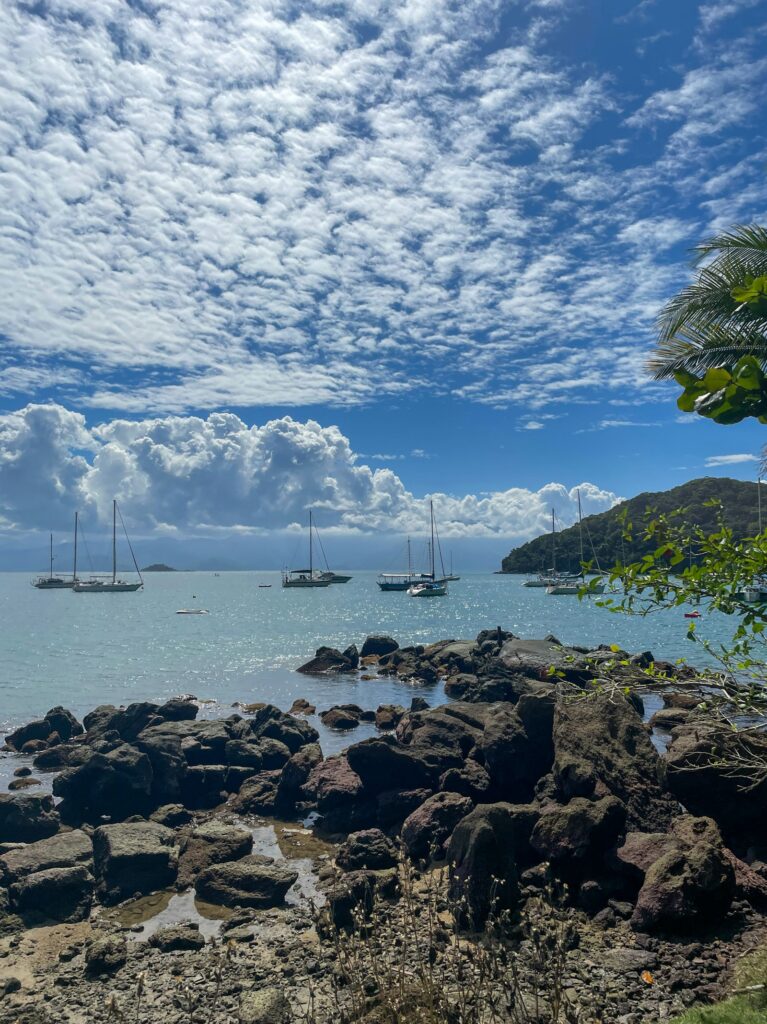
Ilha Grande is a mountainous island of 193 km² in the bay of the same name, part of the municipality of Angra dos Reis and the largest island of Rio de Janeiro state. Covered in Atlantic Forest and rising to 1,031 m at the Pico da Pedra d'Água, it has no roads for private cars and is reached only by boat. Some 5,000 people live on the island, most of them in Vila do Abraão, the main village and ferry landing, with smaller communities around its coves. For almost a century the island was largely closed to visitors, first by the imperial quarantine station built at the Lazareto in the 1880s and then by penal colonies at Dois Rios, the last of which was imploded in 1994. That isolation helped preserve its forest: about 87% of the island now lies in protected areas, including Ilha Grande State Park and the Praia do Sul Biological Reserve, both components of the UNESCO World Heritage site Paraty and Ilha Grande, Culture and Biodiversity, inscribed in 2019 as Brazil's first mixed natural and cultural property. For agencies, Ilha Grande suits active FIT travellers, young groups, nature and hiking programs, and couples seeking a rustic island stay, with more than 150 km of trails and boat tours around beaches and snorkelling spots. It works as a two to four night extension from Rio or Paraty, or as an add-on to a resort stay in Angra dos Reis across the bay. Honest logistics: from Rio, clients drive to one of three piers, Conceição de Jacareí (about 135 km), Angra dos Reis (about 150 km) or Mangaratiba (about 100 km), then cross by fast boat in 15 to 30 minutes or by ferry in about 1 hour 10 to 1 hour 30. Cars stay in paid parking on the mainland, so luggage should be light and porters arranged in Abraão. Accommodation is dominated by pousadas rather than large hotels, which limits big groups and MICE. Trails such as the walk to Lopes Mendes take about 2 hours each way and some are steep, and sea crossings can be rough in bad weather.
Aeroporto Internacional do Rio de Janeiro/Galeão, Antonio Carlos Jobim
Rio's main international gateway, with runways of 4,000 m and 3,180 m and the widest choice of long-haul and domestic flights.
Aeroporto Santos Dumont, Rio de Janeiro
Domestic airport next to Rio's financial centre, with an annual passenger cap and night closure from 23:00 to 06:00; convenient for connections from other Brazilian cities.
How Ilha Grande came to be
Sourced milestones your team can use for guest briefings and storytelling, not filler copy.
Curiosities & practical notes
What's on the table
Peixe com banana
Fish cooked with banana, described locally as the island's typical caiçara dish.
Vieiras da Ilha Grande
Scallops farmed in the clean waters off the southern tip of the island and supplied to restaurants in Rio de Janeiro and beyond.
Caldeirada
A seafood stew of fish, shrimp and squid in a tomato broth, often shared at beachfront restaurants.
Moqueca
Fish or seafood stewed with coconut milk, tomato and peppers.
Peixe frito
Fresh fish, often bought directly from local fishermen, simply fried and served at beachfront restaurants.
What there is to see
Marked where a site carries UNESCO World Heritage status directly, versus a locally or nationally protected landmark.
Parque Estadual da Ilha Grande
The state park created in 1971 and expanded in 2007, covering about 62.5% of the island with forest, beaches and historic ruins.
Praia de Lopes Mendes
One of the island's best known beaches, inside the state park, about a 2-hour hike from Abraão.
Aqueduto and Lazareto ruins
Remains of the imperial quarantine station of the 1880s near Abraão, including its aqueduct, inside the state park.
Praia de Dois Rios and the prison ruins
An ocean-side beach inside the state park with the ruins of the former penal colonies; the Museu do Cárcere is in the adjacent Vila Dois Rios.
Reserva Biológica da Praia do Sul
A strict biological reserve created in 1981 on the island's southern coast, where public visitation is restricted, and a component of the UNESCO property.
Vila do Abraão
The island's main village and ferry landing, with most of the pousadas, restaurants and boat operators.
Praia do Aventureiro
A remote beach and traditional community on the ocean side, inside the Aventureiro Sustainable Development Reserve created in 2014.
What else we brief agencies on
This is what we prepare for every RFP, whether or not it's published on this page yet:
On request for every proposal
- Best season / weather windows and blackout dates for groups & MICE
- Permit and quota logistics for regulated attractions, lead time and group-size caps
- Accessibility notes and physical-difficulty ratings per activity
- Vetted ground partners, guides and transport already used on past programs
- Sustainability / certification credentials relevant to client RFPs, where they genuinely exist
- Real, checked room and vehicle availability for your travel dates, not a generic quote
