
Jericoacoara
All of Brazil, within reach.

Adopted in 1922, it echoes the national flag: a green field with a yellow rhombus and a white disc bearing the state arms. The arms show a jangada raft, a carnaúba palm, the Mucuripe lighthouse and a fort, with seven stars for the state's mesoregions and a dove recalling the early abolition of slavery.
Jericoacoara in pictures
About Jericoacoara
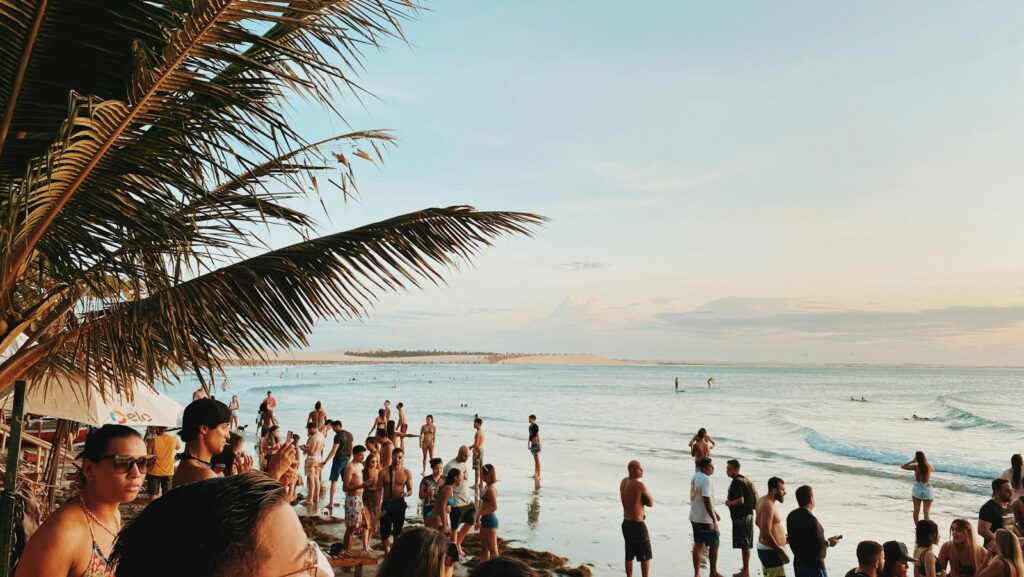
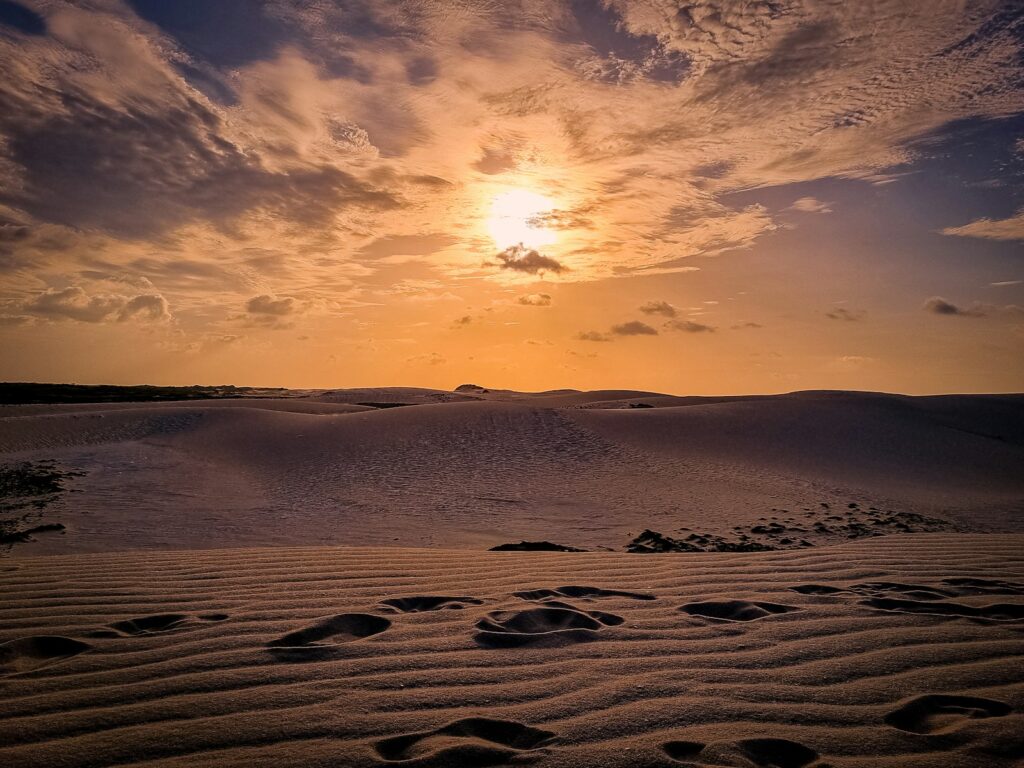
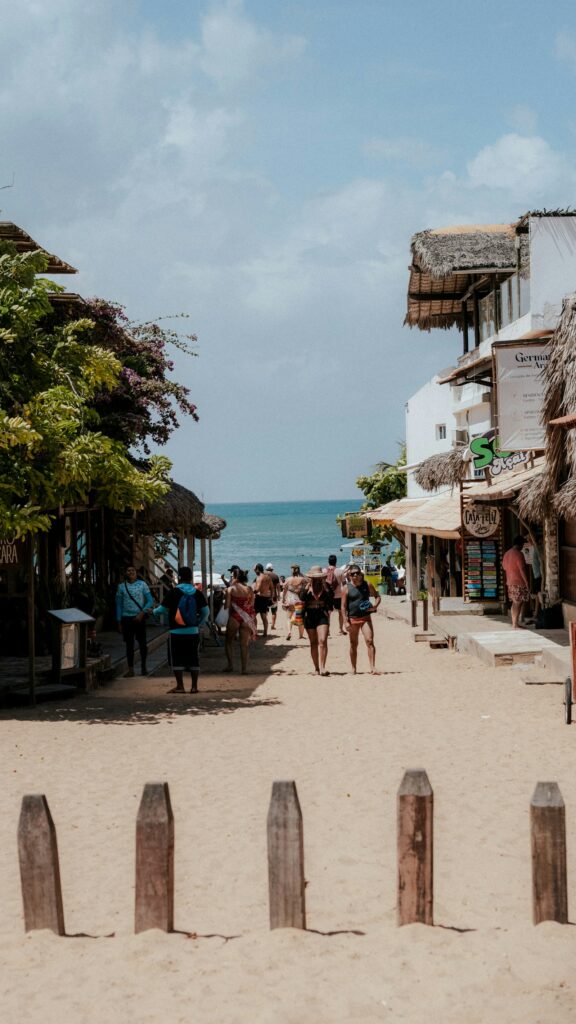
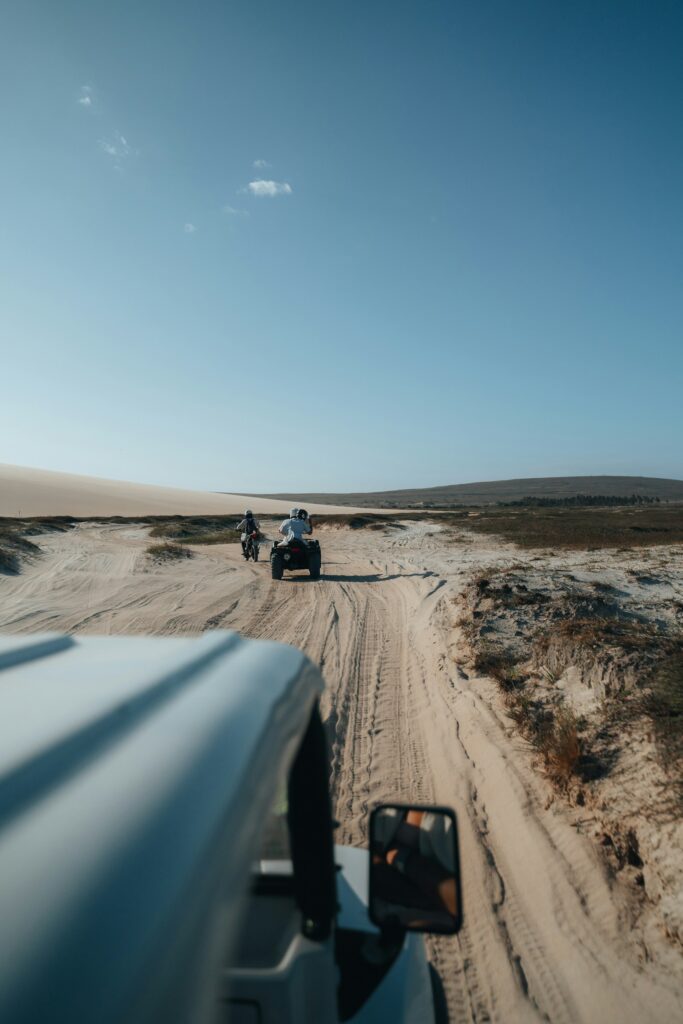
Jericoacoara is a beach village on Ceará's west coast, about 300 km from Fortaleza, set within Jericoacoara National Park. The name comes from Tupi and is usually translated as 'den of turtles'. Until the mid-1980s it was an isolated fishing village; tourism grew from that time, and the dunes were protected as an environmental area in 1984 before becoming a national park in 2002, now covering 8,850 hectares and managed by ICMBio. The landscape is the product: the Duna do Pôr do Sol above the village, the Pedra Furada rock arch, the Serrote headland with its lighthouse, mangroves, and the freshwater lagoons of Lagoa do Paraíso and Lagoa Azul in neighbouring Jijoca. From mid-July to mid-August the setting sun lines up with the opening of the Pedra Furada, one of the most photographed moments on the Ceará coast. In 2024 it was the third most visited national park in Brazil, with more than 1.5 million visits. For agencies, Jericoacoara suits couples and honeymoons, kite and wind-sport programs, relaxed beach stays and multi-day itineraries along the Rota das Emoções to the Parnaíba Delta and the Lençóis Maranhenses. Access has improved with the regional airport at Cruz, about 31 km away, but the last stretch is always over sand, and commercial tourist transport inside the park requires ICMBio authorisation, so transfers should use credentialed 4x4 operators. Every visitor pays a municipal sustainable tourism fee. Rains fall mainly from January to June, peaking in March and April; the kite season runs from about July to November, and the interdune lagoons are usually fullest just after the rains. Most stays work best at three nights or more, combined with Fortaleza at the start or end of the trip, or with the Parnaíba Delta for clients continuing west.
Aeroporto Regional Comandante Ariston Pessoa
Regional airport in Cruz opened in 2017, now operated by Fraport Brasil, with domestic flights recently listed to São Paulo–Guarulhos and Belo Horizonte–Confins; routes change seasonally.
Aeroporto Internacional Pinto Martins
Ceará's main gateway, operated by Fraport Brasil since 2018, with domestic flights across Brazil and direct international links including Lisbon and Paris; frequencies vary by season.
How Jericoacoara came to be
Sourced milestones your team can use for guest briefings and storytelling, not filler copy.
Curiosities & practical notes
What's on the table
Peixada cearense
A fish stew with vegetables, served with pirão, a thick cassava-flour sauce.
Tapioca
A griddled cassava-starch crêpe with sweet or savoury fillings, a staple of village snack stalls.
Baião de dois
Rice and beans cooked together with coalho cheese, the classic Ceará side dish.
Carne de sol com paçoca
Salted, sun-cured beef, fried and pounded with cassava flour.
Rapadura and doce de caju
Sugar-cane and cashew-fruit sweets typical of Ceará.
What there is to see
Marked where a site carries UNESCO World Heritage status directly, versus a locally or nationally protected landmark.
Duna do Pôr do Sol
The large dune beside the village and Praia das Canoas, the classic sunset viewpoint.
Pedra Furada
A natural rock arch on the shore east of the village, the icon of Jericoacoara.
Serrote and Farol de Jericoacoara
A small ridge of about 100 metres topped by the Jericoacoara lighthouse.
Árvore da Preguiça
A strikingly shaped button mangrove (Conocarpus erectus), one of the park's best-known sights.
Lagoa do Paraíso
A large freshwater lagoon in Jijoca de Jericoacoara, one of the region's main day-trip stops.
Lagoa Azul
A freshwater lagoon near Lagoa do Paraíso, often combined with it on the same day.
Mangue Seco
A small settlement among the dunes west of the village.
What else we brief agencies on
This is what we prepare for every RFP, whether or not it's published on this page yet:
On request for every proposal
- Best season / weather windows and blackout dates for groups & MICE
- Permit and quota logistics for regulated attractions, lead time and group-size caps
- Accessibility notes and physical-difficulty ratings per activity
- Vetted ground partners, guides and transport already used on past programs
- Sustainability / certification credentials relevant to client RFPs, where they genuinely exist
- Real, checked room and vehicle availability for your travel dates, not a generic quote
