
Ouro Preto
All of Brazil, within reach.

A white field with a red equilateral triangle bearing the Latin motto 'Libertas quae sera tamen' (freedom, albeit late), taken from the flag proposed by the Inconfidência Mineira conspirators of 1789. It was made official by State Law 2,793 of 1963, and the triangle is traditionally read as a symbol of the Holy Trinity.
Ouro Preto in pictures
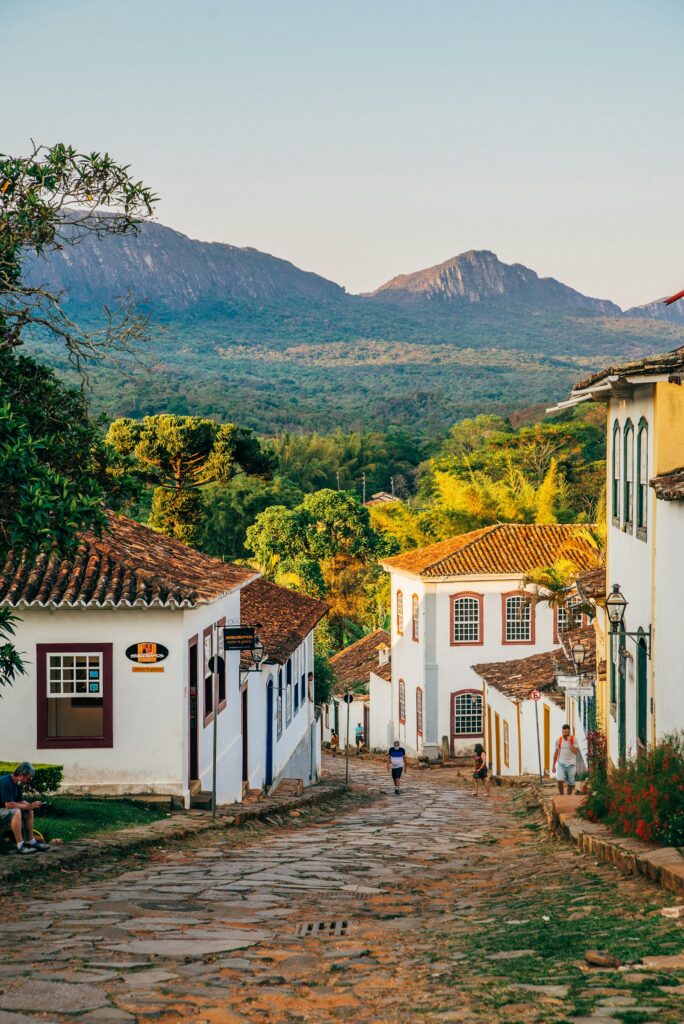
About Ouro Preto
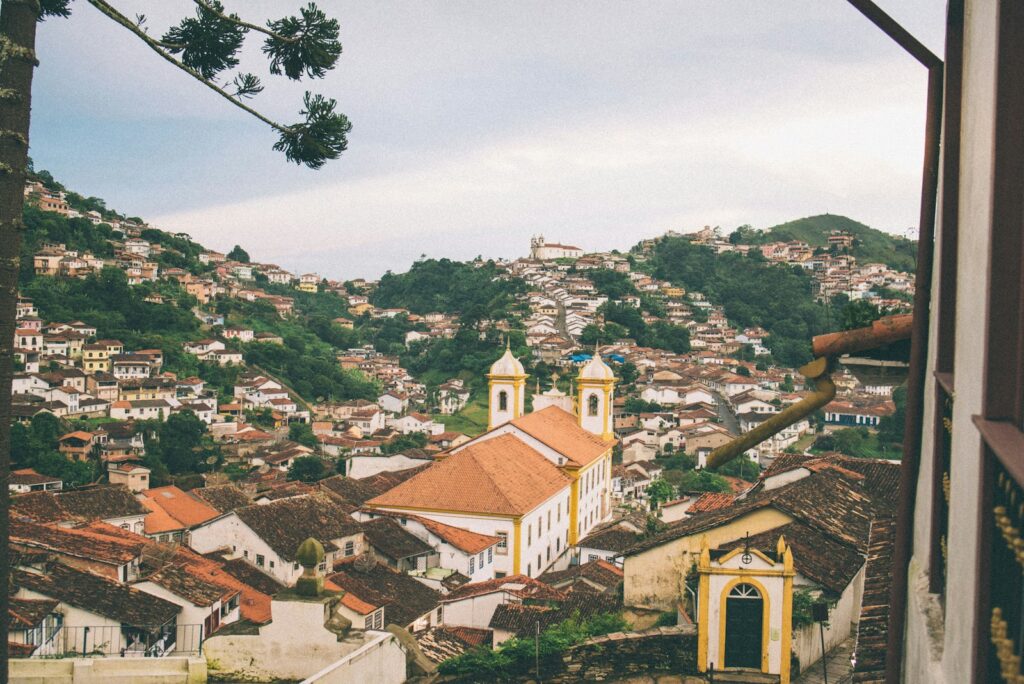
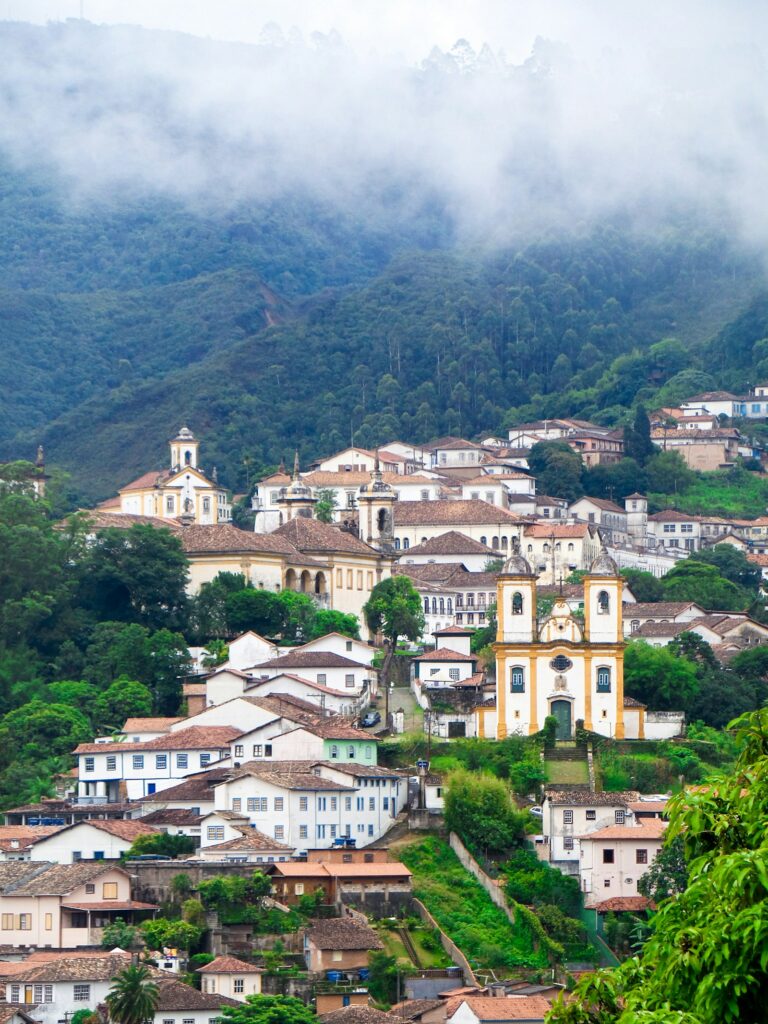
The historic towns of Minas Gerais grew out of the gold rush that made this region the economic heart of colonial Brazil in the 18th century. Ouro Preto, founded in 1711 as Vila Rica, was the captaincy's capital until 1897 and was inscribed by UNESCO in 1980 for its Baroque architecture and the work of the sculptor and architect Aleijadinho, whose Church of São Francisco de Assis, begun in 1765, carries a ceiling painted by Manuel da Costa Ataíde. Mariana, 18 km away, is the oldest settlement in Minas and its first bishopric. Congonhas holds the Sanctuary of Bom Jesus de Matosinhos, a UNESCO site since 1985, with Aleijadinho's twelve soapstone prophets. Further south, São João del-Rei and Tiradentes are linked by a 13 km narrow-gauge heritage railway, part of the Estrada de Ferro Oeste de Minas opened in 1881. The Inconfidência Mineira of 1789, Brazil's best-known colonial independence plot, was hatched here, and its story runs through the museums and squares of the region. For agencies, the circuit suits cultural and art-history programs, heritage-focused FIT and small groups, incentive groups with a gastronomy angle, and religious or festival-driven departures. A classic structure pairs two or three nights in Ouro Preto, with day visits to Mariana and Congonhas, and two nights in Tiradentes with São João del-Rei. Logistics are road-based: the gateway is Belo Horizonte's Confins airport, Ouro Preto lies about 100 km from Belo Horizonte and Tiradentes about 190 km, while Rio de Janeiro is around 340 km from Tiradentes, which makes an overland Rio to Minas routing realistic. Historic centres are steep, cobbled and narrow, so coaches often stop at the edges and clients need good footwear and a reasonable level of mobility. Church and museum opening hours vary, so local guides and pre-checked schedules make a real difference.
Aeroporto Internacional de Belo Horizonte/Confins, Tancredo Neves
Main gateway to Minas Gerais, in Confins, 44 km north of central Belo Horizonte, operated by BH Airport since 2014, with domestic hubs and international routes including Lisbon, Buenos Aires, Santiago and Montevideo.
How Ouro Preto came to be
Sourced milestones your team can use for guest briefings and storytelling, not filler copy.
Curiosities & practical notes
What's on the table
Pão de queijo
Small, soft cheese rolls made with cassava flour, eggs, milk and Minas cheese, naturally gluten-free.
Feijão tropeiro
Beans mixed with cassava flour and other ingredients, a Minas classic named after the tropeiros, the muleteers of colonial times.
Tutu de feijão
Boiled beans sautéed and thickened with cassava or corn flour, with bacon, onion and garlic.
Frango com quiabo
Chicken cooked with okra, one of the most typical home-style dishes of Minas Gerais.
Queijo minas artesanal
Raw-milk artisanal cheese from small family farms, whose traditional making is recognised by UNESCO.
Doce de leite and Romeu e Julieta
Milk caramel and the classic pairing of guava paste with fresh cheese, staples of Minas desserts.
What there is to see
Marked where a site carries UNESCO World Heritage status directly, versus a locally or nationally protected landmark.
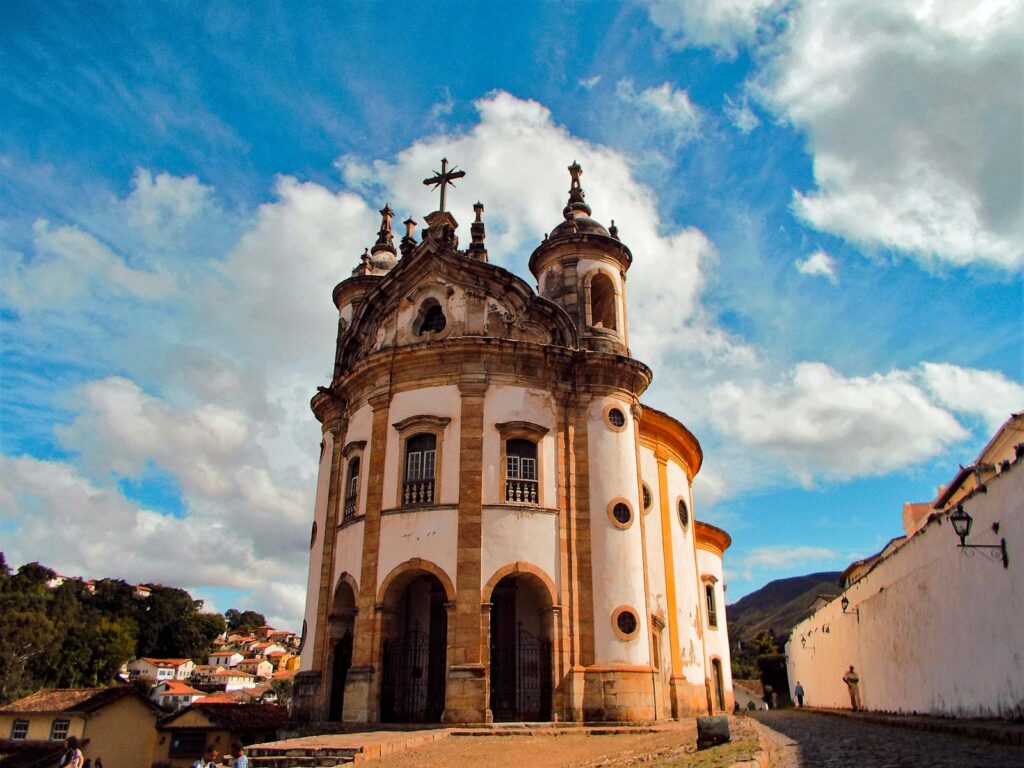
Igreja de São Francisco de Assis, Ouro Preto
Begun in 1765, designed and carved by Aleijadinho, with a soapstone façade and a ceiling painted by Manuel da Costa Ataíde.
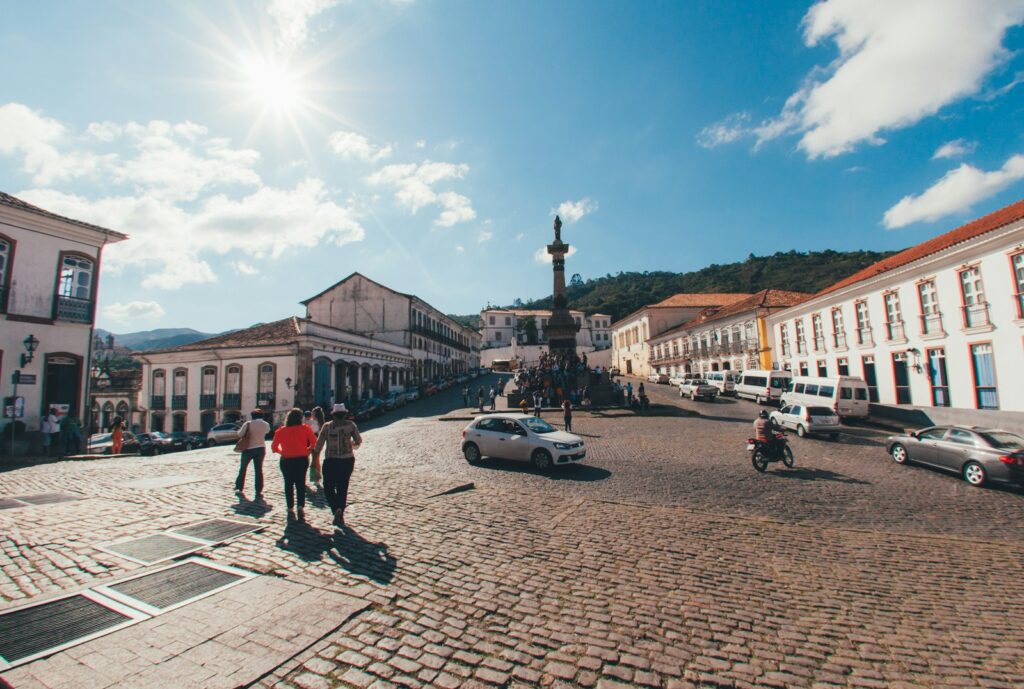
Praça Tiradentes and Museu da Inconfidência
Ouro Preto's main square, where the 1780s town hall and jail, now the Inconfidência museum, faces the heart of the historic town.
Santuário do Bom Jesus de Matosinhos, Congonhas
Pilgrimage church completed in 1775, with Aleijadinho's twelve soapstone prophets and 66 carved figures of the Passion in seven chapels.
Mariana historic centre
The first town of Minas Gerais and seat of its first bishopric in 1748, with colonial churches and squares 18 km from Ouro Preto.
Mina da Passagem
A historic gold mine in Mariana with around 30 km of tunnels and underground lakes, open to visitors since the 1970s.
Tiradentes historic centre
A small, well-preserved colonial town founded as a village in 1702, with cobbled streets, the Matriz de Santo Antônio and the Chafariz de São José.
São João del-Rei churches
Among them São Francisco de Assis (1774), Nossa Senhora do Carmo (1733) and the Pilar cathedral, in a centre listed nationally in 1938.
Maria Fumaça heritage railway
The 13 km steam-train ride on the 762 mm gauge line between São João del-Rei station and Tiradentes.
What else we brief agencies on
This is what we prepare for every RFP, whether or not it's published on this page yet:
On request for every proposal
- Best season / weather windows and blackout dates for groups & MICE
- Permit and quota logistics for regulated attractions, lead time and group-size caps
- Accessibility notes and physical-difficulty ratings per activity
- Vetted ground partners, guides and transport already used on past programs
- Sustainability / certification credentials relevant to client RFPs, where they genuinely exist
- Real, checked room and vehicle availability for your travel dates, not a generic quote
