
Vitória
All of Brazil, within reach.

Three equal horizontal stripes of blue, white and pink, with the motto "Trabalha e Confia" (Work and Trust) in the centre. The colours evoke the garments of Nossa Senhora da Vitória; designed in 1908 under governor Jerônimo Monteiro and made official in 1947.
Vitória in pictures
About Vitória
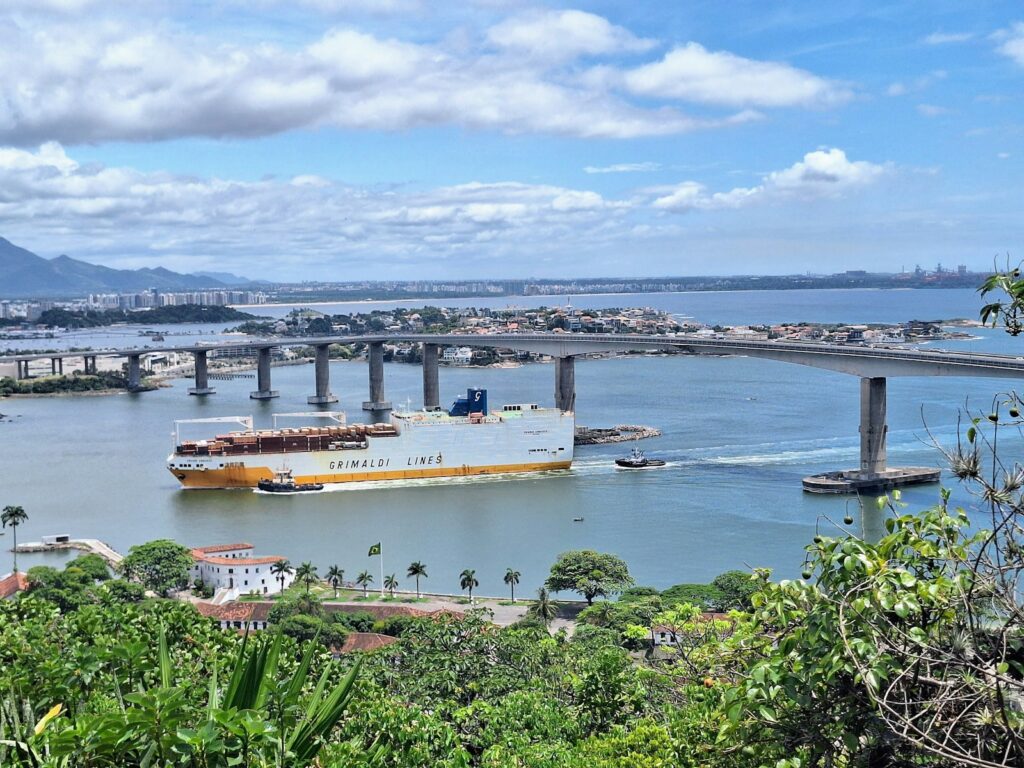
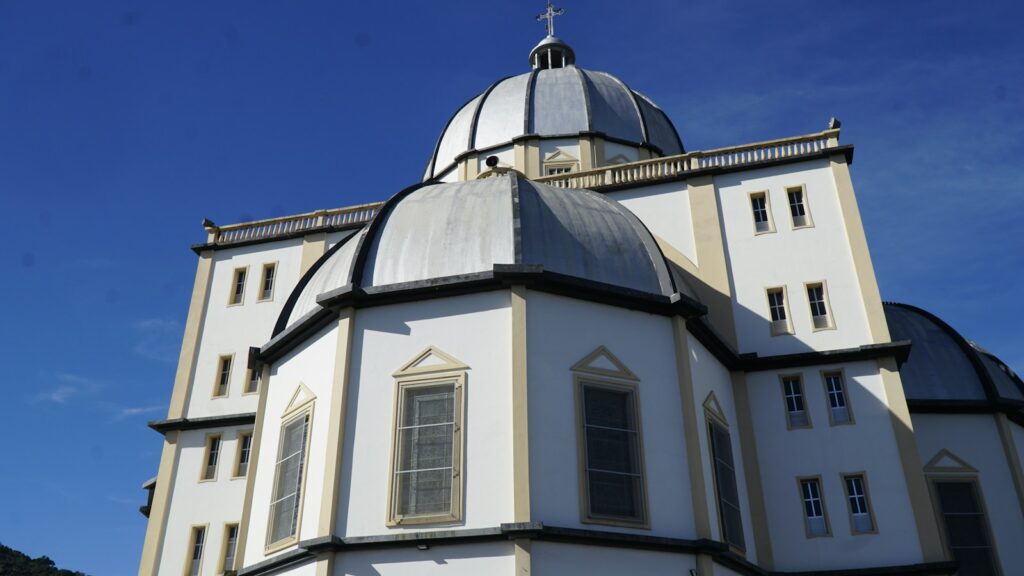
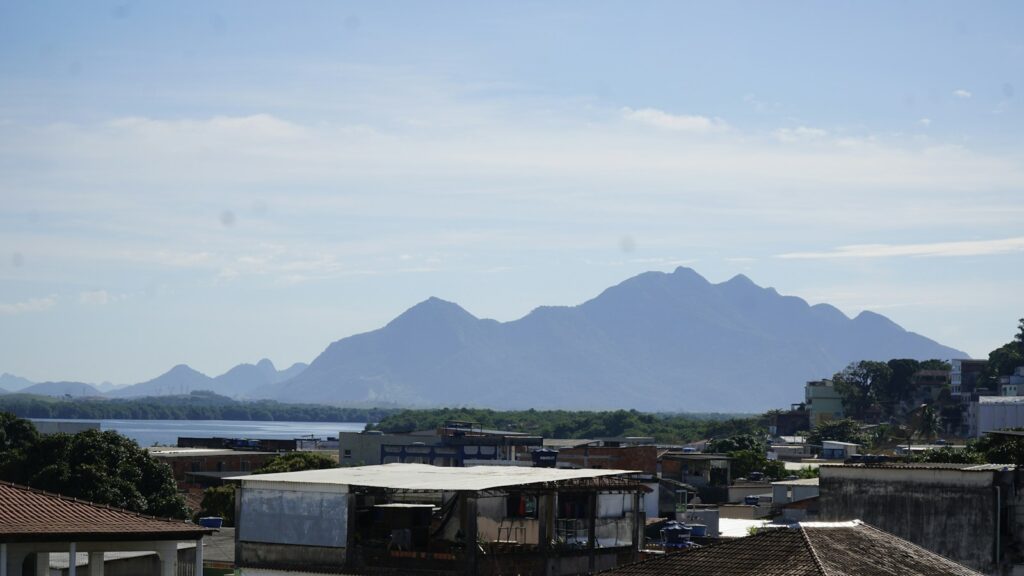
Vitória, capital of Espírito Santo, was founded on 8 September 1551 on an island in Vitória Bay, when the Portuguese moved the seat of the captaincy there from Vila Velha after repeated raids. Today the municipality covers about 93 km², spread over a main island, 34 smaller islands and a strip of mainland; many of the original islands were joined by landfill. With about 323,000 inhabitants in the 2022 census, it is the core of a metropolitan area of close to 1.9 million people and has the highest GDP per capita among Brazil's state capitals, driven by port, mining and steel activity around the Port of Tubarão. The historic centre keeps Palácio Anchieta, the seat of government built on the Jesuit college of São Tiago, the neo-Gothic Catedral Metropolitana and the Theatro Carlos Gomes, while the northern districts hold the workshops of the paneleiras of Goiabeiras, whose black clay pots were the first entry in IPHAN's register of Brazilian knowledge, and the seafood restaurants of Ilha das Caieiras. The six-kilometre Praia de Camburi and the Fonte Grande State Park, with viewpoints over the bay, complete the picture. For agencies, Vitória works as a compact urban base: short city breaks, business travel and MICE groups using the capital's hotels, food-led programs around moqueca capixaba and visits to the clay-pot workshops, and pre or post nights for trips into the Capixaba mountains. Vila Velha, across the Terceira Ponte, is the natural add-on for the Convento da Penha and its beaches. Honest framing matters: this is a working port city rather than a resort destination, with Camburi as its only open-sea beach inside the city. The airport has domestic flights only, mainly to São Paulo, Rio de Janeiro, Brasília, Belo Horizonte and a few Northeast cities, so most international clients connect once. Transfers across the bay to Vila Velha and connections at the airport should be timed with some buffer.
Aeroporto de Vitória, Eurico de Aguiar Salles
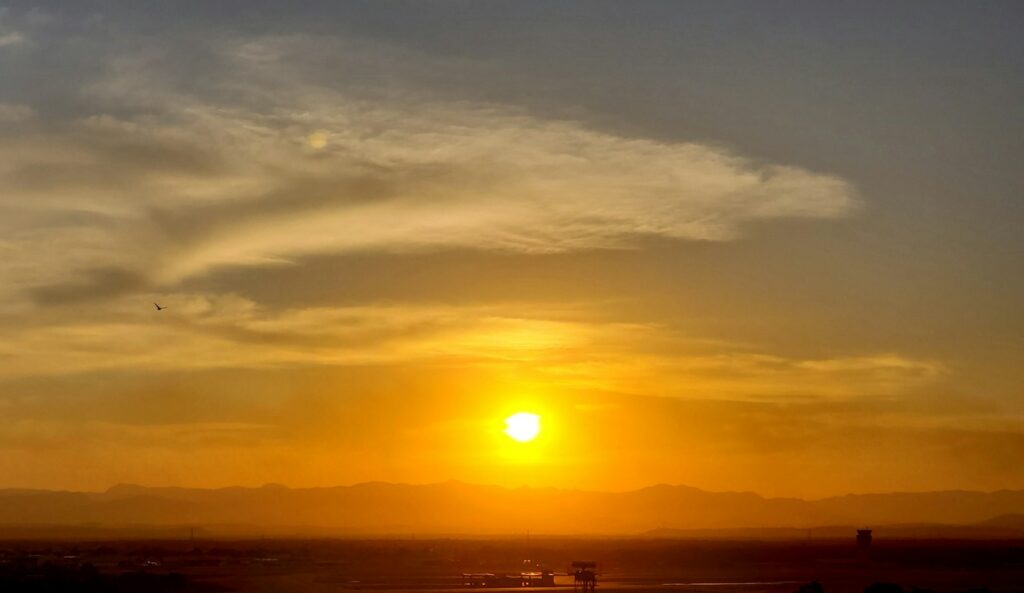
Espírito Santo's main airport, operated by Zurich Airport Brasil under a 30-year concession since 2019, with a new terminal opened in 2018 and domestic flights by Azul, Gol and LATAM to hubs such as São Paulo, Rio de Janeiro, Brasília and Belo Horizonte.
How Vitória came to be
Sourced milestones your team can use for guest briefings and storytelling, not filler copy.
Curiosities & practical notes
What's on the table
Moqueca capixaba
Fish or seafood stewed with tomatoes, onions, coriander, olive oil and annatto, without palm oil or coconut milk, cooked and served in Goiabeiras clay pots.
Torta capixaba
A Holy Week seafood pie of shredded crab, shrimp, oysters, sururu mussels, salt cod and palm heart, also baked in clay pots.
Moqueca de garoupa salgada com banana-da-terra
A moqueca of salted grouper with plantain, another clay-pot classic of capixaba cooking.
Casquinha de siri
Shredded crab meat served in the shell, linked to the desfiadeiras, the crab-shredding women of Ilha das Caieiras.
What there is to see
Marked where a site carries UNESCO World Heritage status directly, versus a locally or nationally protected landmark.
Palácio Anchieta
The seat of the state government, built on the sixteenth-century Jesuit church and college of São Tiago, restored in 2004 to 2009 and open to visitors, with a symbolic tomb of José de Anchieta.
Catedral Metropolitana de Vitória
An eclectic neo-Gothic cathedral built between 1920 and 1970, known for its stained-glass windows.
Theatro Carlos Gomes
A 1927 theatre on Praça Costa Pereira inspired by La Scala, with 415 seats and a ceiling painting by Homero Massena.
Paneleiras de Goiabeiras
The artisans' workshops where the black clay moqueca pots are made, a craft registered by IPHAN in 2002.
Ilha das Caieiras
A fishing neighbourhood on the mangrove-lined Santa Maria river, about 10 km from the centre, known for seafood restaurants and the crab-shredding desfiadeiras.
Parque Estadual da Fonte Grande
A 218 hectare Atlantic Forest park created in 1986, rising to about 309 m, with lookouts over Vitória and the bay.
Praia de Camburi
The city's 6 km open-sea beach, with a promenade, cycle path, kiosks and water sports.
Terceira Ponte
The 3.33 km bridge to Vila Velha, opened in 1989, with a 70 m high central span.
What else we brief agencies on
This is what we prepare for every RFP, whether or not it's published on this page yet:
On request for every proposal
- Best season / weather windows and blackout dates for groups & MICE
- Permit and quota logistics for regulated attractions, lead time and group-size caps
- Accessibility notes and physical-difficulty ratings per activity
- Vetted ground partners, guides and transport already used on past programs
- Sustainability / certification credentials relevant to client RFPs, where they genuinely exist
- Real, checked room and vehicle availability for your travel dates, not a generic quote
