
Santa Catarina
Florianópolis beaches and oysters, German towns of the Itajaí Valley, whale coast and highland canyons: Santa Catarina packs varied programs into short distances.

The state
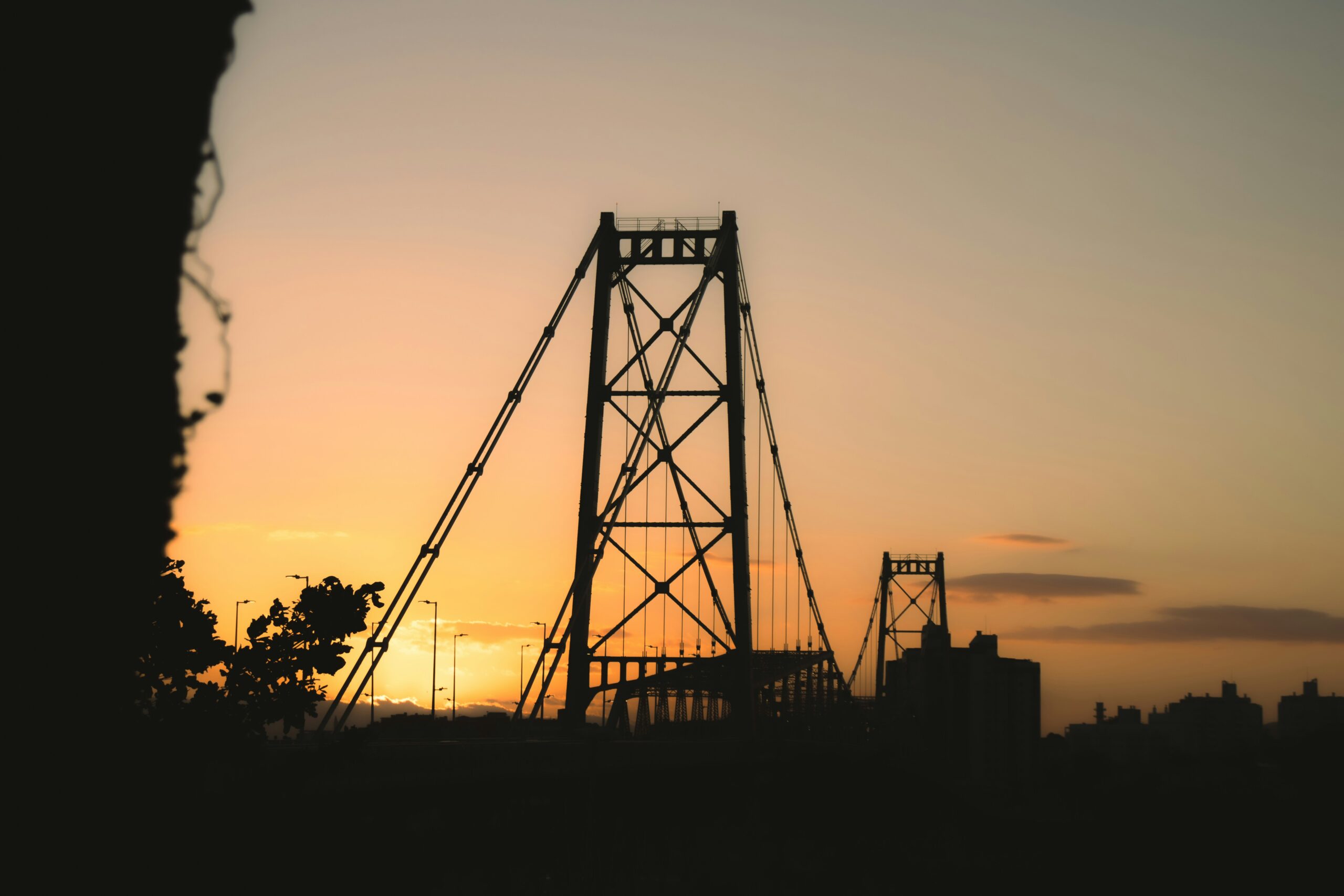
Santa Catarina is one of Brazil's smaller states but among its most varied. Florianópolis, the capital, lies mostly on Santa Catarina Island, with dozens of beaches, lagoons and Azorean fishing villages known for oysters. North along the coast, Balneário Camboriú offers a high-rise resort scene, while inland the Itajaí Valley keeps the half-timbered architecture and festivals of 19th-century German settlers in Blumenau and Pomerode. To the south, the coast around Imbituba and Garopaba receives southern right whales each winter, and the Serra Catarinense rises to cold highlands where snow falls in some winters and high-altitude wineries are emerging.
For agencies, the state suits beach and lifestyle FIT, family groups and incentive programs built around Florianópolis gastronomy or Blumenau's Oktoberfest, and Joinville and Florianópolis handle conferences. Distances are manageable: Florianópolis to Blumenau or Balneário Camboriú is a few hours by road, which makes multi-base itineraries practical. Summer (December to February) is peak season on the coast, with heavy traffic and minimum stays, while the highlands and whale watching are winter products.
The climate is humid subtropical, with warm summers on the coast and cold winters in the highlands, where frost is common and snow occasional. December to March is beach season, right whales are seen off the south coast between July and December, and October brings Oktoberfest in Blumenau.
Destinations 2
Destinations in this state covered by YourBrasil ground services.
Balneário Camboriú
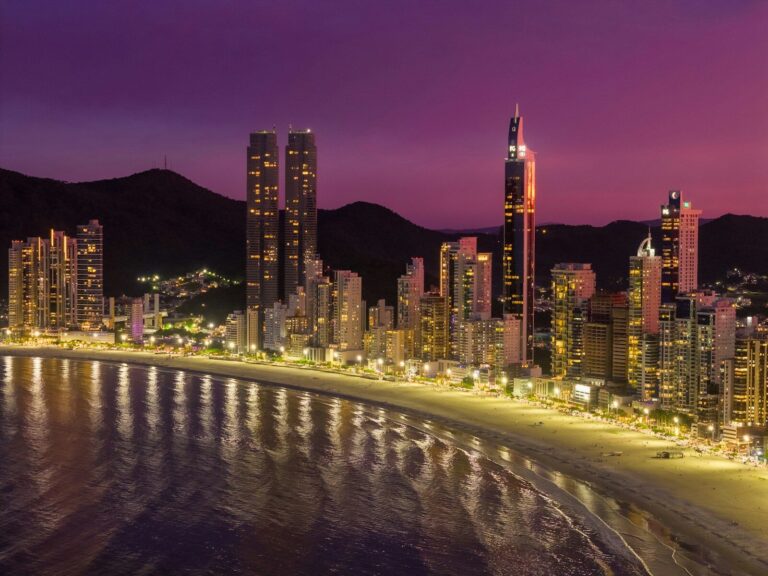
Balneário Camboriú is Brazil's most vertical beach destination, a compact 46 km² municipality on the Santa Catarina coast whose dense cluster of beachfront skyscrapers,…
Explore →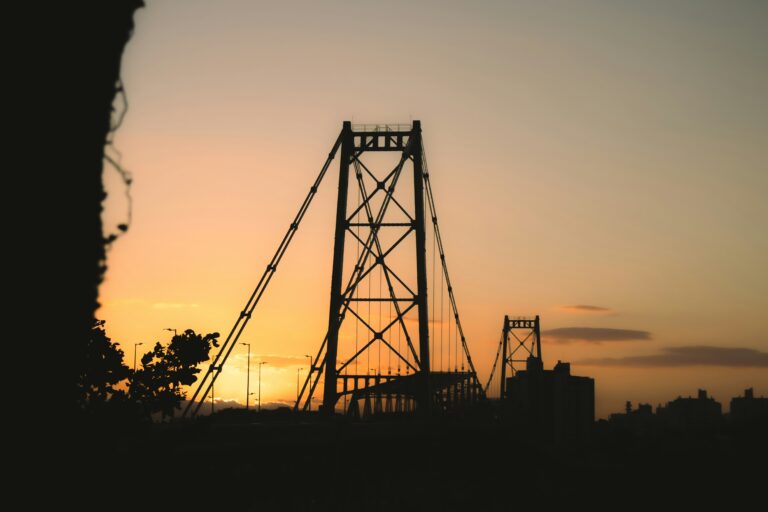
Florianópolis
Florianópolis is Brazil's only insular state capital, a city built across Santa Catarina Island and a strip of mainland, linked since 1926 by the…
Explore →Timeline
- 1738
Santa Catarina is separated from São Paulo as its own captaincy, with Desterro as the seat.
- 1739
Brigadier José da Silva Paes begins the fortress of Santa Cruz de Anhatomirim to defend the island's northern bay.
- 1748-1756
Around 5,000 settlers from the Azores arrive, shaping the culture of the coast.
- 1839
The short-lived Juliana Republic is proclaimed in Laguna during the Ragamuffin War.
- 1850-1851
German colonies are founded at Blumenau (1850) and Dona Francisca, today Joinville (1851).
- 1894
The capital Desterro is renamed Florianópolis.
- 1912-1916
The Contestado War is fought in the interior over land disputed with Paraná.
- 1926
The Hercílio Luz suspension bridge links Santa Catarina Island to the mainland.
Landmarks
Hercílio Luz Bridge
1926 suspension bridge and symbol of Florianópolis, reopened in 2019.
Fortress of Santa Cruz de Anhatomirim
18th-century island fortress in the North Bay of Santa Catarina Island, managed by the Federal University of Santa Catarina and reached by boat.
Serra do Rio do Rastro
Switchback road (SC-390) between Lauro Müller and Bom Jardim da Serra, climbing to about 1,460 m.
Baleia Franca Environmental Protection Area
Protected coastline around Garopaba and Imbituba, including Praia do Rosa, for seasonal whale watching.
Blumenau and Pomerode
Itajaí Valley towns with German half-timbered architecture, breweries and the Vila Germânica park.
Caminhos dos Cânions do Sul UNESCO Global Geopark
Canyons on the plateau edge near Praia Grande, shared with Rio Grande do Sul.
Balneário Camboriú
High-rise beach resort city on the central-north coast, a major domestic leisure destination.
Festivals and events
Oktoberfest Blumenau
Brazil's largest German-heritage festival at Parque Vila Germânica, held in October.
Festival de Dança de Joinville
Large competitive and showcase dance festival held over about twelve days in July.
Festa Pomerana
Pomeranian heritage festival in Pomerode, held in January.
1 en.wikipedia.org2 pt.wikipedia.org3 commons.wikimedia.org4 en.wikipedia.org5 en.wikipedia.org6 en.wikipedia.org7 en.wikipedia.org8 en.wikipedia.org9 en.wikipedia.org10 fortalezas.ufsc.br11 bioicos.org.br12 ndmais.com.br13 oantagonista.com.br14 embrapa.br15 blog.rosepedrozo.com.br16 blog.sc.senac.br17 ndmais.com.br18 canionsdosul.org
← All destinations