
Porto Velho
All of Brazil, within reach.

Adopted by decree-law on 31 December 1981, the flag places a white five-pointed star on a blue upper half, framed by yellow-gold and green fields. Green stands for the forests, yellow for mineral wealth, blue for the sky and white for peace.
Porto Velho in pictures
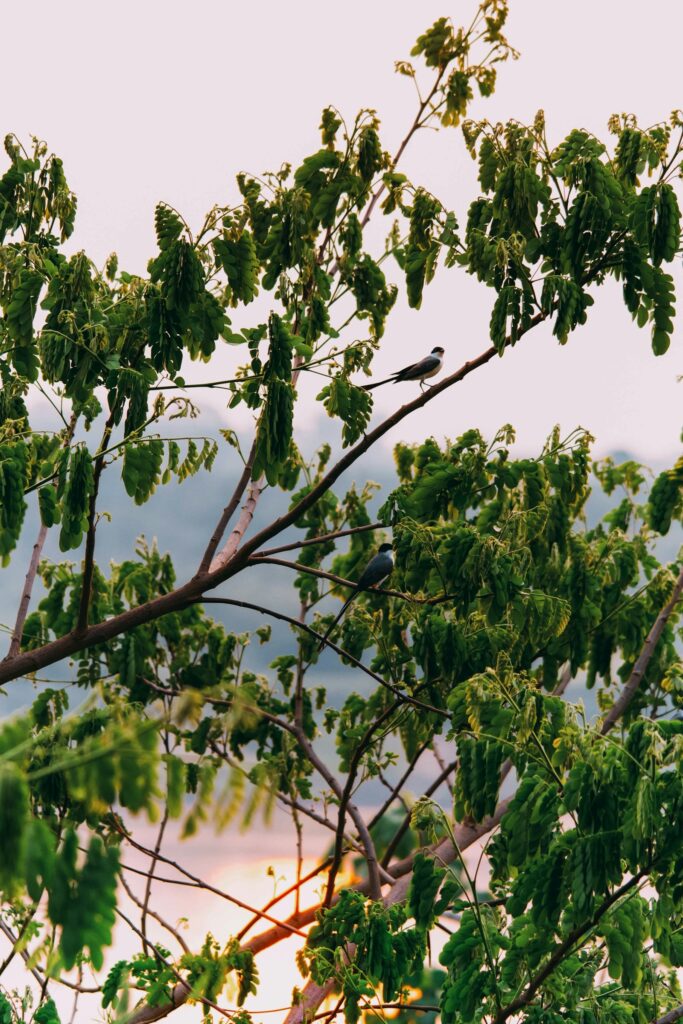
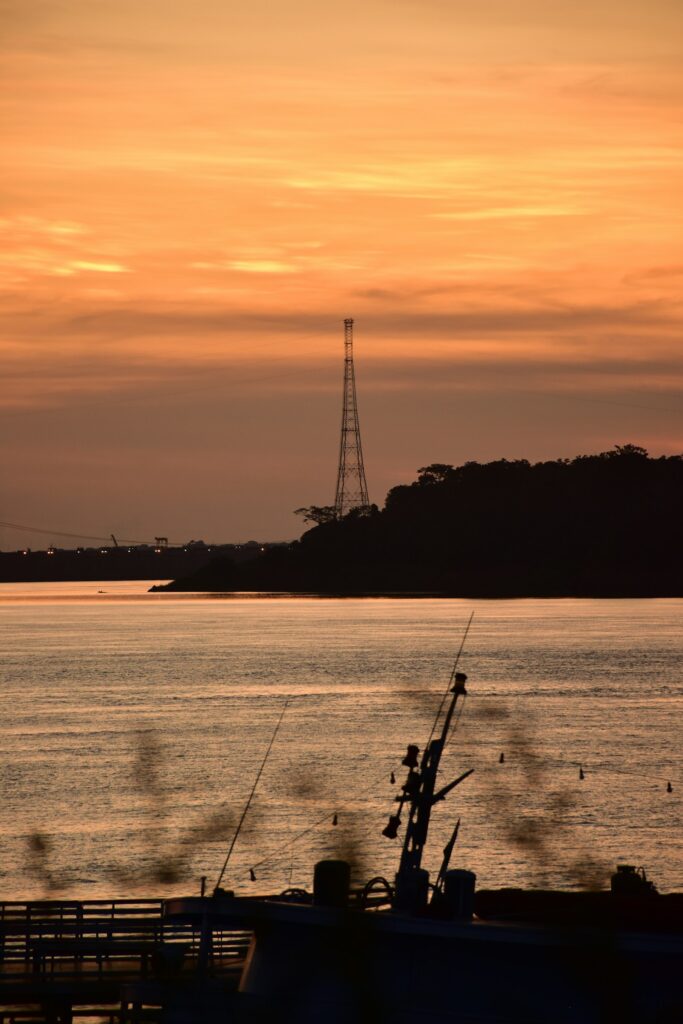
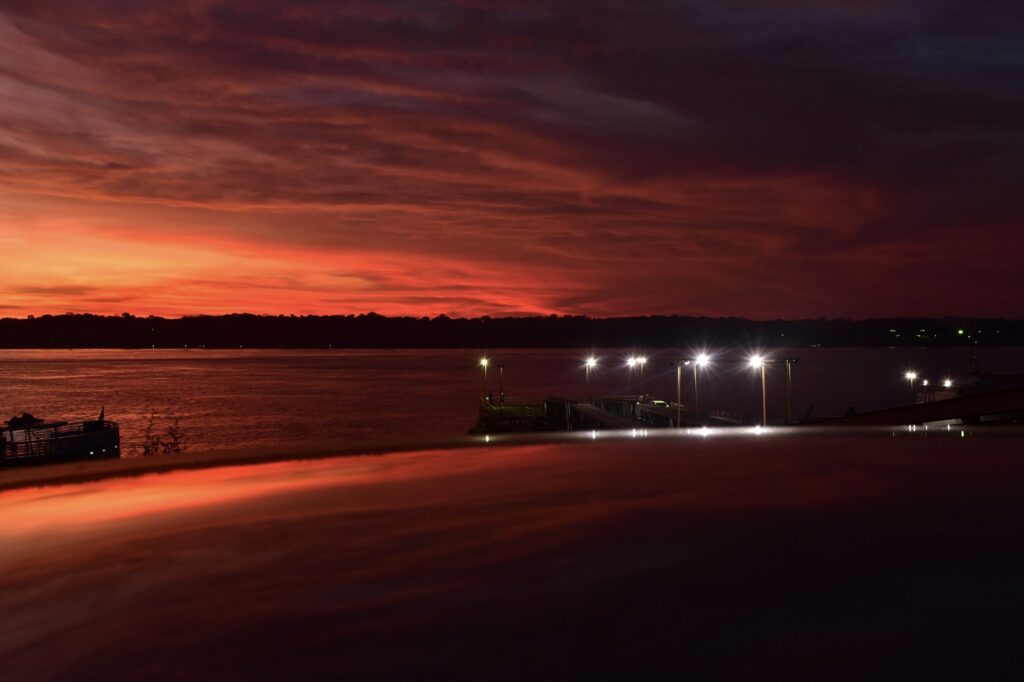
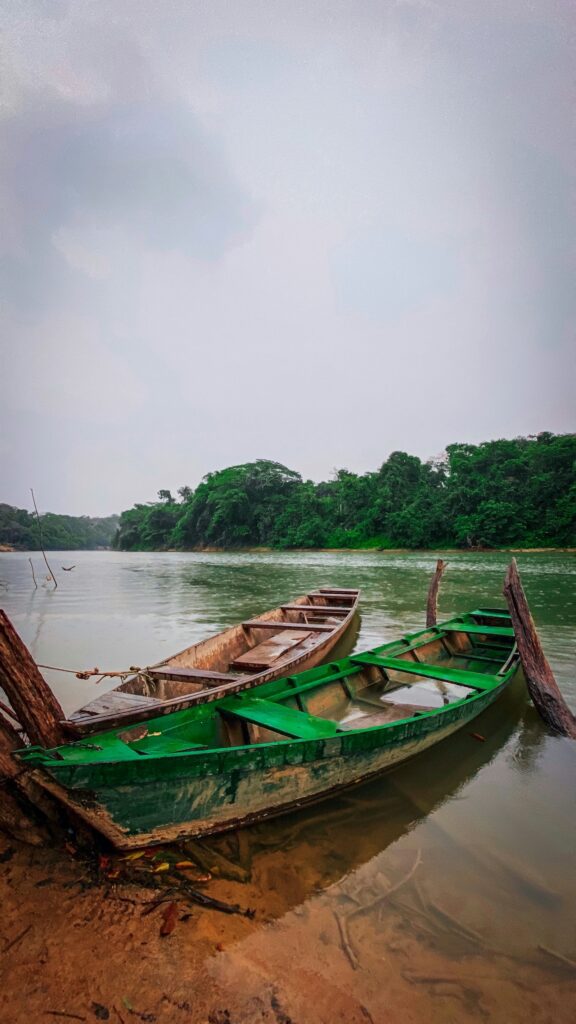
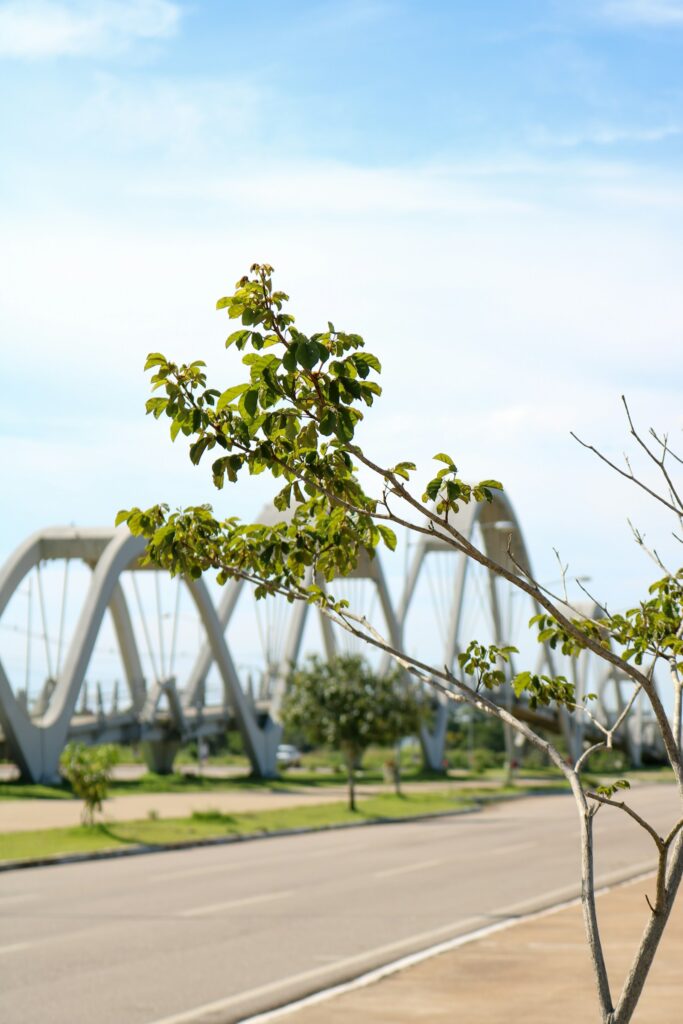
About Porto Velho
Porto Velho, capital of Rondônia, stands on the eastern bank of the Madeira River, one of the main tributaries of the Amazon, in Brazil's far west near the Bolivian border. The city grew from the construction camp of the Estrada de Ferro Madeira-Mamoré, the 366 km railway built between 1907 and 1912 to carry Bolivian rubber around the Madeira rapids. Its railway yard, the three American-made water tanks and the chapel of Santo Antônio still anchor the historic core, and the restored railway complex reopened in 2024 as a riverside museum and public space. Beyond the capital, the state offers the Real Forte Príncipe da Beira on the Guaporé River, the border town of Guajará-Mirim facing Bolivia, and the Pacaás Novos National Park. Rondônia suits heritage-minded and special-interest programs: railway and rubber-era history, river sunsets on the Madeira, Amazon gastronomy and extensions toward the Bolivian frontier, typically as a short add-on to Manaus or the Pantanal circuits. Logistics call for honest planning. Distances are long (Guajará-Mirim is about 327 km by road, Costa Marques about 710 km), the rainy season from November to April is heavy, and protected areas require prior consultation with ICMBio. Private transfers and experienced local ground handling are recommended throughout.
Aeroporto Internacional Governador Jorge Teixeira de Oliveira
Operated by VINCI Airports under a 30-year concession since 2022, with nonstop domestic flights to Brasília, São Paulo-Guarulhos, Manaus, Cuiabá, Belo Horizonte-Confins and Rio Branco on LATAM, Gol and Azul.
How Porto Velho came to be
Sourced milestones your team can use for guest briefings and storytelling, not filler copy.
Curiosities & practical notes
What's on the table
Pirarucu Rondon
Porto Velho's signature dish of fried pirarucu steaks with jambu, tucupi, cassava, banana and sweet potato, created in honour of Marshal Rondon.
Caldeirada de tambaqui
A generous river-fish stew of tambaqui, often with tucunaré, cooked with potato, egg and peppers and served with pirão.
Tacacá
An indigenous-rooted hot broth of tucupi with cassava starch, dried shrimp and jambu, usually generously peppered.
Damurida
A traditional spicy stew of several peppers with beef or fish and vegetables, served with cassava flour and tapioca.
Pirarucu à casaca
Layered pirarucu with plantain and regional ingredients, finished with cassava flour for texture.
What there is to see
Marked where a site carries UNESCO World Heritage status directly, versus a locally or nationally protected landmark.
Complexo da Estrada de Ferro Madeira-Mamoré
The 106,000 m2 riverside railway complex in Porto Velho, restored and reopened in 2024 with an interactive museum, historic warehouses and a deck over the Madeira.
Três Caixas d'Água
Three cylindrical iron water tanks from 1910-1912, listed as heritage in 1988 and the best-known symbol of Porto Velho.
Catedral Metropolitana Sagrado Coração de Jesus
Porto Velho's cathedral, begun in 1917 and completed a decade later, with religious paintings by Father Angelo Cerri.
Capela de Santo Antônio de Pádua
A small riverside chapel inaugurated in 1914 in the former Santo Antônio do Rio Madeira, protected as state and municipal heritage.
Real Forte Príncipe da Beira
A Vauban-style star fortress of 1775-1783 on the Guaporé River in Costa Marques, listed by IPHAN in 1950 and considered the largest Portuguese military fortification built in colonial Brazil.
Guajará-Mirim
The railway's western terminus on the Mamoré River, whose historic station now serves as a museum, facing Guayaramerín in Bolivia.
Parque Nacional de Pacaás Novos
A 764,801-hectare national park managed by ICMBio, largely overlapping Uru-Eu-Wau-Wau indigenous lands, where visits should be arranged with ICMBio in advance.
What else we brief agencies on
This is what we prepare for every RFP, whether or not it's published on this page yet:
On request for every proposal
- Best season / weather windows and blackout dates for groups & MICE
- Permit and quota logistics for regulated attractions, lead time and group-size caps
- Accessibility notes and physical-difficulty ratings per activity
- Vetted ground partners, guides and transport already used on past programs
- Sustainability / certification credentials relevant to client RFPs, where they genuinely exist
- Real, checked room and vehicle availability for your travel dates, not a generic quote
