
Olinda
All of Brazil, within reach.

A blue upper field with a rainbow, a star and a sun above a white lower field with a red cross. Rooted in the 1817 Pernambucan Revolution and made official in 1917, it symbolises unity (rainbow), the state within the Federation (star), strength (sun) and faith in justice (cross).
Olinda in pictures
About Olinda
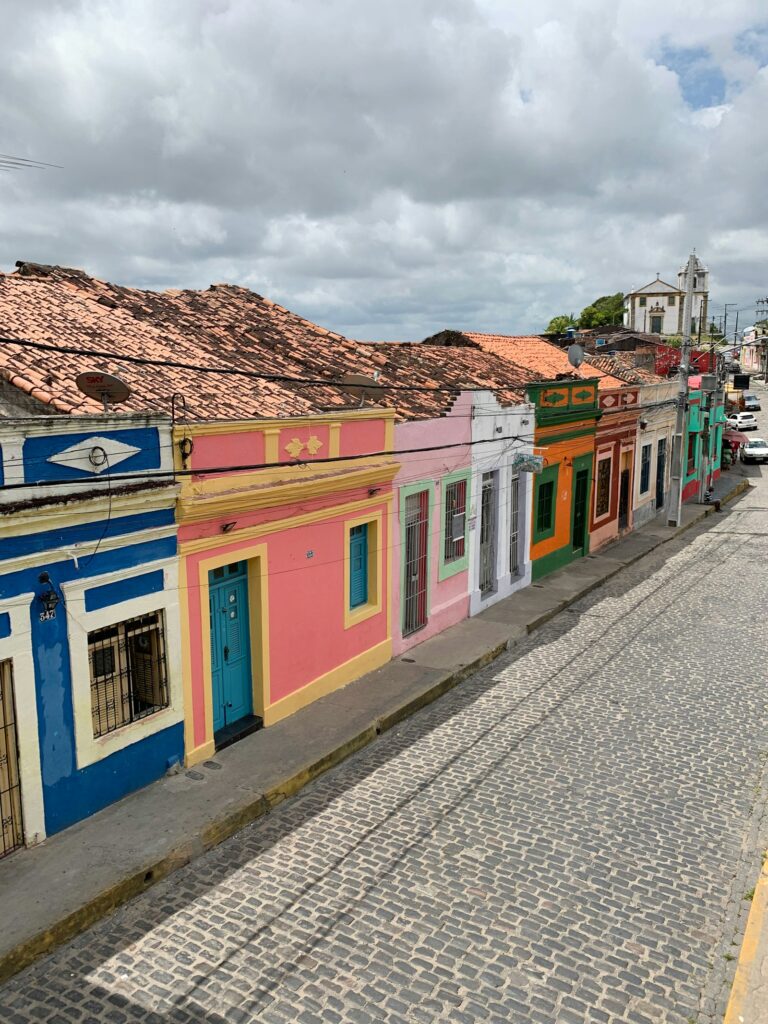
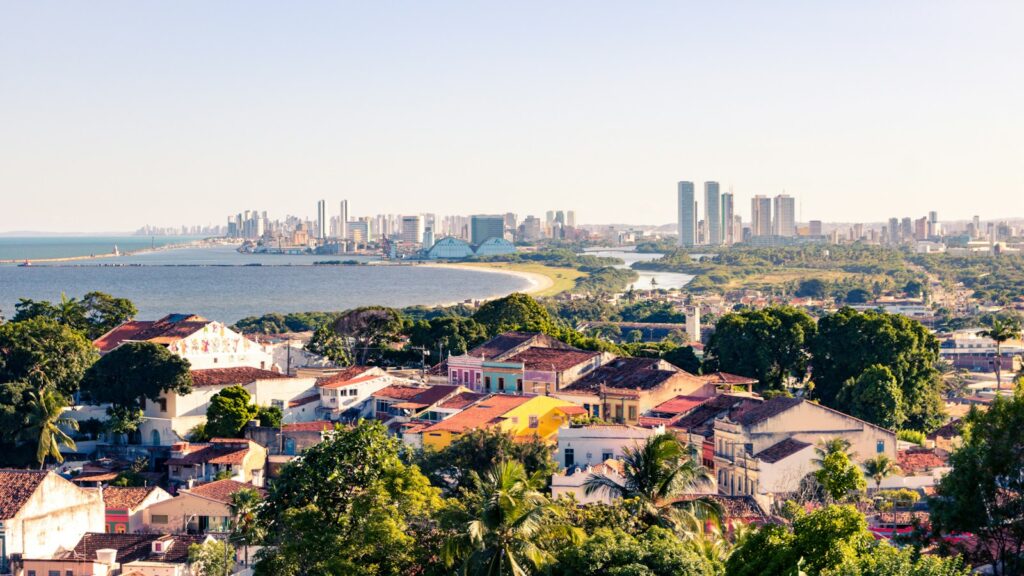
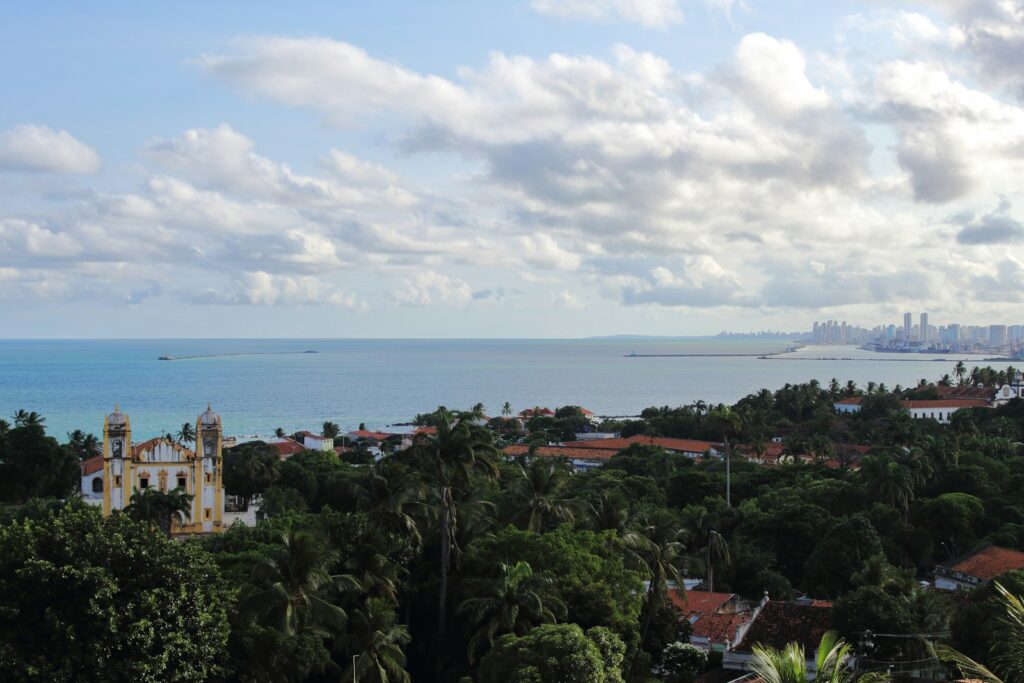
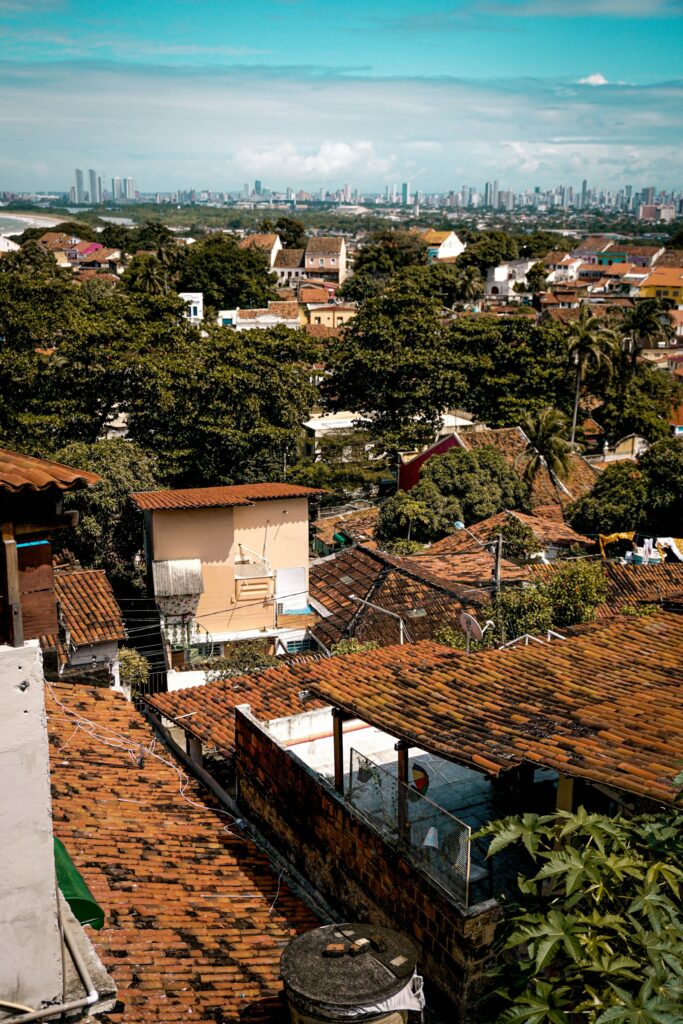
Olinda sits on a cluster of hills overlooking the Atlantic about 6 km north of central Recife. Founded in 1535 by the donatary captain Duarte Coelho and raised to town status in 1537, it was the seat of the captaincy of Pernambuco and a major centre of the sugar economy. In 1631 the Dutch looted and burned it, and the town was rebuilt under Portuguese rule, which is why its historic centre largely reflects the eighteenth century. UNESCO inscribed the Historic Centre of the Town of Olinda on the World Heritage List in 1982, the second Brazilian site after Ouro Preto, citing the harmony between its buildings, gardens, convents, small passos chapels and about twenty Baroque churches, with colourfully painted, often tiled houses set in tropical greenery above the sea. Highlights include the Sé on the Alto da Sé viewpoint, the Benedictine monastery of São Bento and the convent of São Francisco, described as the oldest Franciscan convent in Brazil. Olinda lost its capital status to Recife in 1827, has about 350,000 inhabitants and in 2006 became the first Brazilian Capital of Culture. For agencies, Olinda suits heritage walking tours, photography and art programs, church and convent visits, craft shopping at the Mercado da Ribeira and carnival departures built around its street blocos and giant puppets. Most clients visit it as a half-day or full-day excursion from Recife, where the airport is; Recife itself pairs naturally as the city stay. Honest planning points: the historic centre is steep and cobbled, so comfortable shoes and realistic walking times are needed and it is not ideal for guests with reduced mobility; carnival brings very dense crowds to narrow streets and needs early booking and careful crowd management; and the rainy season, which in the Recife area runs from April to July, can affect outdoor walks.
Aeroporto Internacional do Recife/Guararapes, Gilberto Freyre
The gateway for Olinda, operated by Aena under a 30-year concession, with domestic hubs, a direct metro link to Recife and international routes such as Lisbon and Madrid.
How Olinda came to be
Sourced milestones your team can use for guest briefings and storytelling, not filler copy.
Curiosities & practical notes
What's on the table
Tapioca
A griddled cassava-starch pancake, classically filled with queijo coalho and coconut and sold by the tapioca vendors of the Alto da Sé.
Bolo de rolo
Paper-thin layers of sponge rolled around melted guava paste, declared intangible heritage of Pernambuco in 2008.
Cartola
Fried banana topped with melted cheese, sugar and cinnamon, a plantation-house dessert recognised as state heritage in 2009.
Caldinho
A thick, hot broth served in small cups as a street and bar snack, listed among Olinda's accessible local food.
What there is to see
Marked where a site carries UNESCO World Heritage status directly, versus a locally or nationally protected landmark.
Historic Centre of Olinda
A hillside town of about twenty Baroque churches, convents, passos chapels and colourful tiled houses facing the Atlantic.
Alto da Sé and the Sé Cathedral
The town's highest square and classic viewpoint over the churches, coconut groves, the sea and Recife's skyline; the church, first built in 1540, became a cathedral in 1676.
Mosteiro de São Bento
A Benedictine monastery and minor basilica, rebuilt after the Dutch fire, with a celebrated gilded high altar; Olinda's law course opened here in 1828.
Convento de São Francisco
Begun in 1585 and described as the oldest Franciscan convent in Brazil, with Portuguese azulejo panels in its cloister and carved, painted ceilings.
Igreja e Convento do Carmo
A Carmelite church founded in 1580, rebuilt in Baroque style in 1720 and listed by IPHAN in 1938.
Mercado da Ribeira
A late seventeenth-century market building, once a slave market, now a craft centre with woodcarvers' and painters' workshops.
What else we brief agencies on
This is what we prepare for every RFP, whether or not it's published on this page yet:
On request for every proposal
- Best season / weather windows and blackout dates for groups & MICE
- Permit and quota logistics for regulated attractions, lead time and group-size caps
- Accessibility notes and physical-difficulty ratings per activity
- Vetted ground partners, guides and transport already used on past programs
- Sustainability / certification credentials relevant to client RFPs, where they genuinely exist
- Real, checked room and vehicle availability for your travel dates, not a generic quote
