
Guajará-Mirim
All of Brazil, within reach.

A blue upper field carries a white five-pointed star over a lower field in yellow and green, the colours of the national flag: green for the forests, yellow for mineral wealth, blue for the sky and white for peace. It was adopted by state decree-law in December 1981, as the territory became a state.
Guajará-Mirim in pictures
About Guajará-Mirim
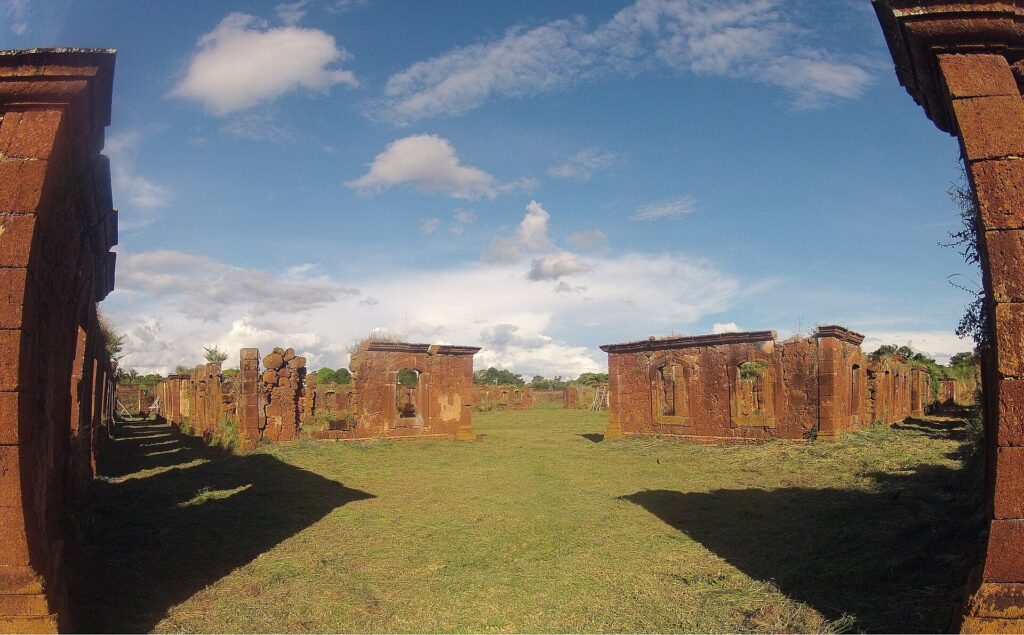
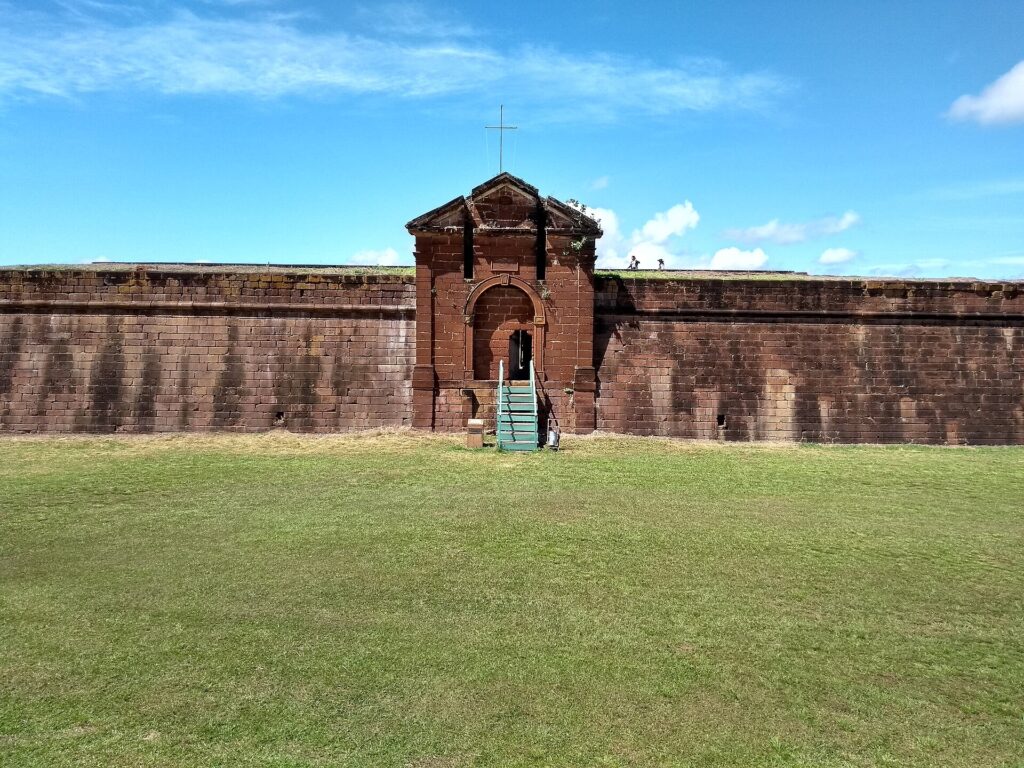
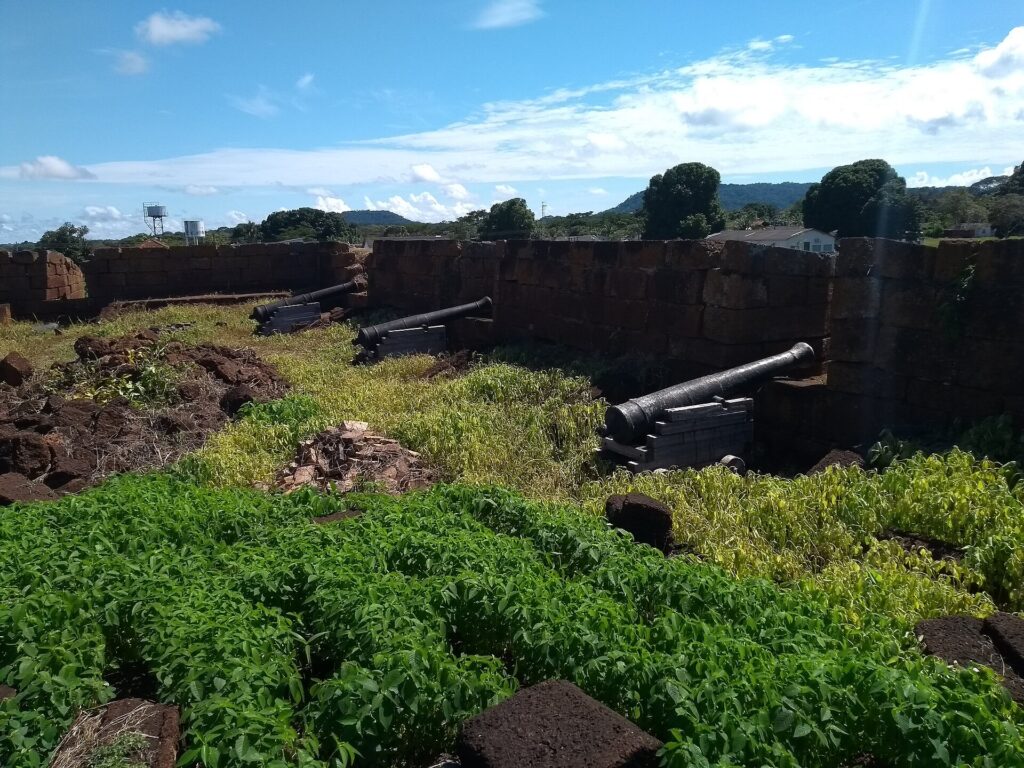
Guajará-Mirim stands on the Mamoré River in western Rondônia, directly across from the Bolivian town of Guayaramerín. With about 46,500 inhabitants in 2020, it is the second largest municipality in the state by area. It grew as the southern terminus of the Madeira-Mamoré railway, the line Brazil agreed to build under the 1903 Treaty of Petrópolis to carry Bolivian trade around the Madeira rapids; its final station, at kilometre 366 of the line and opened in 1912, now houses the Municipal Historical Museum with two locomotives on display. The town hosts a free-trade area and more than 93% of its vast municipal territory lies within protected areas. Upstream, the Guaporé River forms the border with Bolivia, and at Costa Marques stands the Real Forte Príncipe da Beira, built between 1775 and 1783 to guard the Portuguese frontier against Spain and often described as the largest Portuguese military building outside Europe. The valley also keeps the Festa do Divino Espírito Santo, a river procession of some 40 days that links communities on both banks, and a quilombola community lives beside the fort. For agencies, the region suits heritage-minded and special-interest programs: railway and rubber-era history, the locomotives and station museum of the Madeira-Mamoré, colonial military architecture, Afro-Brazilian and Bolivian border traditions, and extensions into Bolivia for adventurous clients. Logistics call for honest planning. The nearest airport with scheduled flights is Porto Velho, about 330 km or some six hours by road from Guajará-Mirim, while Costa Marques is roughly 700 km, around ten hours, from the capital by a different route. Combining both is a multi-day overland program with limited tourism infrastructure, best planned for the drier months, and crossing to Guayaramerín is by small boat with immigration formalities handled separately at the Federal Police. Mercosur nationals may cross with a national ID; other clients need a passport.
Aeroporto Internacional Governador Jorge Teixeira de Oliveira
Rondônia's main gateway, operated by Vinci Airports, with domestic flights to Brasília, São Paulo-Guarulhos, Manaus and other hubs.
How Guajará-Mirim came to be
Sourced milestones your team can use for guest briefings and storytelling, not filler copy.
Curiosities & practical notes
What's on the table
Tacacá
An Indigenous-rooted hot broth of tucupi with cassava starch, dried shrimp and jambu, usually generously peppered.
Caldeirada de tambaqui
A generous river-fish stew of tambaqui cooked with potato, egg and peppers and served with pirão.
Damurida
A traditional spicy stew of several peppers with beef or fish and vegetables, served with cassava flour and tapioca.
Pirarucu à casaca
Layered pirarucu with plantain and regional ingredients, finished with cassava flour for texture.
What there is to see
Marked where a site carries UNESCO World Heritage status directly, versus a locally or nationally protected landmark.
Museu Histórico Municipal de Guajará-Mirim
The former terminus of the Madeira-Mamoré railway, at kilometre 366, opened in 1912 and now a museum with historic locomotives outside.
Mamoré riverfront and Guayaramerín crossing
The river frontier between Brazil and Bolivia, crossed by small boats between Guajará-Mirim and Guayaramerín.
Real Forte Príncipe da Beira
An 18th-century Portuguese fort on the Guaporé in Costa Marques, listed by IPHAN in 1950 and still the focus of archaeological research and restoration.
Bumbódromo de Guajará-Mirim
The arena of the Duelo na Fronteira, where the rival bois Flor do Campo and Malhadinho perform.
Parque Estadual de Guajará-Mirim
A state park of about 216,000 hectares, created in 1990, protecting savanna and rainforest transition with around 500 bird species; most of it lies in neighbouring Nova Mamoré.
Reserva Biológica do Rio Ouro Preto
A 46,438-hectare biological reserve in the municipality, created in 1990, alongside the Rio Ouro Preto Extractive Reserve.
Parque Estadual Serra dos Reis
A state park largely within Costa Marques and a natural complement to a visit to the fort.
What else we brief agencies on
This is what we prepare for every RFP, whether or not it's published on this page yet:
On request for every proposal
- Best season / weather windows and blackout dates for groups & MICE
- Permit and quota logistics for regulated attractions, lead time and group-size caps
- Accessibility notes and physical-difficulty ratings per activity
- Vetted ground partners, guides and transport already used on past programs
- Sustainability / certification credentials relevant to client RFPs, where they genuinely exist
- Real, checked room and vehicle availability for your travel dates, not a generic quote
