
São Luís
All of Brazil, within reach.

Created in 1889 by the poet Joaquim de Sousa Andrade, it has nine horizontal stripes (four white, three red, two black) representing the peoples that formed Maranhão, and a blue canton with a white star. The star is Beta Scorpii, which represents Maranhão on the national flag.
São Luís in pictures
About São Luís
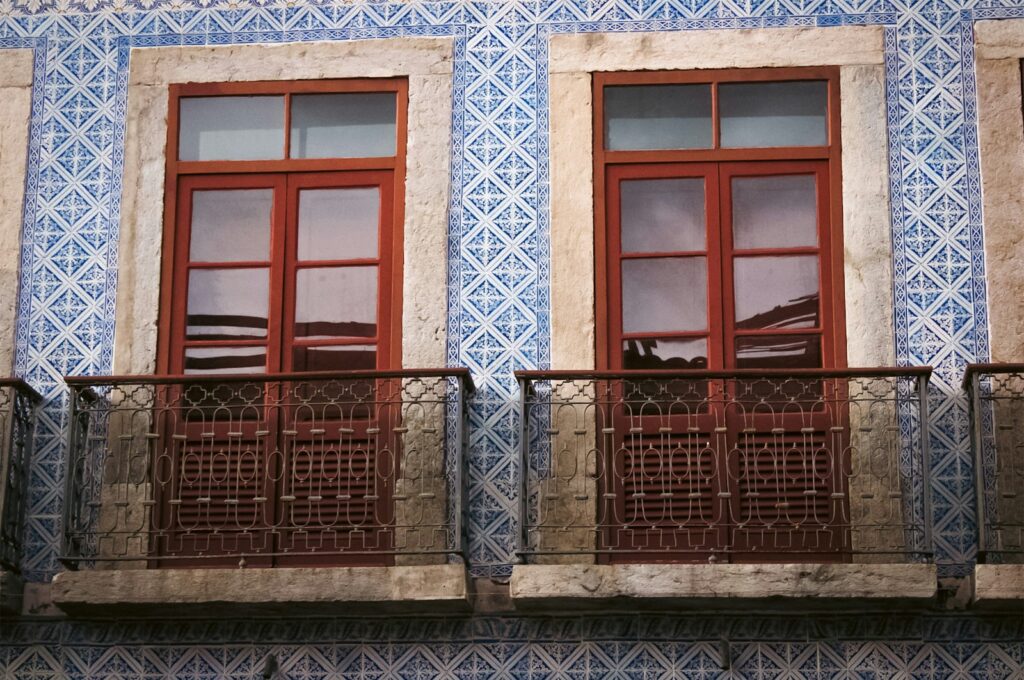
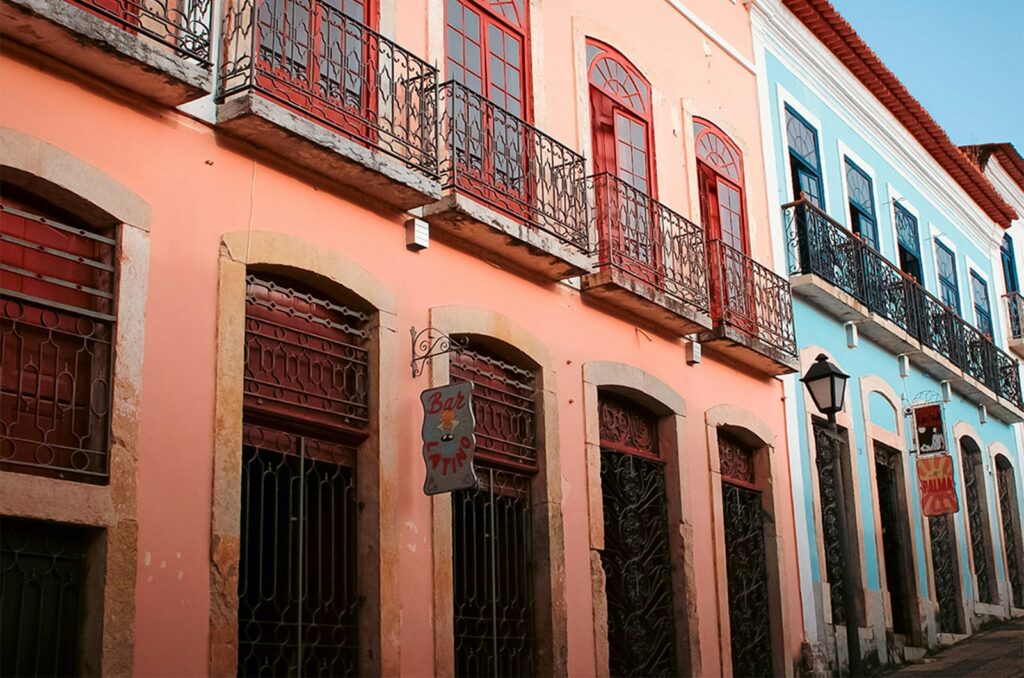
São Luís, capital of Maranhão, stands on São Luís Island in the Bay of São Marcos and is the only Brazilian state capital founded by the French: Daniel de la Touche established Saint-Louis-de-Maragnan there on 8 September 1612. Portugal took the settlement in 1615 after the Battle of Guaxenduba and laid out the rectangular street grid that still survives, and the Dutch held the town from 1641 to 1644. The municipality counted about 1.04 million people in the 2022 census. Its historic centre, inscribed by UNESCO in 1997, is an outstanding example of a Portuguese colonial town adapted to an equatorial climate, with more than 4,000 buildings, many faced with azulejos that both decorate and protect the walls, raised ground floors and wooden verandas. Around Praia Grande stand the Palácio dos Leões, seat of the state government on the site of the French fort, the Teatro Arthur Azevedo, opened in 1817, and the Casa das Tulhas market. The city is just as well known for its living culture: the Bumba meu boi complex, UNESCO Intangible Cultural Heritage since 2019, fills June with drums and costumed groups, Tambor de Crioula is registered national heritage, and a strong reggae scene has earned São Luís the nickname of Brazilian Jamaica. For agencies, São Luís works as a two or three night cultural stay, a walking-based heritage program for FIT clients and small groups, and above all as the entry point for the Lençóis Maranhenses, whose gateway Barreirinhas is about 254 km away by paved road. The colonial town of Alcântara, across the bay, is the classic full-day boat excursion. Logistics are simple: the airport lies about 15 km from downtown, and TAP's Lisbon service, scheduled to begin on 27 October 2026, adds the city's first regular international route. Plan around climate and tides: rainfall is about 2,200 mm a year, concentrated in the first half of the year, the tidal range can exceed seven metres and reshapes beaches and boat timetables through the day, and June festivities push demand and hotel rates up, so blocks should be secured early.
São Luís-Marechal Cunha Machado International Airport
Maranhão's main gateway, operated by ASUR since 2026, with domestic flights on Azul, Gol and LATAM to hubs such as São Paulo, Brasília, Rio de Janeiro, Belo Horizonte, Recife and Belém, and TAP's route to Lisbon, the first regular international service, from 27 October 2026. It handled about 1.84 million passengers in 2025.
How São Luís came to be
Sourced milestones your team can use for guest briefings and storytelling, not filler copy.
Curiosities & practical notes
What's on the table
Arroz de cuxá
The signature dish of São Luís: rice mixed with cuxá, a paste of sour vinagreira leaves, toasted sesame and dried shrimp.
Torta de camarão
Fresh shrimp baked in a custard-like batter of beaten eggs without flour, a São Luís classic.
Juçara
The local name for açaí, served as a thick purple pulp with cassava flour, or alongside dried shrimp and fried fish.
Caranguejada
Mangrove crab served whole, as claws or as stuffed shells; Maranhão holds most of the mangroves of the North and Northeast.
Tiquira
A cassava spirit, usually lilac in colour, sold at the Casa das Tulhas and often called Brazil's oldest distilled drink.
What there is to see
Marked where a site carries UNESCO World Heritage status directly, versus a locally or nationally protected landmark.
Historic Centre of São Luís
The colonial grid of Praia Grande, Desterro and Ribeirão, with more than 4,000 buildings, azulejo façades and wooden verandas adapted to the equatorial climate.
Palácio dos Leões
The neoclassical seat of Maranhão's government on the site of the 1612 French fort, overlooking the Anil and Bacanga estuaries.
Teatro Arthur Azevedo
A neoclassical theatre opened in 1817, among the oldest in Brazil, rebuilt to its original design in 1989 and still in use.
Casa das Tulhas (Feira da Praia Grande)
A 19th-century market building selling regional nuts, sweets, spices, tiquira and crafts.
Convento das Mercês
A convent inaugurated in 1654 by Padre Antônio Vieira, now home to a foundation with a museum, library and art collection.
Museu do Reggae Maranhão
A museum in the historic centre, opened in 2018, on the history of reggae in Maranhão, with rare records and a pioneer's sound system.
Ponta d'Areia
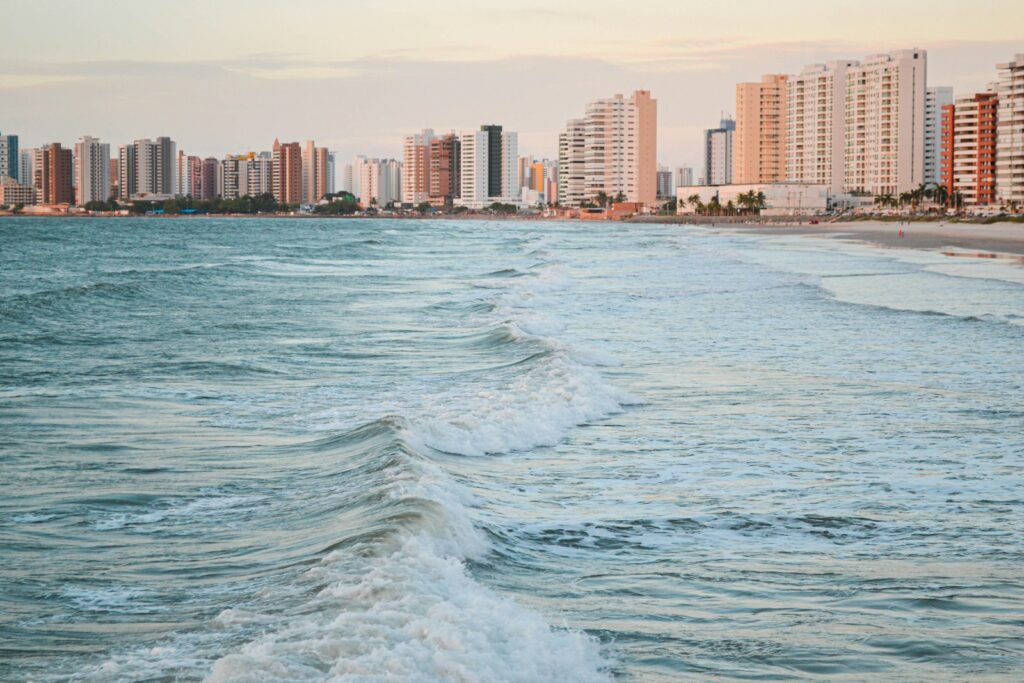
An urban beach backed by high-rise buildings, one of the city's popular sunset spots.
What else we brief agencies on
This is what we prepare for every RFP, whether or not it's published on this page yet:
On request for every proposal
- Best season / weather windows and blackout dates for groups & MICE
- Permit and quota logistics for regulated attractions, lead time and group-size caps
- Accessibility notes and physical-difficulty ratings per activity
- Vetted ground partners, guides and transport already used on past programs
- Sustainability / certification credentials relevant to client RFPs, where they genuinely exist
- Real, checked room and vehicle availability for your travel dates, not a generic quote
