
Xingó Canyons
All of Brazil, within reach.

Four alternating green and yellow stripes with a blue canton bearing five white stars, which represent the state's river estuaries. First adopted in 1920 from a merchant's ship flag, it was restored to its five-star form in 1952; green and yellow express integration with Brazil.
Xingó Canyons in pictures
About Xingó Canyons
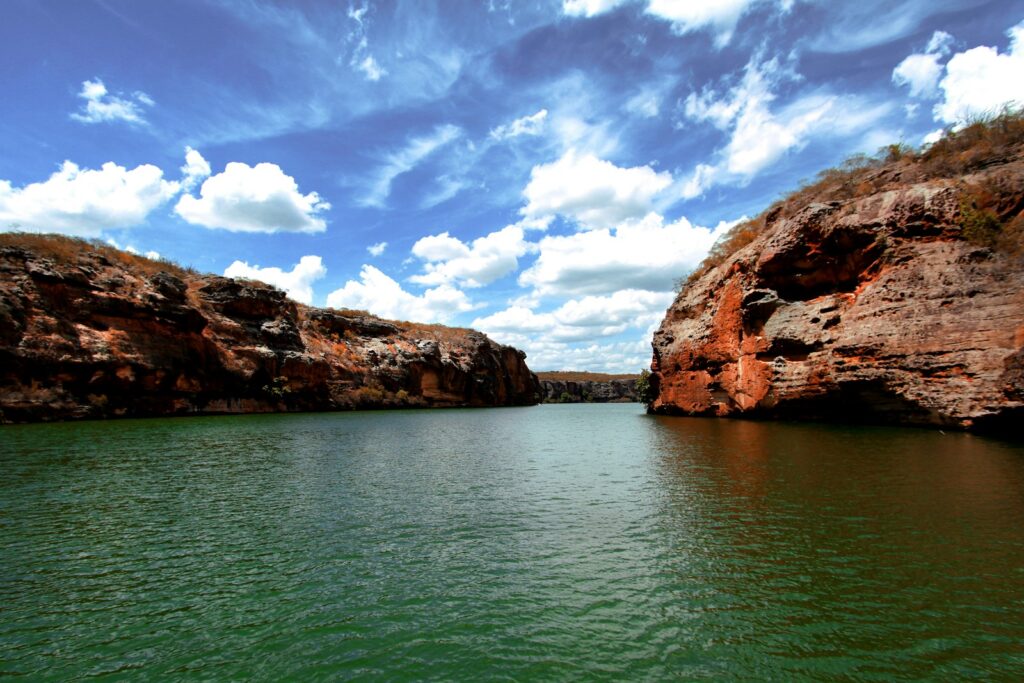
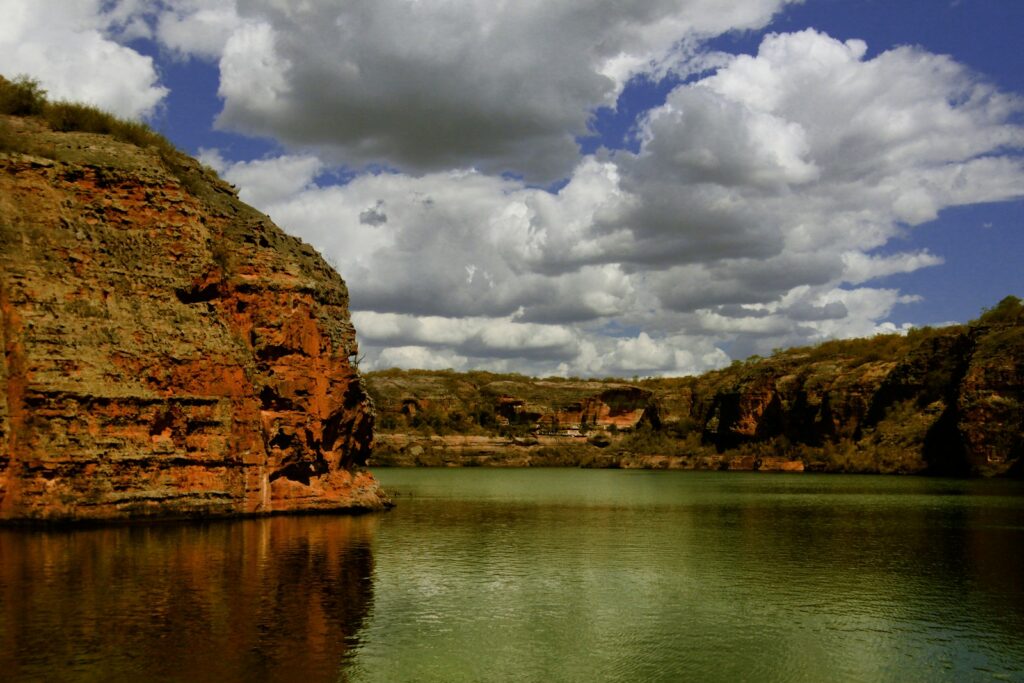
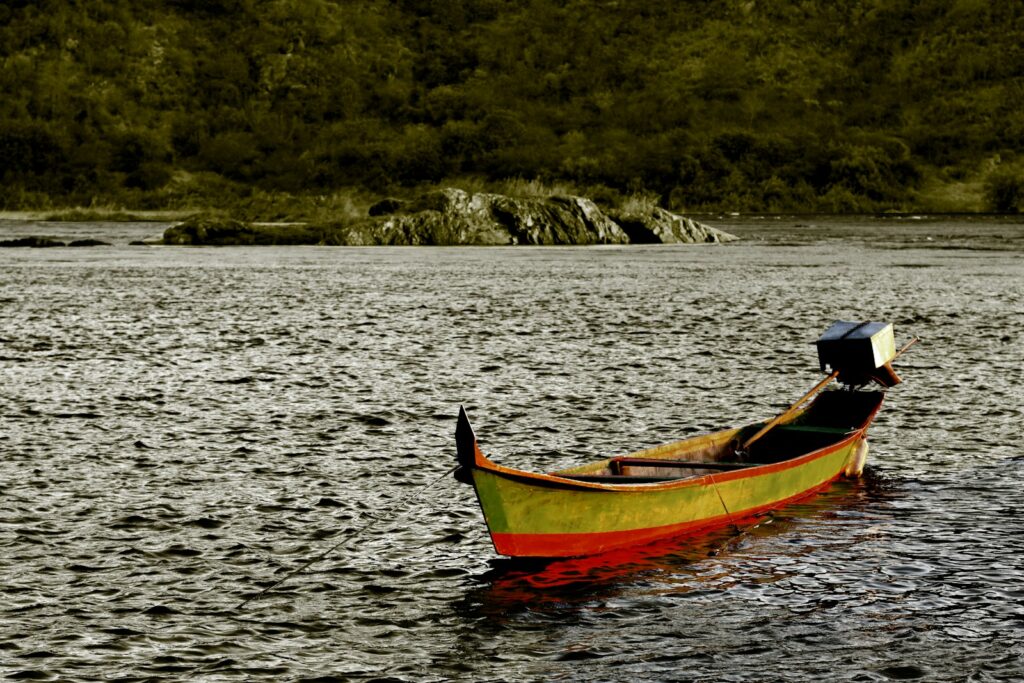
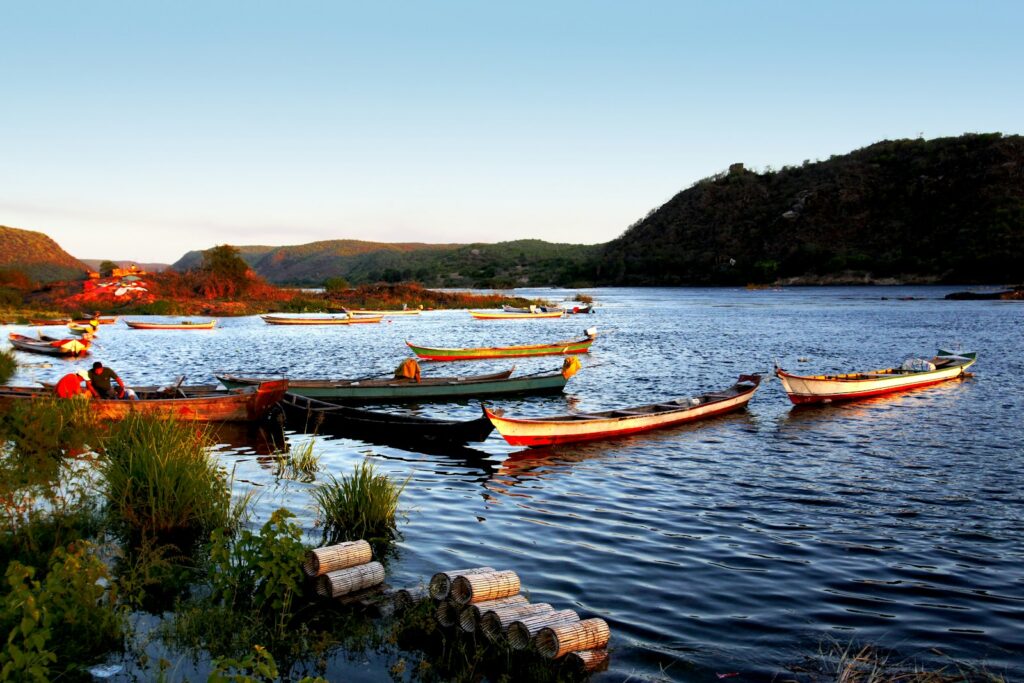
The Xingó Canyons are a stretch of the São Francisco River in the semi-arid sertão where Sergipe meets Alagoas. Since the Xingó hydroelectric dam began filling its reservoir in 1994, the river has risen between steep rock walls, creating a navigable valley of green water some 65 km long and up to 170 metres deep. Catamaran trips from Canindé de São Francisco, on the Sergipe bank, run upstream to the Talhado area, where small boats slip into a narrow, red-walled gorge and roped areas allow swimming. On the Alagoas side, the riverside town of Piranhas, listed by IPHAN in 2004, preserves a 19th-century centre and railway station tied to river trade and to the story of Lampião, the cangaceiro killed in a 1938 ambush at nearby Grota do Angico. The Museu de Arqueologia de Xingó, run by the Federal University of Sergipe, holds more than 50,000 items from the archaeological rescue carried out before the dam was built. For agencies, Xingó works as a one or two night extension from Aracaju or Maceió, and suits groups interested in landscape, river experiences, sertão culture and Brazilian history beyond the coast. A typical program combines the canyon catamaran, the Rota do Cangaço boat and trail to Grota do Angico, and a walk through Piranhas, ideally with an overnight stay in the historic town or in Canindé so that boat trips can start early. Logistics require realistic timing: Canindé is about 210 km, roughly three and a half hours by road, from Aracaju, and Piranhas about 265 to 280 km from Maceió, so day trips are long. Catamarans are large shared vessels, so private departures should be requested early. The climate is hot and dry with strong sun, and the drier winter months are the most comfortable for trails.
Aracaju–Santa Maria International Airport
Sergipe's gateway, operated by AENA since 2019, with domestic flights to major Brazilian hubs.
Maceió–Zumbi dos Palmares International Airport
Alagoas' main airport, operated by AENA, with domestic hubs and international links to Lisbon and Buenos Aires.
How Xingó Canyons came to be
Sourced milestones your team can use for guest briefings and storytelling, not filler copy.
Curiosities & practical notes
What's on the table
Caranguejo
Crab, one of the most appreciated items of Sergipe's coastal cuisine, a staple of Aracaju's seafood restaurants.
Sururu
A small mussel from Sergipe's estuaries and lagoons, cooked in stews and broths.
Amendoim cozido
Boiled green peanuts, a Sergipe favourite registered as state intangible heritage in 2011.
Queijadinha
A small coconut and cheese tart, also recognised as Sergipe's intangible cultural heritage in 2011.
Beiju
A cassava-based flatbread or crêpe served sweet or savoury, a staple of the region's snack culture.
What there is to see
Marked where a site carries UNESCO World Heritage status directly, versus a locally or nationally protected landmark.
Cânions do Xingó
The flooded gorge of the São Francisco River below the dam, about 65 km long, explored by catamaran from Canindé de São Francisco.
Usina Hidrelétrica de Xingó
A 140 metre high, 830 metre long concrete-face rockfill dam operated by CHESF, whose reservoir created the navigable canyons.
Museu de Arqueologia de Xingó
A Federal University of Sergipe museum in Canindé with more than 50,000 items, including rock art, stone tools, ceramics and human burials.
Centro Histórico de Piranhas
A riverside town of 19th-century houses and churches, listed by IPHAN in 2004 as a historic and landscape site.
Museu do Sertão
A museum of the cangaço housed in Piranhas' former railway station, with objects and photographs from Lampião's era.
Torre do Relógio de Piranhas
An 1879 clock tower above the town with an English clock mechanism, now housing a café.
Grota do Angico
The ravine in Poço Redondo, Sergipe, where Lampião and his band were ambushed in 1938, reached by boat and trail.
What else we brief agencies on
This is what we prepare for every RFP, whether or not it's published on this page yet:
On request for every proposal
- Best season / weather windows and blackout dates for groups & MICE
- Permit and quota logistics for regulated attractions, lead time and group-size caps
- Accessibility notes and physical-difficulty ratings per activity
- Vetted ground partners, guides and transport already used on past programs
- Sustainability / certification credentials relevant to client RFPs, where they genuinely exist
- Real, checked room and vehicle availability for your travel dates, not a generic quote
