
Tocantins
Brazil's youngest state: Jalapão's dunes and spring-fed pools, Bananal Island on the Araguaia and colonial Natividade, with Palmas as a planned gateway.

The state
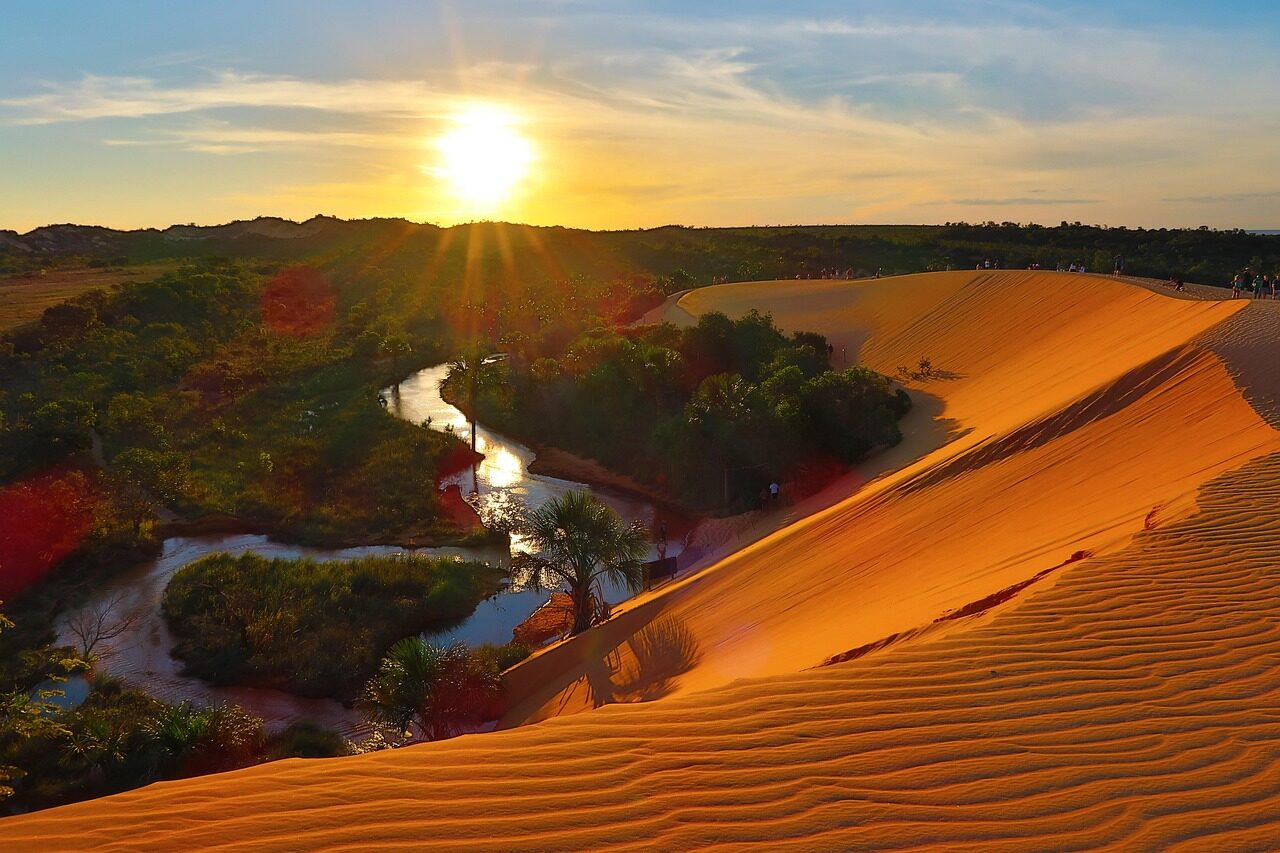
Tocantins, created in 1988 from the northern part of Goiás, is Brazil's youngest state. Although it belongs to the North region, most of its territory is cerrado savanna, giving way to Amazon forest in the north, and it is framed by two great rivers, the Tocantins and the Araguaia, which splits around Bananal Island. Its heritage runs from 18th-century gold-mining towns such as Natividade to Palmas, a planned capital founded in 1989 on the shores of a reservoir lake. Golden grass crafts, filigree jewellery and cerrado cooking with pequi give the state a distinct identity.
For agencies, Tocantins is primarily an adventure and nature destination. Jalapão, with its orange dunes, waterfalls and spring-fed fervedouros, suits small-group and FIT expeditions in 4x4 vehicles, while the Araguaia, Cantão State Park and Bananal Island offer river, wildlife and fishing programs. Palmas works as the logistical base and a practical venue for small meetings. Distances are considerable and roads into Jalapão are largely unpaved, so itineraries need experienced local drivers and realistic transfer times, ideally in the dry season.
The dry season from May to September is the main travel window, with easier roads into Jalapão and river beaches appearing on the Araguaia and Tocantins from June to September, peaking in July; October to April brings the rains.
Destinations 3
Destinations in this state covered by YourBrasil ground services.
Jalapão
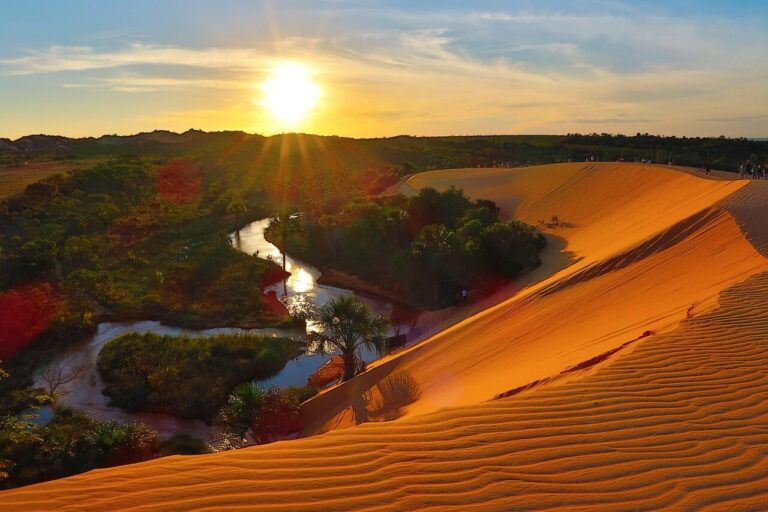
Jalapão is Tocantins' flagship hard-adventure product, a remote stretch of Cerrado savanna in the state's eastern reaches, anchored by the 158,885-hectare Jalapão State Park…
Explore →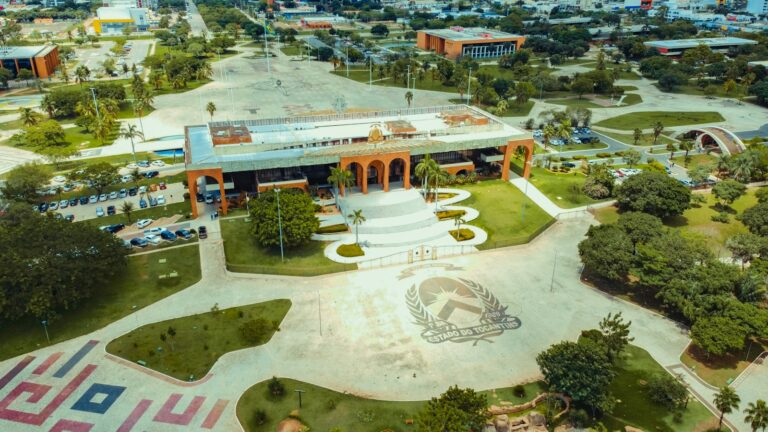
Palmas
Palmas is the capital of Tocantins, the state created by the 1988 Constitution from the northern part of Goiás. Founded on 20 May 1989…
Explore →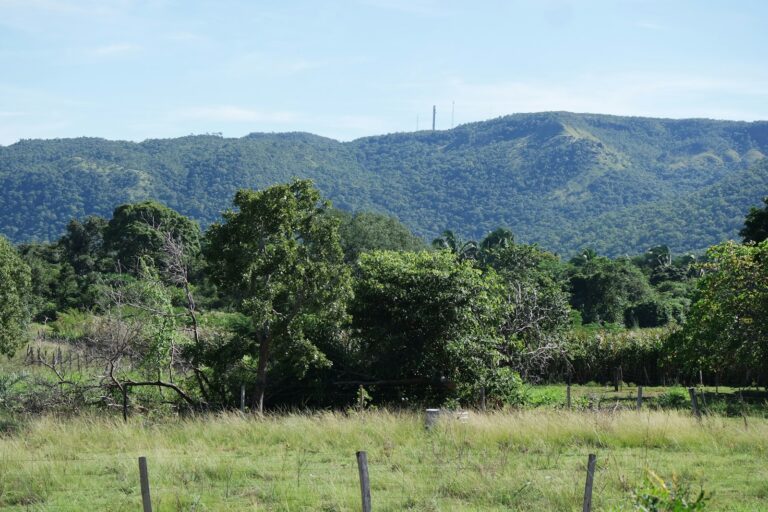
Taquaruçu
Taquaruçu is not a separate town but a district of the municipality of Palmas, set in the hills of the Serra do Lajeado about…
Explore →Timeline
- 1734
The mining settlement of Arraial de São Luiz, later Natividade, is founded during the gold cycle.
- 1759
Natividade's parish church is built, part of the colonial ensemble that survives today.
- 1987
IPHAN lists Natividade's historic urban ensemble as national heritage.
- 1988
The Federal Constitution creates the state of Tocantins from northern Goiás on 5 October.
- 1989
The state is installed on 1 January with a provisional capital at Miracema, and Palmas is founded on 20 May.
- 1990
The seat of government moves to Palmas on 1 January.
- 1998
Cantão State Park is created in the Araguaia floodplain.
- 2001
Jalapão State Park is created in the municipality of Mateiros.
Landmarks
Jalapão State Park, Mateiros
Around 159,000 hectares of dunes, plateaus, cerrado and gallery forest, created in 2001.
Bananal Island
A vast river island between the Araguaia and Javaés rivers, home to Araguaia National Park and Indigenous lands of the Karajá and Javaé.
Cantão State Park, Pium
A seasonally flooded wilderness of lakes and channels between the Araguaia and Coco rivers, rich in birds and wildlife.
Natividade historic center
An 18th-century mining town listed by IPHAN in 1987, with the ruins of the Church of Nossa Senhora do Rosário dos Pretos.
Palmas
The planned capital founded in 1989, laid out beside the reservoir lake on the Tocantins River, with lake beaches and the nearby Lajeado State Park.
Taquaruçu
A district of Palmas with a cooler microclimate and numerous waterfalls, used for hiking and rappelling.
Festivals and events
Romaria do Senhor do Bonfim
A pilgrimage near Natividade held annually around 15 August, drawing thousands of pilgrims.
Temporada de Praia
The river beach season from June to September, peaking in July, when sandbanks on the Araguaia and Tocantins host beach camps and events.
Festa do Divino Espírito Santo
A traditional religious festival celebrated in historic towns such as Natividade around Pentecost, usually in May or June.
1 ibge.gov.br2 en.wikipedia.org3 pt.wikipedia.org4 pt.wikipedia.org5 commons.wikimedia.org6 en.wikipedia.org7 en.wikipedia.org8 en.wikipedia.org9 en.wikipedia.org10 en.wikipedia.org11 en.wikipedia.org12 gov.br13 pt.wikipedia.org14 gazetadocerrado.com.br15 gazetadocerrado.com.br
← All destinations